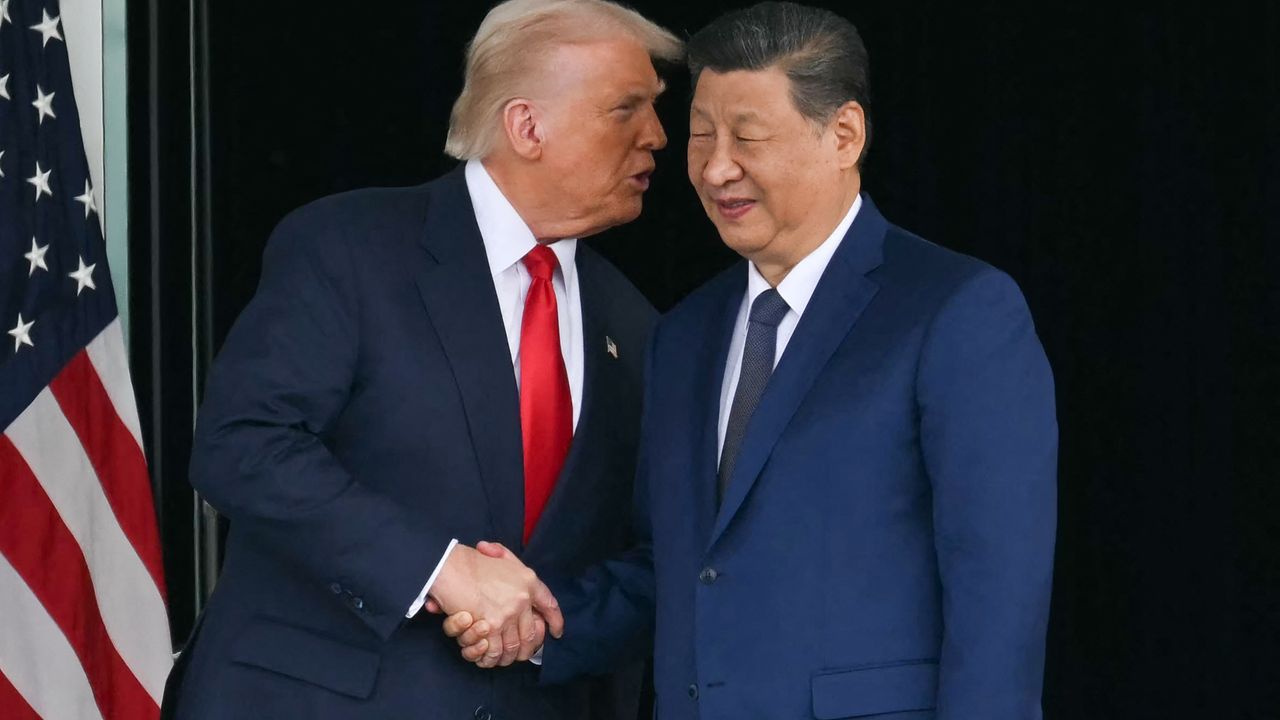
The U.S. will allow Nvidia to export its H200 chips to "approved customers" in China, President Donald Trump announced on Monday, setting off a fresh round of political and regulatory manoeuvring on both sides of the Pacific.
The decision authorises shipments of Nvidia’s second-tier Hopper-generation chip in exchange for a 25% fee collected when parts arrive in the United States for security review before re-export. The Commerce Department is finalising the terms of the arrangement, which Trump said would also apply to AMD and Intel.

H200 sits below Nvidia’s latest Blackwell architecture yet remains far ahead of any processor China can legally import today. It is roughly six times more powerful than the H20, the downgraded model Nvidia specifically created to comply with earlier export controls. China restricted tech companies from buying the H20, arguing its performance gains over domestic alternatives were too modest to justify continued reliance on U.S. parts.
Trump’s announcement briefly lifted Nvidia’s share price, but the company’s prospects in China now potentially rest on decisions in Beijing as much as in Washington. The Financial Times reports that Chinese regulators have been discussing ways to allow only limited access to H200 — including an approval process where buyers must explain why domestic chips cannot meet their needs — and could bar the public sector from purchasing Nvidia hardware altogether. At the time of writing, no official confirmation of this has been released by the Chinese government.
The provisional opening nonetheless matters to China’s largest cloud providers. Alibaba, Tencent, and ByteDance have adopted domestic accelerators for some inference workloads but continue to prefer Nvidia products for training and maintaining large models, often sending jobs overseas where access to H100-class compute remains unrestricted. If allowed, H200 purchases would ease those workarounds, though companies would still have to navigate both governments’ approval systems.
Following the announcement, a group of senators described the move as a "colossal economic and national security failure", arguing that H200’s performance would give Chinese AI firms a meaningful lift. The bipartisan "SAFE CHIPS Act" introduced last week seeks to prevent the administration from approving exports of advanced chips, including H200, for 30 months.
The announcement also coincided with the Justice Department’s announcement of "Operation Gatekeeper", which alleges a smuggling network routed Nvidia parts into China and Hong Kong despite existing controls, piling yet more pressure on Washington to create a regulated channel for hardware that continues to leak across borders.
Whether H200 reaches China at scale now depends on two competing gatekeepers. Washington is attempting to shape the market through controlled exports and taxes, while Beijing reportedly weighs measures that would keep foreign accelerators available only where domestic suppliers cannot yet compete.

Follow Tom's Hardware on Google News, or add us as a preferred source, to get our latest news, analysis, & reviews in your feeds.