Get all your news in one place.
100's of premium titles.
One app.
Start reading
Latin Times
Latin Times
Politics
Azucena Salazar

Trump Aide Stephen Miller Now Wants Mexico To Police Its Own Citizens At The Border

Demonstrators hang a Mexican flag alongside protest banners and crosses on the MexicoUnited States border wall during the International Migrants Day in Playas de Tijuana, Baja California state, Mexico on December 18, 2025. (Credit: Photo by Guillermo ARIAS / AFP via Getty Images)
  • U.S. officials are now pressing Mexico to stop its own citizens from heading toward the border — not only migrants passing through — a demand that legal experts say collides directly with Mexico's constitutional guarantee of free movement.
  • Border Patrol apprehensions doubled year-over-year in July, topping 9,200, even as overall irregular migration through Mexico has fallen sharply during Trump's second term.
  • The two governments return to the table this month for a fourth round of USMCA talks in Washington, still deadlocked over a proposed 50% U.S.-content rule for vehicles.
  • The request lands alongside a Sinaloa cartel-corruption case, dozens of revoked visas for Mexican officials, and a disputed CIA operation — straining the relationship on several fronts simultaneously.

Washington's push to lock down the southern border has picked up an unusual new target: Mexican citizens moving inside their own country. According to Bloomberg's reporting, Homeland Security Adviser Stephen Miller is now the driving force behind a demand that Mexico stop its own nationals from traveling toward the U.S. border, going beyond the administration's broader ask that Mexico do more to intercept migrants from other countries.
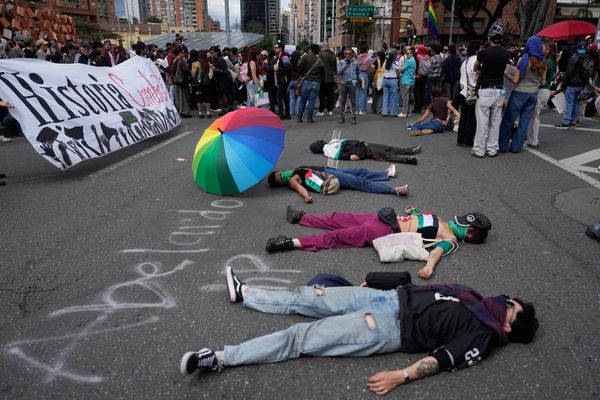
That distinction matters. Mexico's constitution guarantees citizens the right to move freely within their own territory, so a policy built around blocking Mexicans from heading north — including workers commuting to border-state factories — would put President Claudia Sheinbaum in a legally awkward position almost immediately.

A Demand That Breaks With Precedent

The request surfaced during the first in-person meeting between Foreign Affairs Minister Roberto Velasco and U.S. Secretary of State Marco Rubio on Aug. 26 in Washington. Publicly, both sides described a routine security check-in focused on joint anti-trafficking work. Privately, sources told Bloomberg the conversation went further: Rubio pressed for more general migration enforcement, but the sharper ask — restricting Mexican nationals' own movement — originated specifically with Miller.

Mexico's foreign ministry has repeatedly invoked its diplomatic doctrine of "coordination without subordination" in describing security cooperation with Washington, a line that reads very differently once a demand like this one is on the table.

Behind the Numbers: Why Washington Is Pushing Now

The timing tracks with a genuine shift at the border. Overall irregular migration through Mexico has dropped sharply since Trump's second term began, but CBP's own July data shows Border Patrol apprehensions climbing to 9,295 — roughly double the 4,592 recorded in July 2025, which had been the lowest month of the entire administration. That reversal appears to have sharpened U.S. demands even as Mexican officials point to their own enforcement record, including a sharp rise in firearm seizures and the killing of Jalisco New Generation Cartel leader Nemesio Oseguera Cervantes, known as "El Mencho," in February.

Immigration lawyers on both sides of the border note a practical problem with any policy built around restricting Mexican citizens' internal travel: distinguishing routine movement — workers heading north for factory jobs, families visiting relatives — from attempts to cross illegally is nearly impossible without some form of discriminatory profiling.

A Relationship Under Strain on Multiple Fronts

The border dispute is only one piece of a broader rupture. U.S. prosecutors have indicted Sinaloa Governor Rubén Rocha Moya and nine other current and former officials on drug-trafficking and weapons charges tied to the Sinaloa Cartel. Rocha Moya's status has shifted twice since the April indictment: he took a leave of absence in May, briefly returned to office on Aug. 21, then requested a second, indefinite leave just 34 hours later amid backlash from his own Morena party. Sinaloa's Congress swore in Graciela Domínguez Nava as interim governor on Aug. 25.

Washington has also revoked the U.S. visas of more than 50 politicians tied to Mexico's ruling Morena party, and Mexico is still seeking answers over an alleged unauthorized CIA operation at a Chihuahua drug lab that Sheinbaum says her government was never told about. Mexico has separately pressed Washington over the deaths of 17 Mexican nationals in ICE custody or during enforcement operations, while Trump has repeatedly floated unilateral military action against cartels on Mexican soil — an idea Sheinbaum has rejected outright.

Trade Talks Add Financial Pressure

All of this is unfolding alongside a stalled trade review. The U.S. and Mexico are set for a fourth round of USMCA negotiations this month in Washington, still stuck on a U.S. demand for 50% U.S.-specific content in vehicles to keep preferential tariff access, while Mexico wants relief from existing 25% auto and 50% steel-and-aluminum tariffs first. The three USMCA partners already missed their July 1 deadline to agree on a straightforward extension, meaning the pact now faces annual review through 2036 instead of automatic renewal.

Sheinbaum's Narrow Path Forward

Sheinbaum has so far avoided directly confronting Trump, framing her posture as firm but non-confrontational even while accusing Washington of interfering in Mexican affairs. Mexican officials describe receiving conflicting signals from different corners of the Trump administration — a dynamic The Atlantic has reported on separately, though the specific characterization of which U.S. officials are taking a harder or softer line could not be independently confirmed for this piece and should be verified against the original reporting before publication.

Whether Sheinbaum's government can absorb a demand to police its own citizens' movement without a domestic backlash may become clearer once this month's trade round concludes. For now, migration, trade, and security disputes between the two countries are increasingly difficult to treat as separate problems.

What It Could Mean for Families Crossing the Border

For Mexican families with relatives on both sides of the border, the stakes are practical rather than abstract. New internal checkpoints or travel restrictions inside Mexico could slow legal crossings for work, school, and family visits well before any formal policy is announced — a concern migration advocates say is already shaping how they're tracking the talks.

Sign up to read this article
Read news from 100's of titles, curated specifically for you.
Already a member? Sign in here
Related Stories
Top stories on inkl right now
One subscription that gives you access to news from hundreds of sites
Already a member? Sign in here
Our Picks
Fourteen days free
Download the app
One app. One membership.
100+ trusted global sources.