Get all your news in one place.
100's of premium titles.
One app.
Start reading
International Business Times UK
Politics
Porfel Manongsong

Trump Administration Plan to Review Nixon Investigation Is Dangerous, Watergate Prosecutor Warns

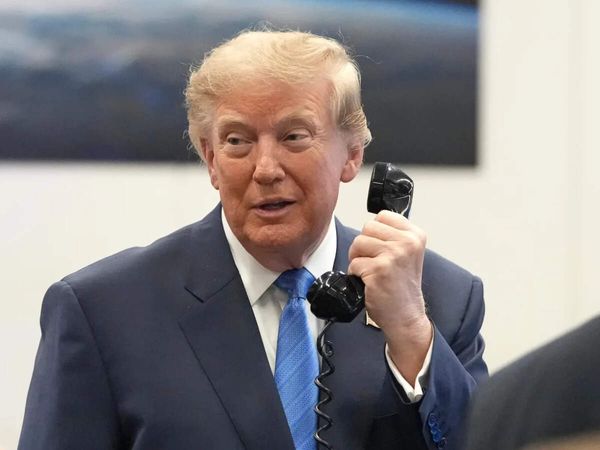
Donald Trump's administration has drawn criticism over a Department of Justice review of the Watergate investigation (Credit: IBTimes UK/Gage Skidmore/Wikimedia)

Donald Trump's administration has drawn criticism over a Department of Justice review of the Watergate investigation, after former prosecutor Nick Akerman warned that pursuing a disputed theory about Richard Nixon's downfall would be 'extremely dangerous'.

The Wall Street Journal reported this week that the Justice Department's Office of Professional Responsibility was examining whether the special prosecutor's office that investigated the Watergate break-in committed misconduct. According to that report, the review concerns an investigation that helped expose the scandal surrounding Nixon and ultimately preceded his resignation.

For context, the Watergate scandal began in 1972 after efforts to spy on the Democratic National Committee's headquarters at the Watergate complex became the centre of a widening political crisis. The investigation uncovered evidence central to the case against Nixon and has often been associated with a lasting loss of public trust in government.

Trump-Era DOJ Watergate Review Draws Warning From Prosecutor

Akerman worked on the Watergate investigation from 1973 to 1976 as an assistant special prosecutor with the Watergate Special Prosecution Force. He served under Archibald Cox and Leon Jaworski, who led the prosecution at different stages of the investigation.

Akerman, in a recent commentary, challenged the premise behind the DOJ review. He focused on Geoff Shepard, who he said had presented the department with an extensive slide deck arguing that Nixon had been treated unfairly.

Akerman described Shepard as 'something of an evangelist for this bonkers revisionist conspiracy theory' and said Shepard's position was that 'the deep state took Nixon down'. These are Akerman's characterisations of Shepard's argument, rather than independent findings established by the material provided here.

The distinction matters because the current review concerns alleged misconduct by the prosecutors, while Akerman's response disputes the broader idea that the Watergate investigation itself was corrupt. The supplied material does not establish that the DOJ has endorsed Shepard's theory or reached a final conclusion about the conduct of the special prosecutor's office.

Richard Nixon, Watergate and the Disputed Investigation

Akerman argues that the historical record points in the opposite direction. 'The opposite is true. Nixon took himself down and tried to use the deep state to cover up his crimes,' he wrote.

He further argued that the evidence implicating Nixon on the central issues surrounding the break-in was extensive and rested on Nixon's own words. Akerman said prosecutors in the Watergate case were required to follow ethical rules and Supreme Court requirements concerning exculpatory evidence.

'I served under both Cox and Jaworski,' Akerman wrote. He said the prosecutors were 'constantly vigilant' about their obligations and claimed they would err on the side of the defendant when there was a close question.

His criticism then turned directly to the current DOJ. Akerman wrote that this was 'something that cannot be said about the current DOJ', before warning that any endorsement of Shepard's theory would represent 'another flagrant effort by the Trump administration to undermine our established rule of law'.

That remains an allegation from a former Watergate prosecutor, not an established finding about the current department.

The political stakes are difficult to miss. Watergate became one of the defining scandals in American political history, and some commentary has linked its aftermath to the development of an alternative media ecosystem within Republican politics.

But the immediate question is narrower. The DOJ's Office of Professional Responsibility is reportedly examining whether the Watergate special prosecutor's office committed misconduct. Whether that review produces evidence supporting the allegations, rejects them, or goes no further is not established in the material provided.

For now, Akerman's warning is unequivocal. He sees the attempt to revisit the conduct of the Watergate prosecutors as more than an argument about historical interpretation, calling it a potential challenge to the way the rule of law is understood.

And that is where the old scandal meets the current administration, with the historical record itself becoming part of the fight.

Sign up to read this article
Read news from 100's of titles, curated specifically for you.
Already a member? Sign in here
Related Stories
Top stories on inkl right now
One subscription that gives you access to news from hundreds of sites
Already a member? Sign in here
Our Picks
Fourteen days free
Download the app
One app. One membership.
100+ trusted global sources.