Get all your news in one place.
100's of premium titles.
One app.
Start reading
International Business Times UK
World
Nica Marie Virtudazo

Trump Admin Under Fire as Protected US Wild Mustangs Are Allegedly Secretly Exported for Slaughter

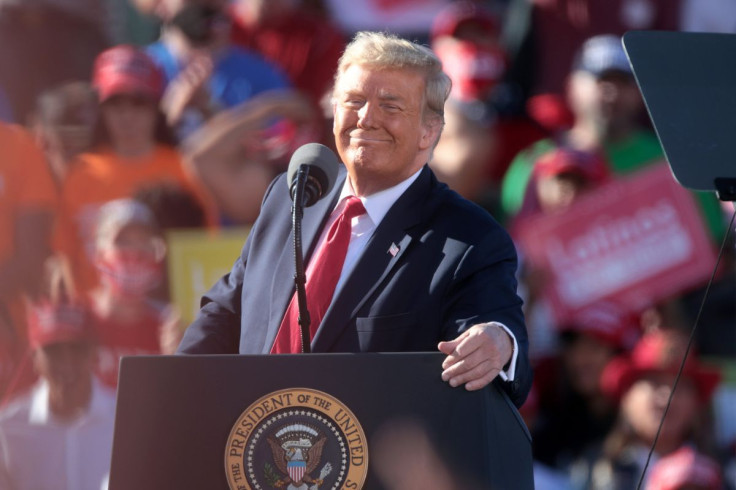
Federal records reveal thousands of protected US wild mustangs sold cheaply by the government are vanishing into foreign slaughter pipelines via commercial livestock loopholes (Credit: Gage Skidmore/Flickr CC BY-SA 4.0)

A herd of 68 federally protected US wild mustangs rounded up from western public lands was quietly sold to an Ohio livestock dealer for just $25 (£18.50) each before disappearing from public view, fuelling fears among animal welfare advocates that they may have entered the foreign horse-slaughter pipeline, according to government records and a recent investigation.

The transaction followed years of federal confinement in an Idaho holding facility, where handlers had been searching for what the Bureau of Land Management called 'loving homes.'
Instead, the band of horses — animals that had never been saddled before being rounded up using helicopters — was loaded onto metal trailers and driven 1,800 miles to a private facility in rural Ohio.

Loophole Strips Protections From US Wild Mustangs

Within 24 hours of their arrival in March, two unmarked double-decker cattle trailers pulled into the property around midnight, loaded the mustangs and disappeared. The buyer, an Ohio livestock trader named Brandon Jones, declined to tell investigators where the horses were taken.

Animal protection organisations suspect the shipment may have entered the slaughter trade, although there is no direct evidence establishing the fate of the 68 horses and Jones has denied sending horses to slaughter.

When confronted with private surveillance footage showing double-decker trailers leaving his pens in the dead of night, Jones questioned whether the footage showed his horses leaving and suggested the vehicles might have been carrying cattle.

However, federal records examined by investigators indicate the Bureau of Land Management has been selling thousands of captured wild horses under rules that transfer ownership and remove protections attached to animals awaiting adoption

Trump Administration Sees Surge in US Wild Mustang Sales

The BLM is prohibited from knowingly selling wild horses for slaughter and requires buyers to certify that they will not knowingly transfer the animals for slaughter or processing. However, critics say subsequent private resales make the horses difficult to track.

Sales of gathered horses more than doubled in 2025 to reach about 3,700 animals, according to BLM records reviewed by investigators. Public records show Jones alone received approximately 500 wild horses directly from federal custody after becoming one of the programme's largest buyers.

The economic disparity driving these bulk sales is staggering. The federal government can spend more than $3,000 (£2,220) to capture a single mustang and prepare it for adoption or sale, yet horses involved in the transactions examined by investigators were sold for as little as $25 (£18.50) apiece.

At slaughterhouse receiving docks, a healthy horse can fetch up to $750 (£555), creating a potential profit incentive for livestock traders.

Holding System Fails Protected US Wild Mustangs

Animal welfare groups argue that disposing of horses at nominal prices can undermine the government's stated responsibility to protect them if buyers are not closely monitored.

Clare Staples, who operates Skydog Ranch and Sanctuary in Oregon, has accused the BLM of allowing a system in which wild horses can pass rapidly from government custody into commercial trading networks. Skydog says its review of federal records documented hundreds of horses transferred to Jones.

When approached about the transactions, the BLM declined interviews for the Times investigation. The agency has separately maintained that it does not knowingly sell or send wild horses and burros to slaughter and requires purchasers to certify that they will provide humane care.

Approximately 73,000 wild horses and burros are reported to remain on western public lands, while tens of thousands more are maintained in off-range holding facilities. BLM data from 2024 showed about 68,000 animals in corrals and pastures at that point, although the total fluctuates.

The holding system consumes a large share of the wild horse programme's budget, creating continuing pressure to reduce long-term confinement costs.

BLM removed 7,853 horses and burros from the range in fiscal 2025 and placed 4,330 through adoption, illustrating the continuing gap between removals and permanent private placements.

Paperwork Changes US Wild Mustangs' Status

Unable to stem the inflow of newly captured herds into federal corrals, the BLM also uses a sale-authority programme for animals that have repeatedly failed to attract adopters.

Under federal procedures, the bureau must demonstrate a horse cannot be placed through standard adoption channels. Eligible animals can be offered unsuccessfully for adoption several times before becoming available for sale.

Once eligible for sale, the mustang moves from adoption into a different ownership system. Adopted horses remain under federal title for at least a year before ownership can transfer, while horses sold under sale authority pass into private ownership immediately.

A purchaser must agree not to knowingly sell or transfer the animal for processing into commercial products. The investigation, however, identified weaknesses in what happens after subsequent private sales, making it difficult for the government to trace a horse once it has changed hands.

Tracing Formerly Protected US Wild Mustangs Towards Slaughter

Jones emerged as the BLM's largest private buyer during the period examined, despite having no established background in mustang rescue. Federal records show that while some buyers approved for large transfers have historically included established sanctuaries, Jones came from the commercial livestock business.

His bulk-purchasing application sat dormant within the agency for about a year until March 2025, when a federal court order effectively halted an adoption incentive programme that paid private individuals $1,000 (£743) per animal. Around that time, federal administrators approved Jones as an authorised bulk buyer.

In interviews, Jones insisted he sells horses in small quantities of two or three at a time to reputable regional buyers. He said he deals with local farmers seeking horses rather than commercial livestock middlemen and argued that quickly moving animals into private ownership saves taxpayers the cost of keeping them in federal facilities.

Border Records Raise Questions Over Slaughter Pipeline

US horse slaughter plants have effectively remained closed since 2007, largely because Congress has repeatedly withheld funding for federal inspection of horse-meat facilities. American horses can nevertheless be exported alive for slaughter abroad.

Jones operates his holding facility within driving distance of a major Canadian horse-export crossing.

Last summer, several weeks after Jones received 97 wild mares, Canadian border records showed Ohio livestock exporter Fred Bauer transporting two truckloads of horses north. Inspection photographs appeared to show some animals bearing the BLM's distinctive freeze brands.

Jones denied sending his horses to Canada through Bauer, saying: 'I'd never deal with Freddy Bauer. Me and Freddy Bauer don't get along.'

Bauer declined to say whether he had acquired mustangs from Jones. However, he told investigators that authorities should be able to track the animals through government records.

'The government put Brandon Jones in charge of this whole wild horse situation,' Bauer said. 'There's all kinds of records. So they ought to be able to find out what he's doing if they want to.'

The available records do not prove that every horse sold to Jones entered the slaughter pipeline. They do, however, show that some federally branded mustangs later appeared in channels associated with commercial slaughter exports, raising questions about how effectively the BLM monitors animals after sale.

For the 68 horses delivered to Jones in March, their ultimate destination remains unknown. That uncertainty sits at the centre of the controversy: once wild mustangs leave federal custody through sale authority, tracing where they go can become substantially more difficult.

Sign up to read this article
Read news from 100's of titles, curated specifically for you.
Already a member? Sign in here
Related Stories
Top stories on inkl right now
One subscription that gives you access to news from hundreds of sites
Already a member? Sign in here
Our Picks
Fourteen days free
Download the app
One app. One membership.
100+ trusted global sources.