Get all your news in one place.
100's of premium titles.
One app.
Start reading
International Business Times
Matias Civita

Treasury Secretary Bessent Says U.S. Will 'Retake Control' of Strait of Hormuz

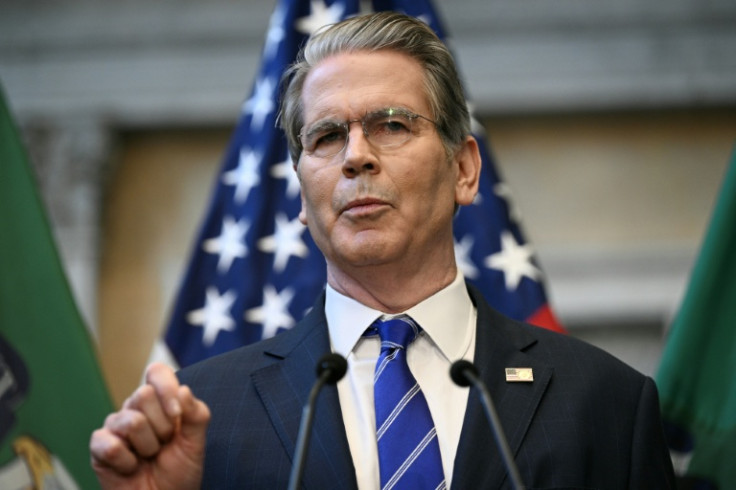
In an interview on Monday, Treasury Secretary Scott Bessent said that the United States will "retake control" of the Strait of Hormuz over time, signaling that Washington is considering direct naval escorts, or a broader multinational mission, to restore freedom of navigation through one of the world's most critical energy chokepoints.

Speaking on "Fox & Friends," Bessent said, "Over time, the U.S. is going to retake control of the straits, and there will be freedom of navigation, whether it is through U.S. escorts or a multinational escort." His comments came as the administration tried to reassure markets that oil supplies remain available, even as shipping traffic through the Strait of Hormuz has been badly disrupted by the escalating conflict involving Iran.

The Strait of Hormuz is one of the most strategically sensitive waterways in the world because a massive share of globally traded oil and gas moves through it. Roughly 20 percent of the world's oil and gas supplies pass through the narrow corridor, making any threat to the route an immediate economic and geopolitical flashpoint. In recent days, the near closure of the strait helped send energy prices sharply higher, with Brent crude briefly nearing $117 a barrel before retreating as G7 officials promised measures aimed at stabilizing markets.

Bessent said the oil market was still "well supplied" and noted that maritime activity through the strait had begun to pick up again. The Wall Street Journal separately reported that his reference to "retaking control" could involve either American naval escorts or a multinational security arrangement, an option that would spread the military and political burden among allies and partners.

The remarks also align with comments from Secretary of State Marco Rubio, who has said the Strait of Hormuz will reopen "one way or another." Rubio has framed the issue not only as a U.S. national security matter but as a global economic necessity, given that many countries are more dependent on the strait's flows than the United States itself. That framing could help the White House build support for a coalition escort effort rather than a purely American operation.

Even so, any move to impose escorted transit through the strait would carry major risks. Reuters reported that hundreds of ships and around 20,000 seafarers had been stranded as shipping companies weighed whether it was safe to reenter the area. On Monday, two Chinese container ships successfully passed through the strait on a second attempt, a sign that some commercial traffic may be resuming, but only under extraordinary caution. Reuters said some vessels have reduced their exposure by sailing at night or disabling ship trackers.

The broader market impact remains severe. Reuters reported that the closure of the strait has left roughly 12 million barrels per day of global supply compromised in what analysts described as a near worst-case scenario for oil and liquefied natural gas markets. Asia has been especially exposed because it receives the overwhelming majority of exports that normally pass through the route.

Sign up to read this article
Read news from 100's of titles, curated specifically for you.
Already a member? Sign in here
Related Stories
Top stories on inkl right now
Our Picks
Fourteen days free
Download the app
One app. One membership.
100+ trusted global sources.