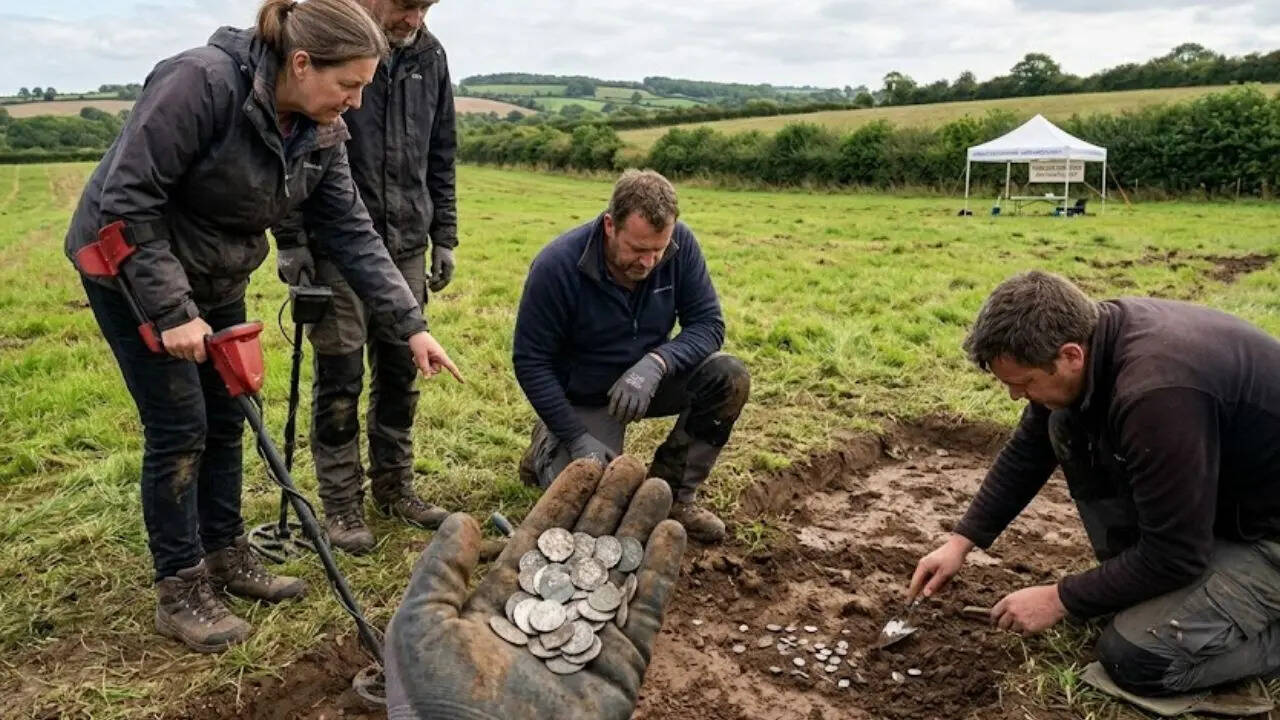
In the parish of Bickmarsh, Worcestershire, a group of metal-detecting enthusiasts found a large cache of 63 early medieval Anglo-Saxon coins. An initial report was submitted by Go Detecting (Midlands) Limited, and subsequent to that, Worcestershire Archaeology completed an extensive survey and excavation of the site. Most of the coins were minted during the reign of King Burgred of Mercia (AD 852-874) and represent a very interesting timespan in England's history, as noted in a study published by Worcestershire County Council.
Historians believe these coins were intentionally buried sometime between AD 871 and 874 to protect the treasure from invading Viking armies. The discovery of this hoard is unprecedented, as it provides archaeological evidence for the circulation of money within a defined area of England during the Anglo-Saxon period. The discovery of this currency hoard also highlights the importance of following standards and reporting regulations for archaeologists to protect and preserve Britain's cultural heritage. These silver coins offer a tangible link to the Mercian economy's collapse under the Great Heathen Army, underscoring the desperate measures taken by locals to safeguard their wealth during war.