
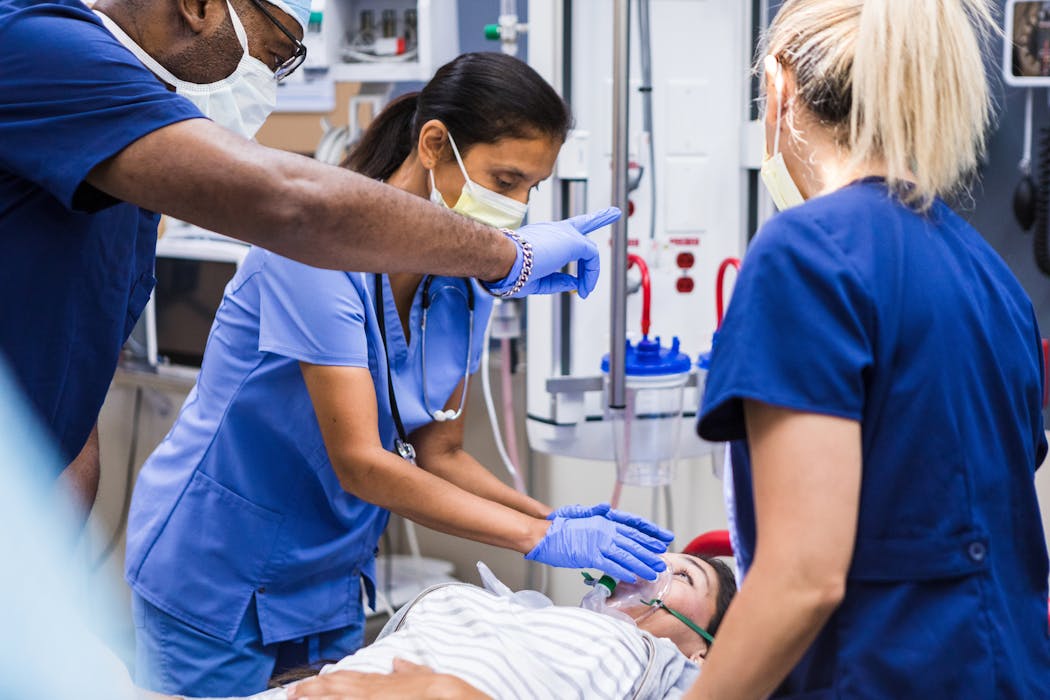
When a trauma patient enters the emergency department, their potential for survival often depends on what happens within the first minutes after their arrival. After studying trauma resuscitation teams at UPMC Presbyterian in Pittsburgh, the largest major trauma center in Pennsylvania, it’s clear that trauma teams aren’t organized ahead of time – they’re formed on the fly. Some team members may have worked together many times before, while others may be meeting for the first time.
Those minutes can be chaotic, fast-paced and high-stakes. The patient is usually rolled in on a stretcher, bleeding, barely breathing and surrounded by alarms and shouting. At the bedside are emergency physicians, anesthesiologists, surgeons, nurses and respiratory therapists – a large team of dedicated health care providers. Everyone has a job. Everyone is moving fast. When it works well, it looks almost effortless. When it doesn’t, small delays can have big consequences.














