Get all your news in one place.
100’s of premium titles.
One app.
Start reading
The Guardian - UK
The Guardian - UK
Comment
Lynne Segal

Trapped in a tube station on my way to march for a ceasefire in Gaza, I found hope in solidarity

A marcher holds an olive branch on Armistice Day in London.
A marcher holds an olive branch on Armistice Day in London. Photograph: Henry Nicholls/AFP/Getty Images

Recalling reasons for hope at the close of a year in which we have witnessed such devastation is challenging. Yet, like others before me, I know it’s surely necessary to look for ways of making hope possible and resisting despair. But it’s complicated, teasing apart moments of hope from feelings of desolation in violent times.

We all recall the barbaric violence of 7 October, when Hamas kidnapped hundreds of civilians and brutally massacred 1,200 people in southern Israel. This resulted in Israel’s immediate declaration of war on Hamas and unparalleled bombing ever since (with a few days’ pause). So far, there are up to 21,000 Palestinians dead, hundreds of thousands injured and 2 million displaced and destitute, more than half of them children.
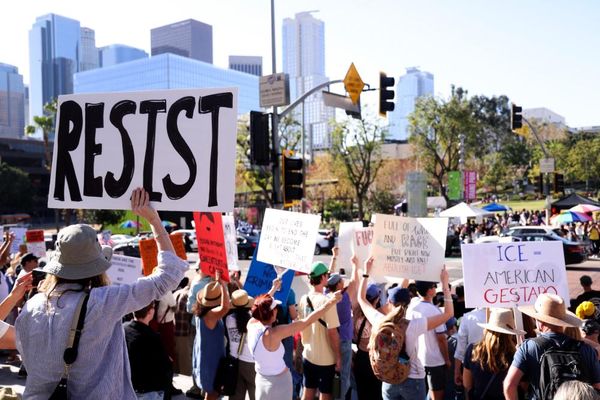
I hardly expected to find reasons for hope when I set out on 11 November, as I had most Saturdays over the previous month, to join others calling for a ceasefire and the return of hostages. However, this Armistice Day, as thousands headed at the same time for Hyde Park corner in London, to join the start of the march, many of us became trapped underground at Marble Arch station.

There we were, at a standstill, young and old together, strangers to each other, including women in headscarves, children with their Palestinian flags and Jews organising for peace, all held tight with little room. No frustration, anger or impatience arose, as distances collapsed across age, ethnicity, and religious difference. Instead, there was a sense that nothing bad could happen since we were all together. Being stuck peacefully side by side in the underground was the most hopeful evidence that our goal was possible. Since I am now old and often breathless, I would have found it hard to remain in that situation without the kindness and concern evident on every face. Reluctant as I am to leave home nowadays, I would never have got there at all except for friends happy to accompany me.

Wearing my Jewish Voice for Labour badge, I was in search of the Jewish group, which had grown larger each week. Apart from our desire to end the stupefying violence engulfing Gaza, now reaching genocidal proportions, our goal was to be seen and counted alongside our Muslim and other marching partners. The ensuing unexpected crush was indeed a hopeful moment – heading, as we were, not to a “hate march” but a care march. We were intent not just to insist on peace on Armistice Day, but to demand an end to one of the longest, most coercive injustices in history. Solidarity was our goal, despite false accusations of violent intent from our then home secretary, Suella Braverman, thankfully now gone. Unsurprisingly, the only trouble that day came from our opponents, hoping to stop our peaceful protests through violence.

My Armistice Day experience was not only a powerful source of hope in tragic times, helping to keep despair at bay, but it reminded me of similar past occurrences in the seemingly hopeless struggle for peace and justice between Israel and the Palestinians.

Visiting Israel for peace conferences, I had, like many others I know, always felt a fleeting hope in the presence of the late Dr Eyad el-Sarraj, the charismatic Palestinian psychiatrist who founded the Gaza Community Mental Health Programme in 1990. It was amazing how Eyad could always grasp at the tiniest thread of hope, insisting the Israelis and Palestinians needed each other: “For only the Palestinians can release Israel from its moral guilt, from all that has gone wrong since those first Zionist dreams to the nightmare of living in a country permanently at war with its neighbours; while only the Israelis can negotiate a just peace with Palestine, allowing them control over their own affairs and thereby laying the basis for security, freedom and dignity for both sides.” He struggled at home trying to prevent imprisoned Gazans from resorting to violence, then travelled the world demanding an end to the Israel’s siege and occupation as often as he could.

I also sometimes felt a similar hope listening to the eloquent words of Raja Shehadeh from the West Bank, who’s always known that peace is possible, despite the unending military manoeuvres of a hardline Israeli state determined to prevent it. The catastrophic destruction in Gaza and heightened violence in the West Bank has all but extinguished any voices of hope, with so many Palestinians struggling against impossible odds just to survive. So, at this moment, the only hope I can find is in experiencing solidarity on the streets with hundreds of thousands of others calling for an end to violence.

  • Lynne Segal is anniversary professor emerita of psychosocial studies at Birkbeck, University of London

  • Do you have an opinion on the issues raised in this article? If you would like to submit a response of up to 300 words by email to be considered for publication in our letters section, please click here.

Sign up to read this article
Read news from 100’s of titles, curated specifically for you.
Already a member? Sign in here
Related Stories
Top stories on inkl right now
One subscription that gives you access to news from hundreds of sites
Already a member? Sign in here
Our Picks
Fourteen days free
Download the app
One app. One membership.
100+ trusted global sources.