
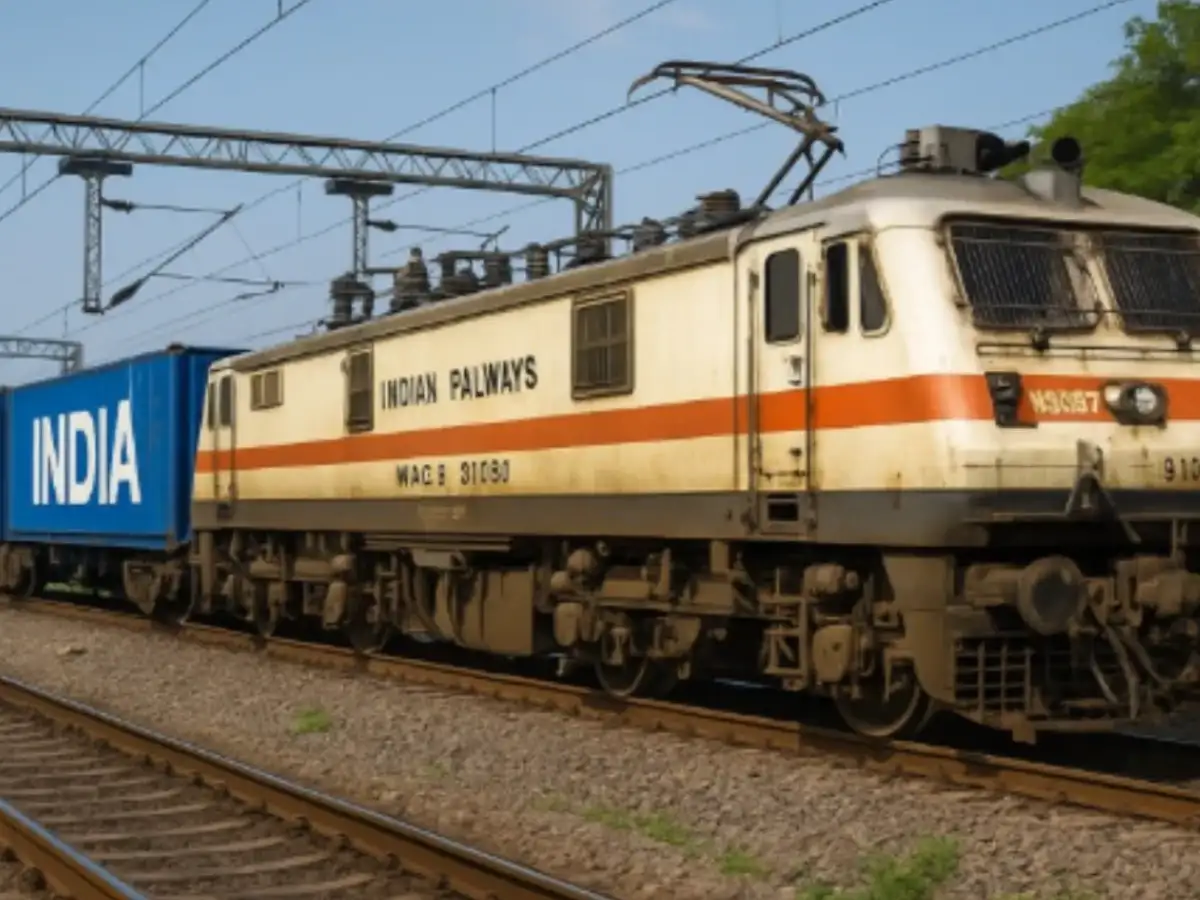
India’s railway network carries millions of passengers and a vast volume of goods every day. But the scale of demand has also placed enormous pressure on some of the country’s busiest rail routes, resulting in congestion, delays and lower average speeds.
The completion of the Dedicated Freight Corridor (DFC) network could change that equation.

With the commissioning of the remaining sections of the Western Dedicated Freight Corridor, India now has a fully operational 2,843-km dedicated freight network. The project is expected to speed up the movement of goods, improve freight reliability and release capacity on conventional railway routes used by both passenger and freight trains.
India’s Dedicated Freight Corridor network: What is now operational?
The DFC network comprises two major corridors. The 1,506-km Western Dedicated Freight Corridor runs between Dadri in Uttar Pradesh and Jawaharlal Nehru Port Trust (JNPT) in Maharashtra. The 1,337-km Eastern Dedicated Freight Corridor connects New Sahnewal in Punjab with New Sonnagar in Bihar.
The final three sections of the Western DFC, covering around 326 km, were inaugurated by Prime Minister Narendra Modi this week. The sections were developed at a cost of more than Rs 20,700 crore.
With this, the entire 2,843-km DFC network has become operational.







