Get all your news in one place.
100's of premium titles.
One app.
Start reading
The Guardian - AU
The Guardian - AU
National
Luca Ittimani

Traffic falls on major Sydney and Melbourne roads as fuel crisis sees Australians cut back on driving

General view of traffic on Great Western Highway in Auburn in Sydney on 2 April 2026, Australia
Many Australians are cutting back on driving amid the fuel crisis sparked by the US-Israel war on Iran, with road traffic falling significantly in Sydney (pictured) and Melbourne. Photograph: George Chan/Getty Images

Road traffic is falling on Australia’s east coast as fuel prices bite, with most key Sydney highways recording 20% fewer weekend trips.

The number of trips recorded on Sydney’s key thoroughfares has fallen by thousands of trips a day, according to New South Wales government data shared exclusively with Guardian Australia.
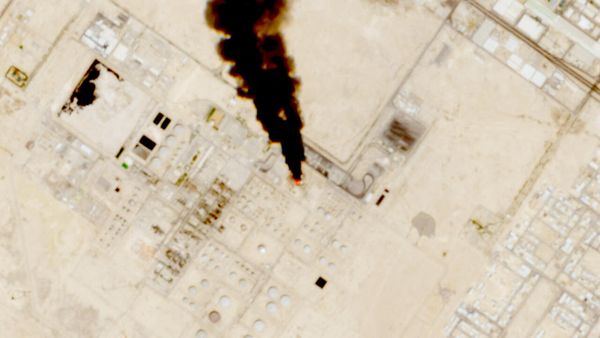
Petrol prices are 50 cents a litre higher and still rising while diesel is up 140 cents a litre since the US went to war on Iran, forcing many Australians to cut back on driving and instead take the train, cycle or work from home.

Between the week ending 1 March – when prices began rising – to the week ending 5 April, Sydney traffic fell 7% on the cross-city tunnel and more than 6% on the M2, eastern distributor and Sydney Harbour Bridge.

The harbour bridge saw average weekday trips fall from 144,000 in the week ending 1 March to less than 135,000 by 22 March. By 5 April, it sat at about 139,000 a weekday, while weekend trips fell to just 89,000 a day.

All of the 23 main roads counted by Transport NSW saw one in 10 weekend trips disappear over the period, with 14 of them losing at least two in 10.

While traffic softened in the week of 5 April with both the last week of school term and the Easter long weekend, 17 of 23 roads recorded even lower traffic than the comparable weeks in 2025.

Traffic to Sydney airport fell 9% on Airport Drive and 7% on Qantas Drive as flights were cancelled and air fares rose over the month.

Sign up for the Breaking News Australia email

Melbourne’s Tullamarine Freeway, linking the city’s CBD to its airport, saw traffic fall by 20% from the week ending 1 March to 22 March, according to Guardian Australia analysis of Victorian government data. Its traffic fell almost 50% in the week ending 6 April.

The M1 and M80 saw traffic fall 15% from the week ending 1 March to the week ending 22 March, and down 30% to the week ending 6 April, representing an estimated 30,000 fewer trips a day on both highways.

The Princes, Burwood and Nepean highways recorded slight declines, in partial data three weeks into March, while the newly opened West Gate Tunnel saw small declines over the month.

Melbourne’s CityLink toll road saw traffic decline by 7,000 trips a day on average in the March quarter, compared to a year earlier, toll road operator Transurban reported on Thursday.

Owen Birrell, an RBC analyst, found that underlying traffic fell by 3.4% in March alone, suggesting March 2026 saw about 20,000 fewer trips a day than March 2025.

Six of Transurban’s Sydney toll roads lost a combined 6,000 trips a day in the March quarter compared to the same period in 2025, though the WestConnex saw trip numbers rise 10,000 a day and the M5 was up 2,000 a day.

WestConnex’s growth saw Transurban’s average Sydney traffic rise 0.6% year on year, well below its 1.8% rate in December and the 2.4% recorded in March 2025. Average weekend and public holiday traffic stood still, up just 0.1%.

Transurban’s Brisbane highways saw traffic grow just 0.7% year on year, excluding the impact of Tropical Cyclone Alfred in 2025, down from 2.7% in December. Birrell’s analysis implied that traffic actually fell 0.3% in the month of March, excluding the cyclone’s impact.

“We are concerned by the soft underlying Australian network results and weakness accelerating into March … which bodes poorly for April and possibly May if the conflict in the Middle East is drawn out,” Birrell said.

Public transport patronage boomed in south-east Queensland over the month of March, according to the state department of transport and main roads.

Daily patronage had risen 7% by the week ending 29 March since 1 March, with the biggest jump occurring on the Saturday and Sunday, respectively 16% and nearly 20% higher than the comparable days.

Rail trips recorded the biggest gains, up by 12.6% in the week, with light rail up 9.9%, ferry up 6.6% and bus up 5.3%.

Additional reporting by Josh Nicholas

Sign up to read this article
Read news from 100's of titles, curated specifically for you.
Already a member? Sign in here
Related Stories
Top stories on inkl right now
One subscription that gives you access to news from hundreds of sites
Already a member? Sign in here
Our Picks
Fourteen days free
Download the app
One app. One membership.
100+ trusted global sources.