Get all your news in one place.
100's of premium titles.
One app.
Start reading
Fortune
Fortune
Eleanor Pringle

Trade war is back on the agenda as White House floats new 10% tariff plan—with footnotes to avoid an affordability crisis or chip shortage

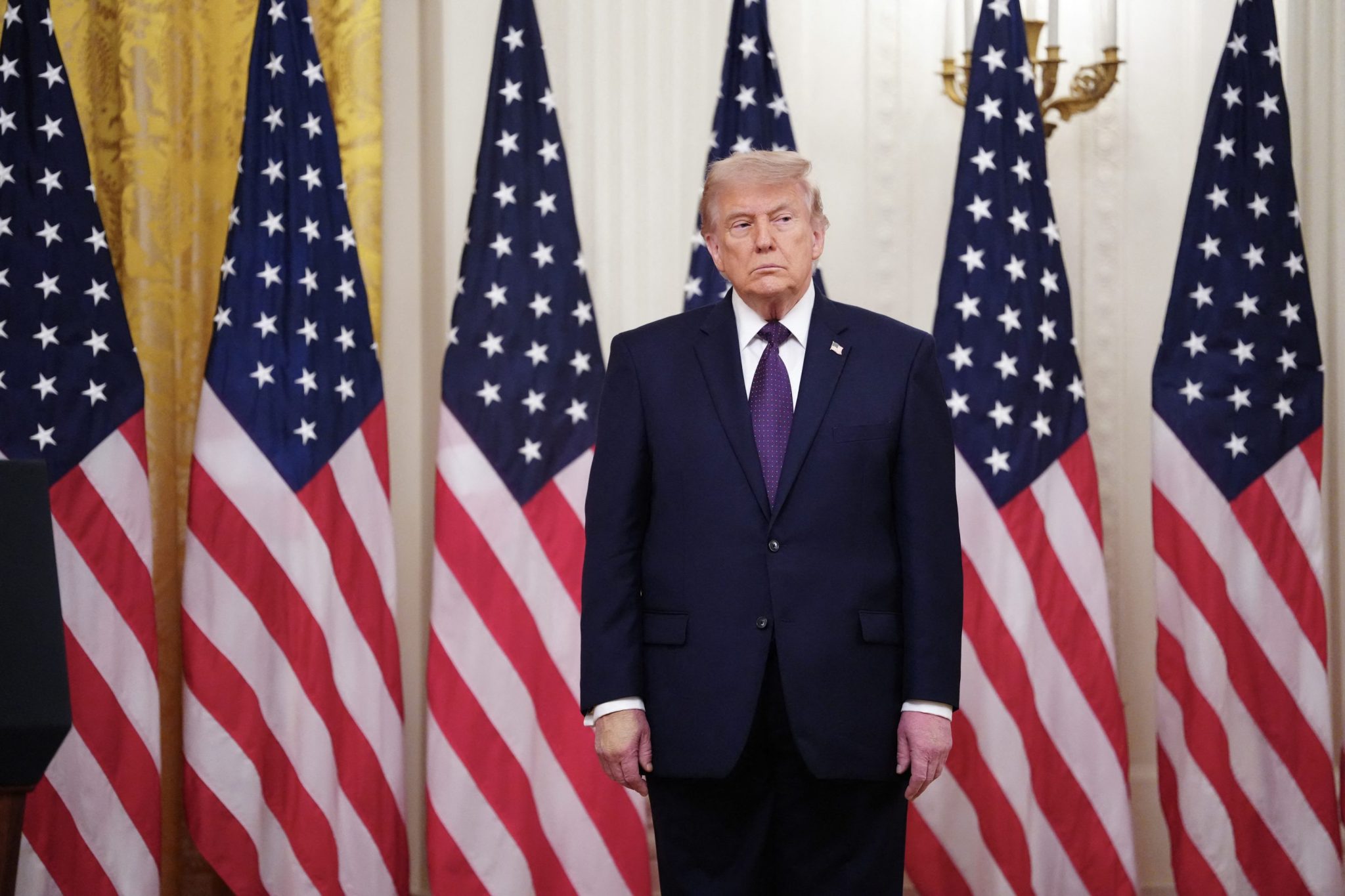
US President Donald Trump looks on during a swearing in ceremony for new Chairman of the Federal Reserve Kevin Warsh in the East Room of the White House in Washington, DC on May 22, 2026. (Credit: Aaron Schwartz / AFP - Getty Images)

President Trump’s team is once again ruffling international feathers with a new plan for import tariffs imposed on 60 trade allies, facing levies of either 10% or 12.5%.

In an update released overnight, the United States Trade Representative claimed a number of trade partners had failed to effectively handle goods produced with forced labor, which were therefore subject to action under Section 301(b) of the Trade Act.

“The failure of our most important trading partners to address the importation of goods made with forced labor is unacceptable. This creates a dynamic where American workers are forced to compete globally on an unlevel playing field,” said Ambassador Jamieson Greer in a statement released late last night. “We will no longer tolerate this disparity.”

The report suggests that economies that have undertaken commitments or actioned policy against forced labor—Canada, Mexico, the EU and the UK among them—should be subject to a 10% tariff. All other economies, such as China, Brazil, and India face a 12.5% hike.
Despite a raft of deals being signed since President Trump’s “Liberation Day” tariffs in April 2025, the goalposts seem to be changing once again for foreign allies attempting to do business with the U.S. Already, Trump’s protectionist scheme has resulted in a tit-for-tat trade war with China, as well as barbed exchanges with the likes of European Commission President, Ursula von der Leyen.

However, the Trump administration has a significant financial hole to fill: In February this year, the U.S. Supreme Court ruled against a tranche of tariffs the White House had rolled out in 2025 under the International Emergency Economic Powers Act (IEEPA). The government was ordered to pay them back, some $129 billion, according to Congressional documents.

Learning the lesson

The new bevy of tariffs comes with an interesting footnote: An annex of exceptions from the additional duties. Among this list are many pantry cupboard staples: Tomatoes, orange juice, coffee, and beef.

“The proposed tariff exemptions for key foodstuffs seem to indicate that someone in the administration is aware of the way high-frequency purchases are shaping inflation perceptions, and thus contributing to the affordability crisis,” noted UBS’s Paul Donovan this morning.

Affordability was one of the key messages of Trump’s presidential run, and has continued to be a political lightning rod in the run-up to midterms this year. According to an April study from Gallup, 31% of Americans cited a high cost of living and inflation as their key financial concern (the most popular answer), with 55% of respondents saying their finances were getting worse.

“A critical question is what this means for the U.S. consumer,” Donovan added, “Certainly, there is little evidence that past price increases were rolled back when the last wave of tariffs were declared to be illegal. Once a tariff has been passed through to the consumer, it tends to stick … and becomes a boost to profits if that tariff was reversed.”

The annex also included some exemptions which will be useful for businesses—particularly those building out AI infrastructure. Featured on the list are various metals and minerals such as copper, nickel, and titanium, which are all used to build semiconductors.

Sign up to read this article
Read news from 100's of titles, curated specifically for you.
Already a member? Sign in here
Related Stories
Top stories on inkl right now
One subscription that gives you access to news from hundreds of sites
Already a member? Sign in here
Our Picks
Fourteen days free
Download the app
One app. One membership.
100+ trusted global sources.