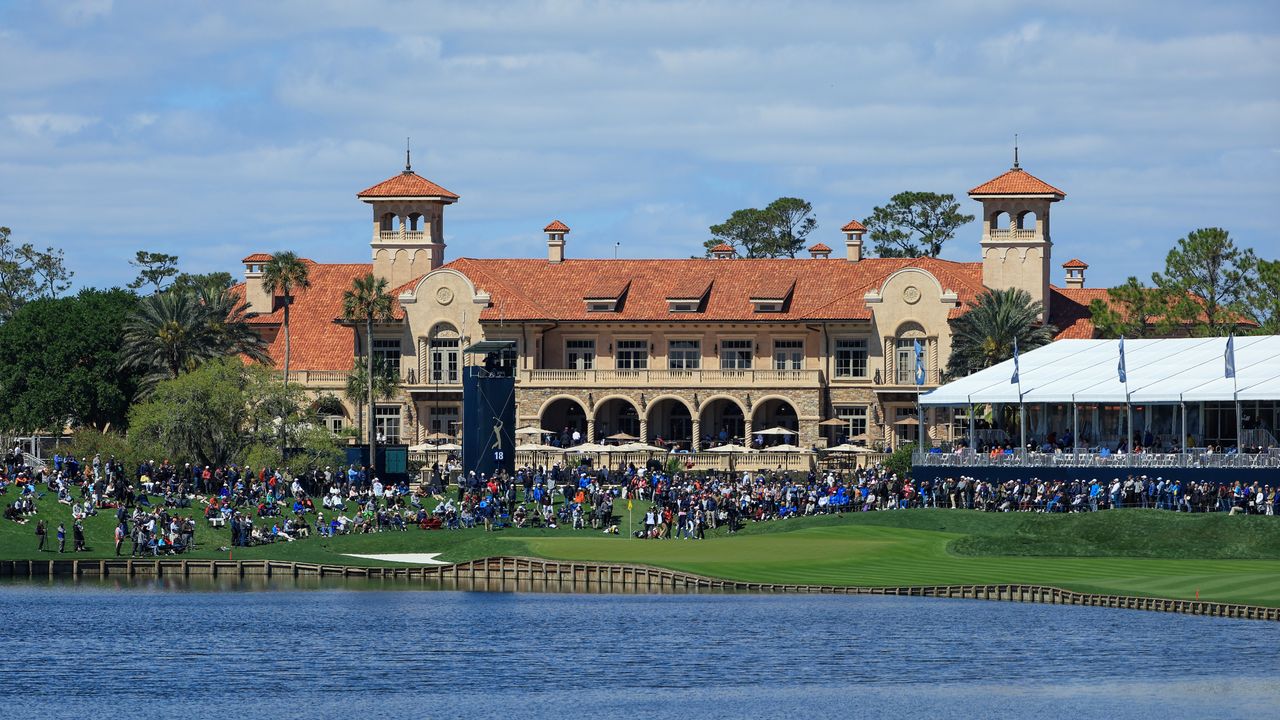
There’s little wonder many regard The Players Championship as a Major in all but name. As well as factors including huge prize money, a world-class field and elevated world-ranking points, the PGA Tour’s flagship event also has a permanent home fit for one of the sternest tests in golf, while one of the holes is among the most iconic on Earth.
TPC Sawgrass opened in 1980, and has hosted The Players Championship every year since 1982, but what are some of the little-known facts about the venue that help make it so special? Let’s find out.
The Bargain Land Purchase

When former pro Deane Beman was the PGA Tour commissioner in the 1970s, he had the idea of opening a course that would be player-owned and capable of hosting the circuit’s flagship event. He originally wanted to buy Sawgrass Country Club in Ponte Vedra Beach, Florida, where the event was held between 1977 and 1981, but his efforts came to nothing, as the owners didn’t want to sell. Undeterred, and spurred on by a $100 bet with one of Sawgrass Country Club’s owners that he’d never realize his dream, Beman turned his attention to a 415-acre piece of swampland to the further north west of Florida. In January 1979, he struck a deal with the landowners to purchase it for just $1, writing a check for the sum, which, to this day, is displayed in the TPC Sawgrass clubhouse. He collected the money for his bet, as well, and the bill for the $100 wager also has pride of place there.Nowadays, it’s not just the famous Pete Dye-designed Stadium Course at the site, but the Dye’s Valley Course, too.
A Stadium Golf Pioneer

Beman wasn’t just determined to open a permanent home for The Players Championship, he also wanted to provide stadium golf for fans. But what was it?Well, the idea stemmed from Beman's own experience. With a height of just 5 feet 7 inches, he had been frustrated watching the 1974 Phoenix Open after finding himself constantly needing to peer around the back of fans' heads to catch the action. As a result, he came up with the idea of TPC Sawgrass having large mounds for fans to sit and offer unobstructed views. Hence, the concept of stadium golf was born.The mounds were built from the soil that had been excavated to build TPC Sawgrass’s water hazards.
The Home Of The PGA Tour

The PGA Tour’s headquarters moved to Ponte Vedra Beach from Washington DC in 1979, ultimately seeing the organisation’s 800 employees scattered across 17 buildings in the area.That all changed in 2021 with the opening of a slick new building, known as its Global Home, at TPC Sawgrass.The 187,000-square-foot building is located just to the south of the Stadium Course, while in 2025, another complex opened alongside it. That houses the PGA Tour’s state-of-the-art production studios.
The Accidental Island Green

The jewel in the crown of TPC Sawgrass’s Stadium Course is the iconic 17th, with its perilous island green. However, while it strikes fear into players to this day, it wasn’t originally intended to exist. Dye’s initial design for the 17th was meant to be a simple par-3 only partially surrounded by a lake. That had to be rethought when the sand that was dug to build the course left the area around the green surrounded by water.Dye’s wife, Alice, suggested creating an island green there, and, despite not being sold on the idea, the legendary designer took the advice on board, and the rest is history. Nowadays, the hole isn’t just one of the world’s most famous, it’s one of the most feared, with an estimated 100,000 golf balls retrieved from the water surrounding it each year.
The Green Fees

The course, which was designed to test players of every ability, is also open to the public, but it won’t be affordable for everyone. A round at the Stadium Course starts at $550 per person between June and August and upwards of $750 per person between September and May, even surpassing $900 at certain times. Those are among the most expensive PGA Tour green fees.A round at Dye’s Valley isn’t particularly cheap, either, but prices are more manageable than the Stadium Course, with green fees starting at $225 between June and August and upwards of $325 during the peak months.