
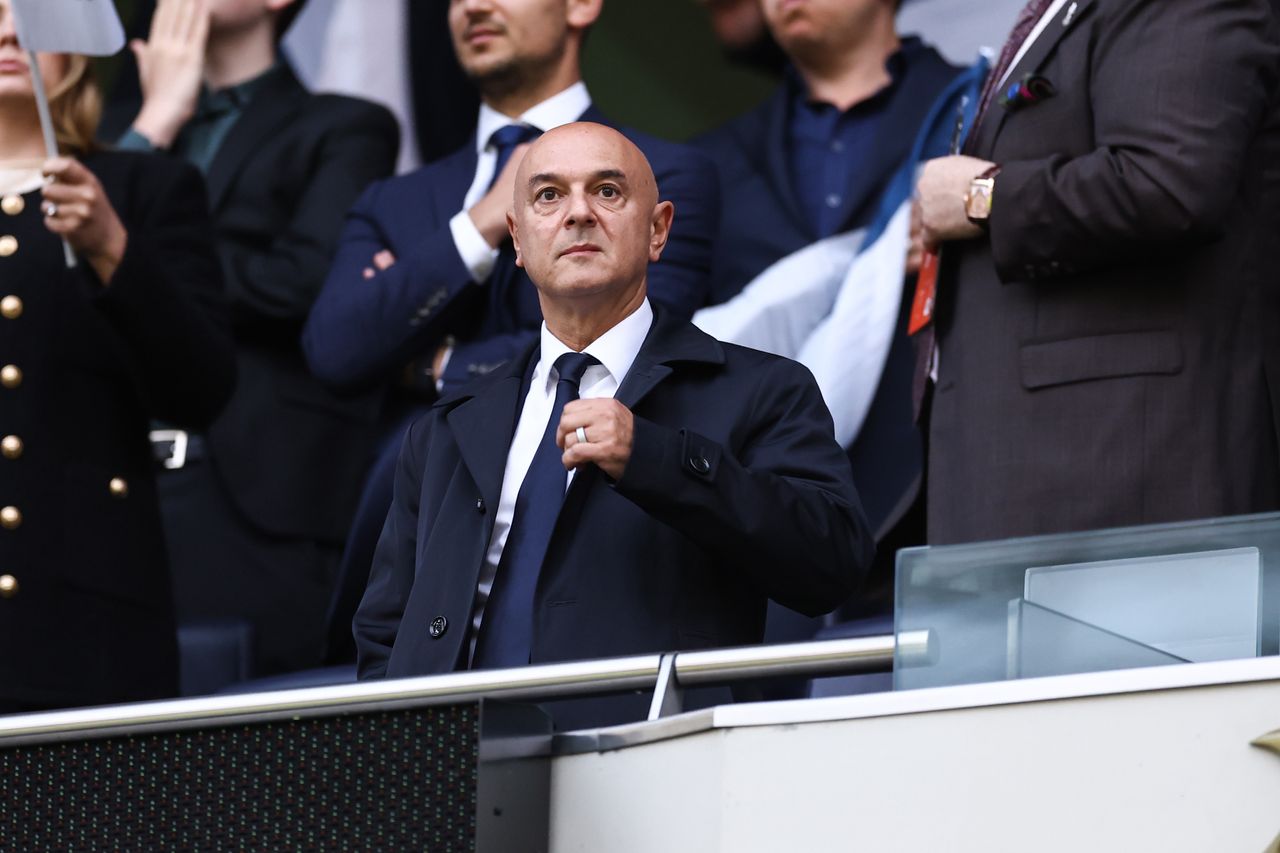
Tottenham Hotspur have been named the most profitable club of the Premier League era.
That may not come as much of a surprise to Spurs fans, given their gripes with former chairman Daniel Levy for not investing enough in the team.

But given they have built a world-class stadium, lifted the Europa League and gone to a Champions League final in that time, Levy may well feel he deserves greater praise for his financial management.
Tottenham’s close rivals record £1.2bn loss in Premier League era

The figures come from football finance expert Kieran Maguire, who posted via his X account the profit or loss of each team since the formation of the Premier League in 1992.
Tottenham sit at the top of that tree, recording a total pre-tax profit of £183.2m over the last three decades.

They are followed relatively closely by north London rivals Arsenal and northern representatives Burnley, both of which have registered just over £130m in profit.
That trio have undoubtedly been the most successful during that period based on this metric, but the picture looks altogether different for Chelsea.
Maguire reveals that the Blues have recorded a loss of £1.2bn since 1992, far and away the most of any club on the list, almost double that of the next closest team, Aston Villa, who have a still-substantial £677.9m loss to their name.
Those two, plus Everton, Manchester City, Fulham, Manchester United, Sunderland, Leicester City, Bournemouth and Crystal Palace are responsible for 90 per cent of the losses over that period.
In total, since the rejigging of the division, Premier League clubs have lost a total of £4.99bn.
In FourFourTwo’s opinion, to see Chelsea at the top of that list is not all that surprising.
While their recent years under BlueCo have been defined by relentless spending, Maguire reveals that much of that figure is from when Roman Abramovich owned the club.
Money was never an issue for the Russian billionaire, and Maguire terms it “sustainable”, so long as the owner keeps putting their money into it, as Abramovich did.
But that followed by Todd Boehly’s heavy-spending strategy was always likely to look a little scary when it comes to putting together a balance sheet.