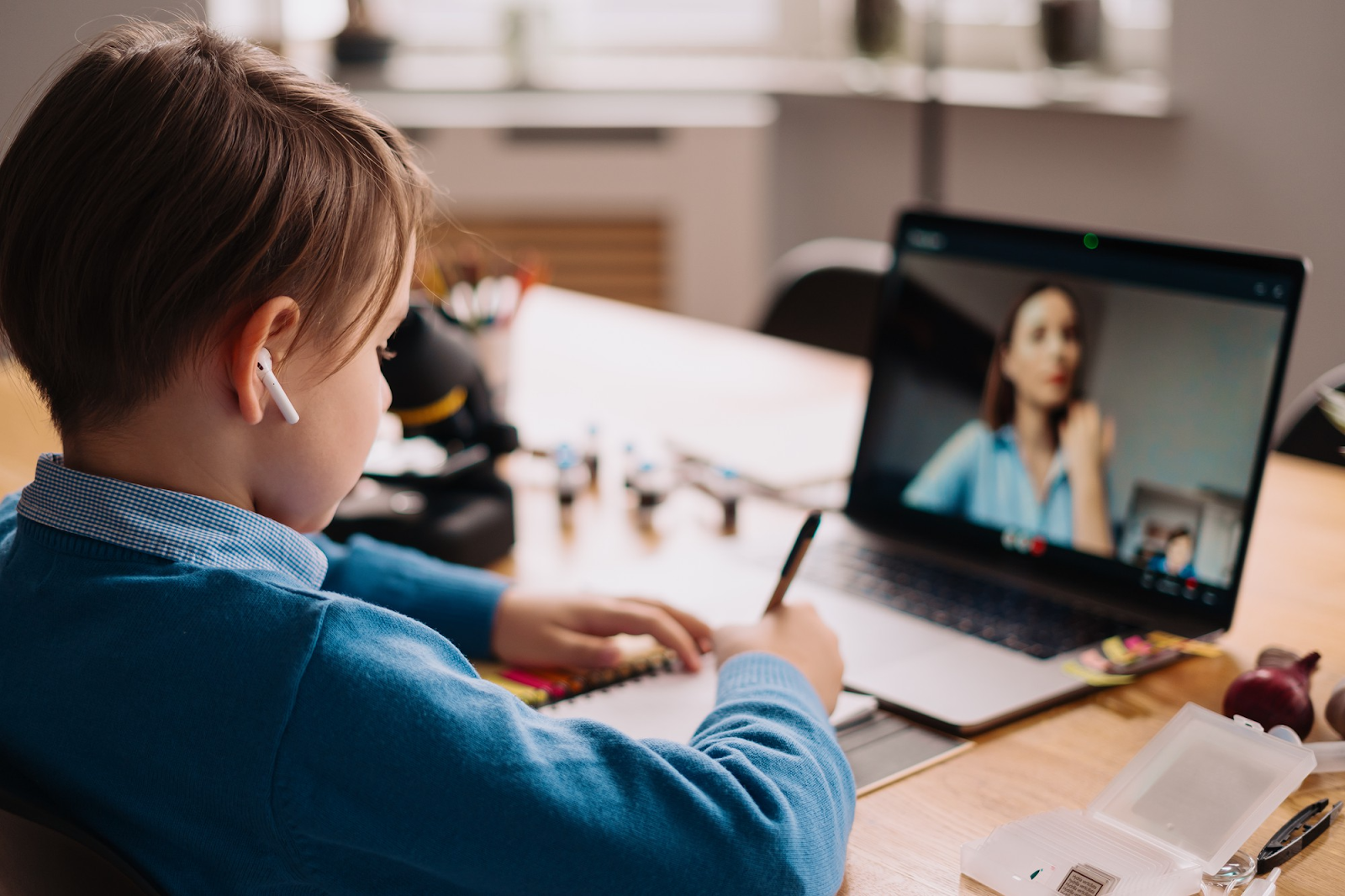
Source:Freepik
There has been a huge change in the way schools work. What used to be a brief emergency reaction is now a smart, constant part of modern schools. This change has been nothing less than a job shift for parents. The dining room table becomes a lab, the living room a gym, and you simultaneously work as IT, guide, and director.
Remote or blended learning requires more than a good Wi-Fi connection for video calls. Create an atmosphere where kids desire to study without the physical, social, and structural signs of a traditional school. If being a teacher makes you feel stressed or makes you question your skills, you're not alone. You need a mental health-academic balance strategy to move to this approach.
Here are the five best ways to help your child do well in an open learning setting.
1. Designate a School-Only Zone: The Psychology of Space
Associative learning is what makes the brain such a great machine. Our bodies are programmed to connect different surroundings with different behaviors. For example, the kitchen makes us hungry, the bedroom makes us want to sleep, and the garden makes us want to play. Cognitive conflict happens when these lines become less clear. When a child tries to answer difficult math problems while lying on their back with their pillows pushed up, their brain gets mixed messages: "Should I be in high-focus mode or should I be releasing melatonin for a nap?"
One of the main reasons why remote learners put things off and get mentally tired is that their surroundings aren't always clear. The mind stays in a state of confusion when it doesn't physically leave home life and arrive at school. To stop this, parents need to create a place that makes kids want to be productive.
Creating the Ideal Environment
- The context shift
Establish a dedicated workspace that is used only for school. It doesn't need to be a private office; even a specific corner of a room or a particular side of the dining table can work, provided it is consistent. - Visual cues
Decorate the area with educational materials, a calendar, or their own artwork. When they sit in that chair, they should feel like a student, not a kid at home. - Ergonomics and health
Ensure the chair provides back support, and the screen is at eye level to prevent Zoom fatigue and neck strain. Natural lighting is also a major factor in maintaining alertness and mood during long winter months.
2. Master the Art of the Routine: Reclaiming the School Bell
A conventional school's bell begins and concludes the day. It offers the brain a schedule for work, socializing, and eating. Without such an order, time may extend. The morning gets lost in YouTube or slow starts, which forces late-night work sessions that make you tired.
Building a Bulletproof Schedule
- The morning ritual
Maintain a strict morning routine. This means getting dressed, eating a proper breakfast, and commuting to the desk. This psychological startup sequence prepares the mind for the day ahead. - The power of supplements
Sometimes, even the most perfect home routine isn't enough to overcome a difficult subject. If your child is struggling with the nuances of the curriculum or losing the motivation to keep up with their peers, professional tutoring Vancouver services can provide that essential layer of accountability. A specialized tutor acts as a fresh voice, one that isn't a parent, providing the personalized instruction and mentorship that helps bridge the gap between getting by and truly excelling. - Strategic breaks
Use the Pomodoro technique (25 minutes of work followed by a 5-minute break). During breaks, children should leave the screen, stretch, get a snack, or play with a pet. This prevents the cognitive fuzziness that comes from staring at blue light for hours on end.
3. Prioritize Executive Function Skills: Becoming a Digital Project Manager
The brain function of a child is put under a lot of stress by remote and blended learning. The set of brain processes that help us organize our thoughts, pay attention, remember complicated directions, and do many things at once. Teachers are like external frontal brains in typical classrooms. Students are instructed to open their books, write the date, and put their pens away. In rural areas, such a framework is gone.
Many youngsters don't struggle because they're too dumb to comprehend. They struggle with digital turmoil produced by broken links, hidden PDFs, and platform-specific due dates. They need to stop being passive students and start being involved digital project managers if they want to do well.
Organization as a Subject
Digital literacy. Spend time teaching your child how to organize their computer. Create folders for different subjects and teach them a consistent file-naming convention (e.g., "History_Essay_Draft_V1").
The must-D list. Every morning, have a 5-minute stand-up meeting. What are the three most important things to finish today? Checking these off a physical list provides a dopamine hit and a sense of accomplishment.
Tab management. A browser with fifty open tabs is a recipe for a distracted mind. Teach your child to close unnecessary windows to reduce the noise in their peripheral vision.
4. Foster Social and Emotional Connections: Combatting the Isolation
People who don't like online learning say that it takes away the "hidden curriculum" of social skills, understanding, and how to solve problems with other kids in the halls and on the field. When a child feels alone, they often do worse in school because they lose interest in learning.
Building a Virtual Village
- Peer study groups
Get your kid to join a video call with a friend just to work together in silence. This is known as "body doubling." It makes the work feel less lonely by making it feel like you're in a library or school. - Self-advocacy
You should tell your kid to talk to their teachers directly. You could email the teacher to ask for more time or more information, but you could also help your child write that email. They will have better confidence and speaking skills for a long time. - Physicality
Ensure there is a mandatory outdoor hour every day. Fresh air and movement are the best antidotes to the lethargy of screen-based education.
5. Be a Facilitator, Not a Taskmaster: Encouraging Independence
You might want to hover over your child's shoulder and fix all of their writing and math mistakes as they happen. But too much parenting from afar can teach a child to be useless, so they stop trying because they know you will finally give them the answer or fix the problem.
The Support Role vs. The Teaching Role
- The "ask three before me" rule. If they need to know something, they should first look for it in three places: their notes, the teacher's directions, or by chatting with a friend. After that, they should come to you.
- Focus on the process, not just the grade. When a link fails or a notion is confusing, thank them for their forethought and perseverance. Praise for how they achieved something rather than merely receiving an A helps them build a development mindset that allows them tackle harder jobs later.
- Know your limits. If schoolwork is tense in your relationship and every night ends with a homework conflict, you may need an outside adviser. This strengthens parent-child bonds while providing educational assistance from a neutral third party.
FAQ
How do I keep my child focused during long Zoom sessions?
Take notes on paper instead of just watching to get people to be more involved. Make sure they have a water bottle close by and fidget toys like stress balls to use if they need to move around.
What should I do if my child is falling behind in a hybrid model?
Take care of it early. Talk to the teacher to figure out what the holes are. To boost your confidence, think about getting extra help like one-on-one training. It's often possible to make up for the lack of in-person teaching with a few focused lessons.
How much screen time is too much?
Screen time for school is important, but make sure you get some "green" time too. Aim to do something other than looking at a screen for 15 minutes for every hour you spend on one. To keep kids from getting digitally burned out, set strict limits on their free screen time during the school week.
How can I support my child if I’m also working from home?
You and your child should both have office hours. Show that you can't be stopped by putting a sign on the door or putting on headphones. You can work together in the same room during co-working meetings.
Is hybrid learning as effective as traditional schooling?
It is possible if the student learns to be very self-disciplined. Hybrid learning gives you options and teaches you how to use technology well. Skills that are necessary for today's jobs. The important thing is to keep things organized and get outside help when the program gets too hard.