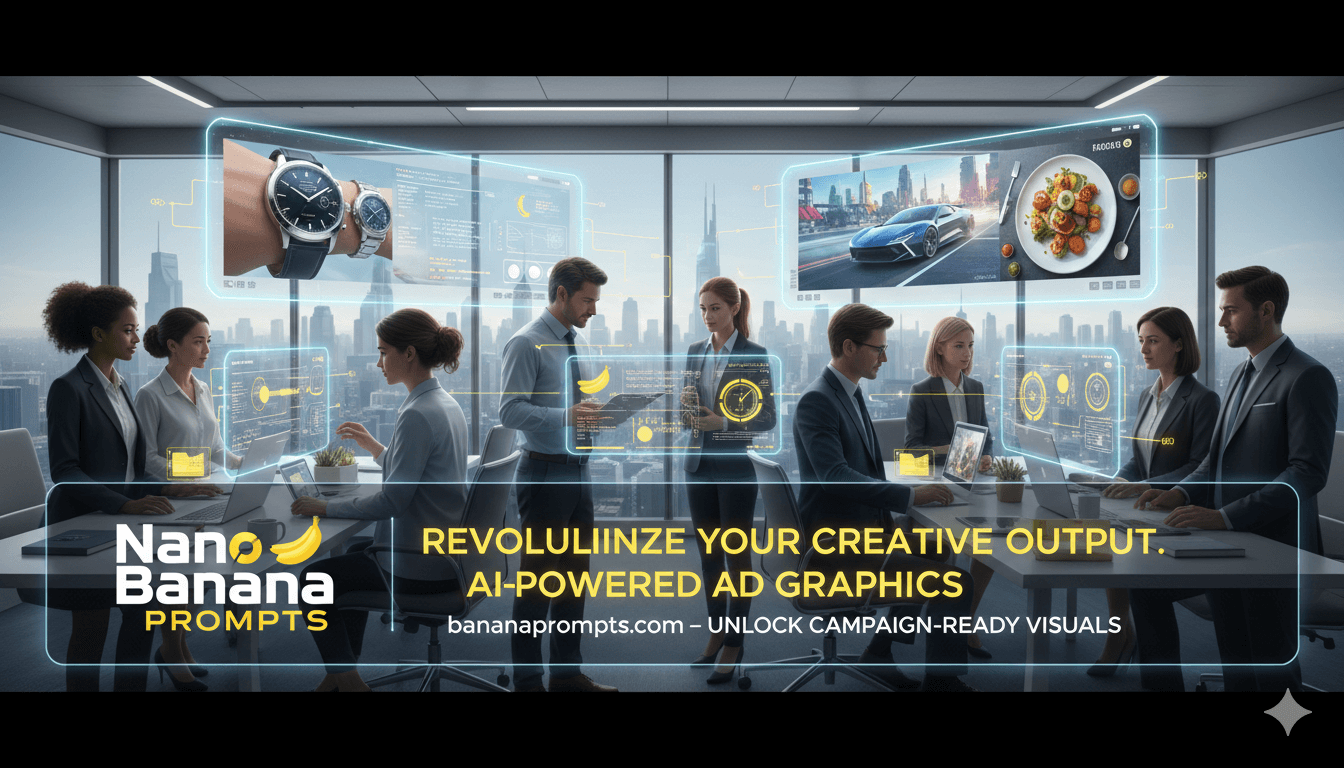
In the current marketing campaigns, there is a need for attractive images that transform spectators into buyers. With constrained advertising budgets and higher content requirements, marketing teams are maximizing AI image generation to generate quality graphics on a large scale. However, generating effective marketing visuals requires more than access to AI design tools—it demands strategic banana prompts that deliver campaign-ready results consistently.
Importance of AI in Marketing Visuals
The pressure is also growing on digital marketers to create different advertising images in various channels at the same time. A one-time campaign may entail social media pictures, email marketing pictures, banner layout, promotional pictures, and product mockups—all with brand compatibility as well as attracting various groups of people. The conventional design processes fail to respond to them without a lot of time and stretched creative resources.
AI art generation provides a way out because it allows creating marketing images quickly with the quality of professional photography. With the generation platform based on prompts, marketers are able to produce a range of lifestyle photography for commercial photography without making studio bookings or contracting photographers. The trick is to know how to have effective prompts that present the marketing goals as visual items that the AI tool can recognize and achieve with a high degree of certainty.
Understanding Marketing-Focused Image Prompts
Unlike general creative prompts, image banana prompts for marketing serve specific business objectives. Such prompts need to take into account brand imagery needs and target audience preferences, as well as the conversion objectives. The Banana quick advertisement template is far different than that created to be explored artistically; such a template is not only more functional in terms of clarity, professionalism, and commercialism but also in experimentation on the aesthetics.
An efficient banana AI in the marketing campaigns requires some strategic elements:
- Specifications of Brand Alignment:Color schemes, visual tone, and consistency in style.
- Target Audience Factors:Emotional appeals and demographic appeal.
- Channel Optimization:Luxury channels and presentation conditions.
- Commercial Quality: Particularities and high-resolution results of professional photography.
- Conversion-Oriented Composition:Elements within an image that direct the concentration of the viewer's attention.
These banana design prompts restructure abstract marketing missions into real visual instructions, which can be interpreted by generative AI art systems. An example of this is when specifying studio lighting, a clean background, product-oriented composition, natural light, a lifestyle setup, and a candid atmosphere will yield dramatically different results because both will work, though at different campaign strategies.
Basic Marketing Visual Issues
When developing campaign images by utilizing traditional methods, marketing teams are faced with foreseeable challenges. Budget constraints restrict the number of professional photoshoots that can be implemented, as the teams will need to either reuse what they already have or trade visual quality. Strict deadlines do not provide enough time to test the design multiple times and therefore, make hasty creative choices that do not work.
There are further complications due to geographic constraints. Culturally relevant images needed in global campaigns will demand unique photoshoots in various markets, but it is extremely costly to coordinate cross-border photoshoots. One alternative is stock photography, which, however, does not possess the specificity and authenticity of modern audiences.
Another challenge is always present in consistency. Several hundred assets will be visually branded, and a careful, detailed approach will be required to maintain branding. Even minor differences in lighting, color tone, or composition will thin out the brand awareness and diminish the effectiveness of the campaigns. Marketing departments require the ability to provide creative flexibility and systemic consistency.
Create Effective Marketing Prompt Libraries
Skilled advertisers create organized collections of banana prompt examples of recurring campaign needs. Instead of developing prompts individually on a project-by-project basis, teams have the advantage of having templates they can rely on in common situations: product launches, seasonal promotions, event marketing, thought leadership content, and customer testimonials. These banana creative prompts are the starting points, which are customized by the teams to suit particular campaigns.
Nano Banana Prompts addresses this need by providing marketers with a curated collection of proven prompts specifically tested for marketing and advertising applications. The platform has placed out prompts by industry, use case, and visual style, so it is easy to find a good starting point in any campaign. Every triggered idea with a banana includes the precise wording and construction that delivered fruitful, commercial-worthy outcomes.
The site accepts the use of several AI models, such as Midjourney, Stable Diffusion, and Flux, and video generation applications, such as Runway, Sora 2, and Veo 3. This will enable the marketing teams to select the most suitable tool in each project, even though there are always the same-time strategies. The one-click feature on copying speeds the workflow process, and multiple visual concepts can be tested fast when making a campaign.
Strategic Applications for Marketing Channels
Different marketing channels require different visual treatments, and visual promotions on bananas are designed to meet these different needs. An email marketing campaign has the advantages of catching the eye with images, with catchy header photographs and product-centered images, which push the click-through rates. Social media marketing requires format-specific images, i.e., vertical images in the case of Instagram Stories, or square compositions in the Instagram feed, or wide banners in the case of LinkedIn articles.
Graphics of websites need to be utilized attentively in the page context and the user journey stage. Homepage hero images help to develop brand identity and value propositions, while blog images help to understand content without requiring large amounts of text. Visual elements in the landing pages direct traffic towards conversion behavior based on tactical visual storytelling and conscious composition decisions.
The graphic advertisements of paid campaigns require the instant effect and clarity of the message. Banana art designs, be they display advertising, sponsored posts on Instagram, or video thumbnails, are required by marketers in accordance with campaign goals. The capability to derive numerous variants in a short period of time facilitates the A/B testing approaches to streamline the performance of the campaign using the actual audience reaction data.
Final Thoughts:
The productivity and creative output quality of marketing teams are revolutionized by mastering banana prompts. Using experimental prompt systems and knowing how to refine them to the requirements of a particular campaign, marketers will generate professional advertisement graphics competing with conventional photography, with a fraction of the budget and time.
Nano Banana Prompts provides marketing professionals with the practical resources needed to succeed with AI visual content creation. You can have a look at all the marketing-oriented prompts that bananaprompts.com offers in its large library, which has been tested to have shown campaign-ready results. Better your advertising material more quickly—transform your marketing visual workflow today.