Get all your news in one place.
100’s of premium titles.
One app.
Start reading
Operation Sports
Operation Sports
Asad Khan

Tony Hawk’s Project 8 and the Cost of Reinvention

In the mid 2000s, the Tony Hawk series was a giant, perfectly blending arcade thrills with skate culture flair. But in 2006, with Tony Hawk’s Project 8, developer Neversoft aimed for a bold reset. 

This lesser-known entry, unlike the Pro Skater and Underground banners, shares DNA with its successor, Tony Hawk’s Proving Ground, both ditching the familiar formula in pursuit of reinvention. 

For those familiar with Tony Hawk’s Pro Skater levels in 3 and 4, Project 8 will feel very different. Tony Hawk’s Project 8 stripped away the over-the-top antics, diverting its focus to realistic physics and an explorable open city. Unfortunately, in chasing evolution, the game sacrificed the soul that made earlier releases addictive, setting up a perilous path for the franchise’s future. 

Operation Sports App Screenshot

Operation Sports App

Your ultimate companion for sports gaming. Access in-depth coverage, thoughtful discussion, and a community built around the games—and sports—you love.

Your ultimate sports gaming companion.

4.8

Changing Up The Formula

Image: Activision

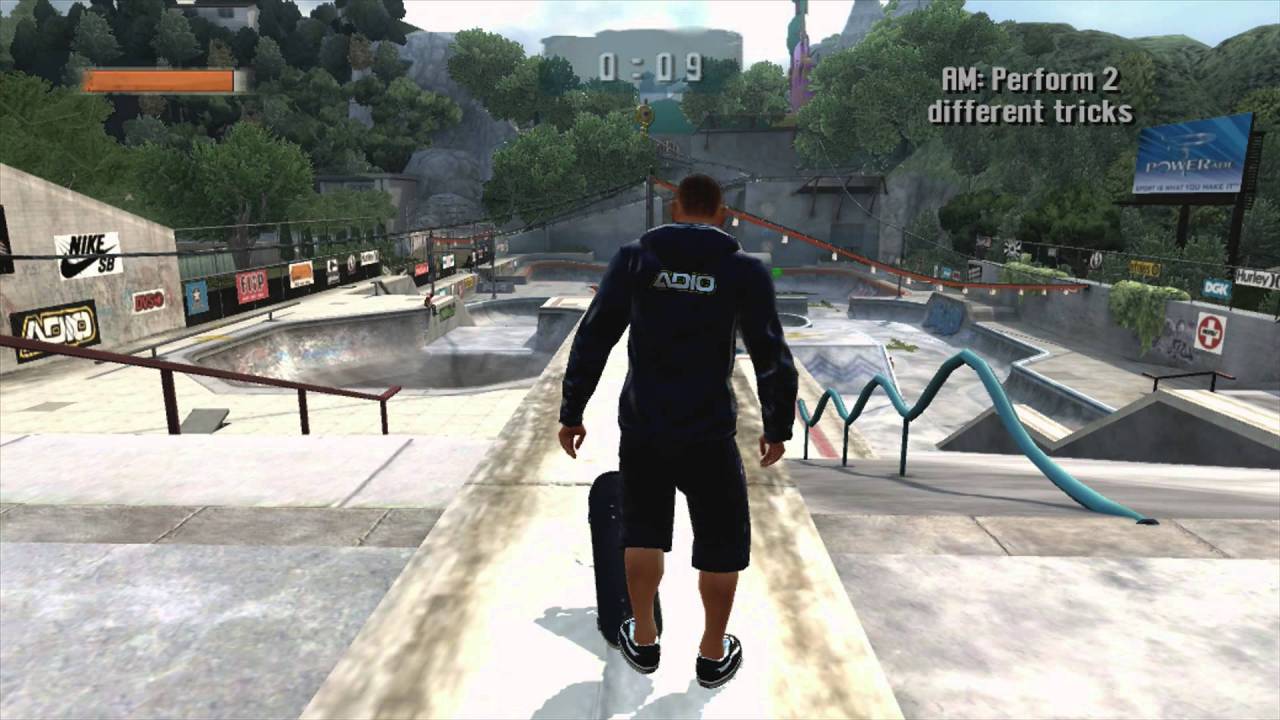
Released on next-gen consoles like the Xbox 360 and PS3, Project 8 didn’t just change the Tony Hawk blueprint; it revamped it with a brand-new engine customized for next-gen hardware. Introducing motion-captured tricks and more realistic physics that made every ollie and grind feel heavy and intended. 

The game transitioned to a mission-based structure within a compact, interconnected city hub, eliminating loading screens for a seamless exploration experience. Players started as amateur skaters vying for a spot in Tony Hawk’s ultimate “Project 8” crew, levelling up through challenges all across the map. 

One of the core mechanics was the “Nail the Trick” mechanic, activated by clicking both analog sticks. Time slowed, the camera zoomed to your feet, and you controlled the board with accurate stick flicks for custom flips and rotations. This added layers of control that go beyond simple-minded button mashing. 

Another fresh layer was the new SICK ranking system; goals now had tiered difficulties. Amateur for basics, Pro for tougher feats, and SICK for runs requiring perfect execution, like nailing all 10 challenges in one two-minute burst. 

What Worked

Image: Activision

No matter the risks, various elements in Project 8 shone brightly, proving that reinvention does have its upside. The open city map was an enjoyable playground, blending urban grit with skate-friendly spots, such as suburbs and schools. This encouraged free-roaming discovery, with challenges unlocking naturally as you leveled up, creating a sense of progression tied to the world itself. 

The narrative, while simple, added motivation: building up from a no-name skater to Hawk’s inner circle by achieving impossible feats. This story felt personal and felt authentic due to cameos from real-life Legends like Bam Margera.

However, the crown jewel was Nail the Trick, transforming tricks into tactile artistry, allowing players to craft distinct combos mid-air. Amplifying the exhilarating feeling were the fluid animations and realistic physics, with rag-doll bails adding a unique flair. 

What Didn’t

Image: Activision

Even after all its achievements, Project 8 fell short in many important aspects, exposing the pitfalls of hurried reinvention. One of the major areas of the game that failed was its performance: frame rate dips plagued the Xbox 360 and PS3 versions, transforming smooth sessions into stuttery messes. 

Compounding this mess were bugs: glitchy collisions, unresponsive controls, and achievement tracking failures infuriated many perfectionists. In addition to this, the game also lacked the persona that defined earlier Tony Hawk titles, due to the removal of energetic soundtracks and quirky humor. And while the artstyle work, it’s a far cry from the vibrant levels seen in the best Tony Hawk games. 

Personalisation took a hit too, with no Create-A-Park mode, limited character options, and clumsy menus. The rag-doll physics acted as a double-edged sword, as the heavier physics made recoveries punishing, making fun combos into rage-quits. 

Why It Was Hard To Come Back From

Sadly, Project 8’s missteps decided the series’ crucial point, crumbling its identity and setting the stage for several problems. By putting more importance on realistic graphics over arcade absurdity, it pushed away fans looking for the effortless flow of Pro Skater and Underground. 

The new physics engine, though visually impressive, brought along physics that felt clunky next to competitors like EA’s Skate. This deviation snowballed, as the successors were not able to recapture the magic, adding more features amid declining sales. 

On top of that, annual releases bored players, and Activision’s failed attempts, like motion peripherals in Ride and Shred, further weakened the core. Project 8 taught developers some harsh lessons: reinvention without polish risks everything, which other rivals absorbed and evolved. For Tony Hawk, redemption meant remasters; however, the original spark faded.

Sign up to read this article
Read news from 100’s of titles, curated specifically for you.
Already a member? Sign in here
Related Stories
Top stories on inkl right now
One subscription that gives you access to news from hundreds of sites
Already a member? Sign in here
Our Picks
Fourteen days free
Download the app
One app. One membership.
100+ trusted global sources.