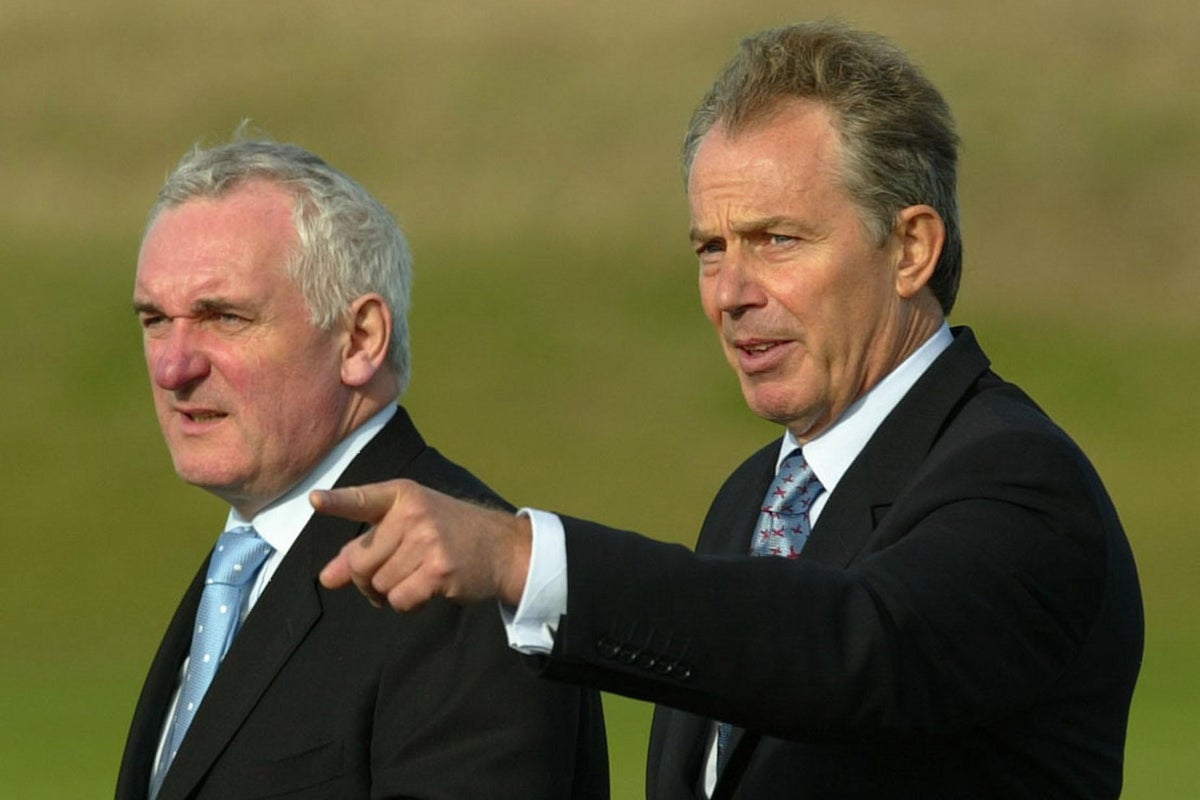
MI5 reportedly rejected a plea from then-Irish prime minister Bertie Ahern for the UK to share intelligence regarding potential terrorist threats to the Sellafield nuclear facility.
Newly declassified government files reveal that following the devastating 2004 Madrid train bombing, Mr Ahern wrote to Tony Blair, warning of a "transnational catastrophe" that could impact Ireland if international terrorists targeted the Cumbrian site.

However, documents released to the National Archives at Kew, west London, indicate that Mr Blair declined the request for intelligence-sharing, citing the necessity to safeguard the confidentiality of UK sources.
Instead the Irish leader had to settle for an assurance that the British ambassador would brief his officials if any threat to Sellafield was uncovered.
It followed a warning by MI5 that there could be “no guarantees about who will have access to it” if sensitive material was shared with Dublin.

Writing to Mr Blair following the March 2004 coordinated bomb attacks by Islamist extremists on the Madrid commuter network which left 193 dead, Mr Ahern said it underlined the “ruthlessness and determination” of global terrorists.
“I think it is fair to say that terrorist targets that could result in transnational catastrophes deserve to receive special attention,” he said.
“I understand your concerns to safeguard the integrity of sensitive information about nuclear facilities and the need to guard against detailed information on the design and nature of nuclear facilities falling into dangerous hands.
“I believe, however, it should be possible to devise arrangements for the communication of sensitive information in a secure manner.”
However the Department of Trade and Industry, which had responsibility for the UK’s nuclear facilities, said the MI5, the Security Service, was not happy with the proposal.
“These letters signal Irish determination not to let go of the Sellafield issue,” Shantha Shan, an official in secretary of state Patricia Hewitt’s private office, told No 10.
“We have consulted with the Security Service and conclude that we must maintain a firm line not to release terrorist-related intelligence of any kind as there could be no guarantees about who will have access to it, no matter what arrangements were put in place.”
Mr Blair sought to reassure him that if the government were to receive intelligence of a real threat to Sellafield, they would seek to share that assessment as fully and as quickly as possible “subject to the constraints placed upon us by the originators of that intelligence”.
Mr Ahern was still unhappy, complaining that while he understood the need to protect intelligence sources “the protection of the lives and health of our citizens should have priority”.
The British ambassador Sir Ivor Roberts said the renewed Irish focus on issues like Sellafield was in part down to the success of the Good Friday Agreement which meant relations with the UK were no longer seen “exclusively through the Northern Ireland prism”.
“Much of this year has been taken up in fighting a vigorous rearguard action against opposition parties and NGOs who have pressurised the Irish government into taking more forward position on Sellafield than they would instinctively have taken themselves,” he reported.
“This has led them to initiate a proliferation of legal cases against us in international courts and to step up the rhetoric.”