
Get all your news in one place.
100's of premium titles.
One app.
Start reading
GamesRadar
GamesRadar
Technology
Dustin Bailey

Tomb Raider: Legacy of Atlantis boss fight lead points to Elden Ring as a stellar example of how to make sure they're fair

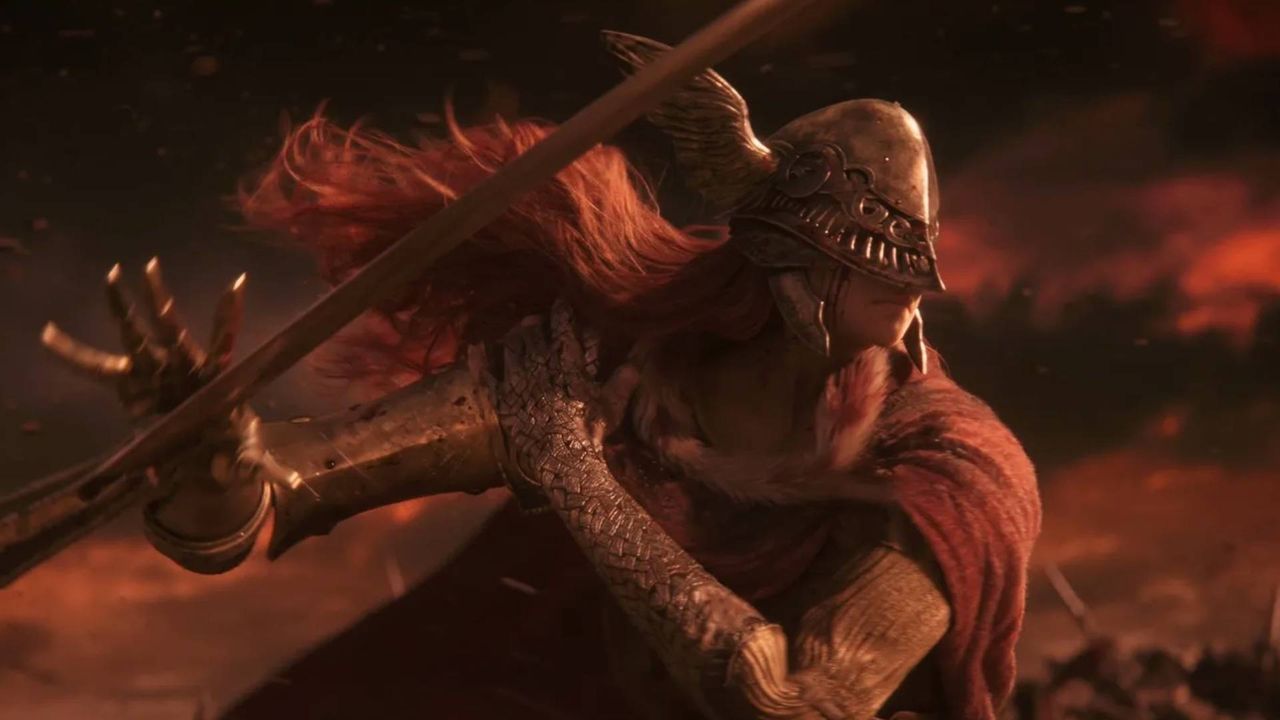
Malenia seen in Elden Ring's cinematic story trailer.

Boss fights are arguably the bread-and-butter of most FromSoftware games, and despite all the broken controllers they've caused over the years, they're usually – usually – fair to players. Even if you can't always execute the right moves to beat them, you almost always know exactly what you did wrong on any given failed attempt. Those kinds of clear telegraphs are essential to good boss design, according to the dev bringing these fights to life in Tomb Raider: Legacy of Atlantis.

"Make attacks clear with the visual and audio cues," Marcin Matuszczyk of Flying Wild Hog says in a talk at the Digital Dragons conference in Kraków, Poland, attended by GamesRadar+. "Telegraph them through character signals. Ensure the losses come from the player's mistakes, not from confusion."

Matuszczyk suggests that it's better to have immersive, in-world indicators of a boss's attack patterns rather than relying on UI. Here's where he cites the infamous battle with Elden Ring's Malenia in an on-screen slide, as he explains: "We can also simply [have a] sword trail that helps telegraph the distance the player has to move back from to evade the attack."

Matuszczyk has spent much of his career taking the lead on boss fights, from his time working on the co-op shooter Outriders at People Can Fly to his contributions to some of the biggest fights in Horizon Forbidden West at Guerrilla Games. With the Horus battle in the Burning Shores expansion, the team similarly tried to prioritize in-world telegraphs.

"In Horizon, we telegraphed coming up tentacles from the ground by moving the sound on the ground, the sound particle," he explains. "This way, it feels grounded and fits in the world. I'm always looking for ways to avoid using the UI elements for such occasions – it is more immersive to show something in [the] actual world than with UI."

Of course, merely making sure attacks are readable isn't the only important bit of making good boss fights. Matuszczyk also points to a variety of types of staging – the way you present and pace the fight – and suggests that devs start by deciding what types of skills they want the boss to challenge, wrapping the enemy's identity around that type of test.

I'm especially interested in Matuszczyk's approach to bosses because of his current credit on Legacy of Atlantis – a remake of a game whose boss fights really don't do any of these things. Yes, the encounter with the T-Rex in the original Tomb Raider is memorable, but the actual fight is effectively identical to any normal enemy, except that you've gotta use a lot more bullets.

I don't know that I necessarily want full-on Elden Ring combat challenges in a Tomb Raider game, but a more considered approach to boss battles could go a long way toward giving the remake a leg up on its beloved predecessor. I'm not sure I can deal with a more intense version of those Atlantean Centaurs, though.

FromSoftware head Hidetaka Miyazaki says games like Elden Ring and Dark Souls aren't about "simply cranking up the difficulty; it’s doing so fairly."

Sign up to read this article
Read news from 100's of titles, curated specifically for you.
Already a member? Sign in here
Related Stories
Top stories on inkl right now
One subscription that gives you access to news from hundreds of sites
Already a member? Sign in here
Our Picks
Fourteen days free
Download the app
One app. One membership.
100+ trusted global sources.