Get all your news in one place.
100's of premium titles.
One app.
Start reading
The Conversation
The Conversation
Science
Chris Impey, University Distinguished Professor of Astronomy, University of Arizona

To search for alien life, astronomers will look for clues in the atmospheres of distant planets – and the James Webb Space Telescope just proved it's possible to do so

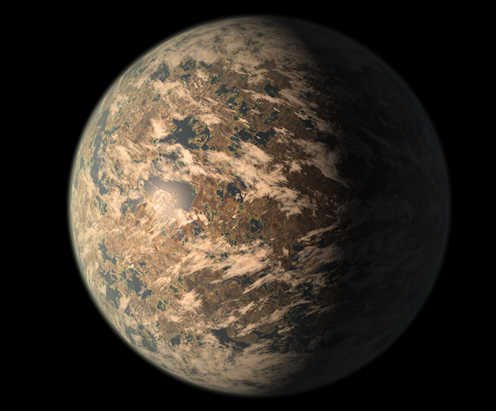
TRAPPIST-1e is a rocky exoplanet in the habitable zone of a star 40 light-years from Earth and may have water and clouds, as depicted in this artist's impression. NASA/JPL-Caltech/Wikimedia Commons

The ingredients for life are spread throughout the universe. While Earth is the only known place in the universe with life, detecting life beyond Earth is a major goal of modern astronomy and planetary science.

We are two scientists who study exoplanets and astrobiology. Thanks in large part to next-generation telescopes like James Webb, researchers like us will soon be able to measure the chemical makeup of atmospheres of planets around other stars. The hope is that one or more of these planets will have a chemical signature of life.

Sign up to read this article
Read news from 100's of titles, curated specifically for you.
Already a member? Sign in here
Related Stories
Top stories on inkl right now
One subscription that gives you access to news from hundreds of sites
Already a member? Sign in here
Our Picks
Fourteen days free
Download the app
One app. One membership.
100+ trusted global sources.