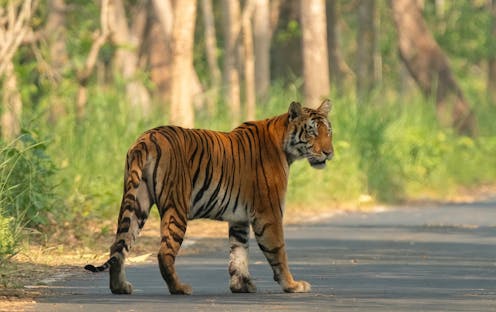
British colonialism turned India’s tigers into trophies. Between 1860 and 1950, more than 65,000 were shot for their skins. The fortunes of the Bengal tiger, one of Earth’s biggest species of big cat, did not markedly improve post-independence. The hunting of tigers – and the animals they eat, like deer and wild pigs – continued, while large tracts of their forest habitat became farmland.
India established Project Tiger in 1972 when there were fewer than 2,000 tigers remaining; it is now one of the world’s longest-running conservation programmes. The project aimed to protect and increase tiger numbers by creating reserves from existing protected areas like national parks and wildlife sanctuaries. Part of that process has involved forcing people to relocate.