A new net-zero report, commissioned by London Mayor Sadiq Khan, outlines several actions that will be required to reduce air pollution, tackle the climate emergency and cut congestion in the U.K. capital by 2030. One of them could be congestion charging on steroids: road pricing.
Khan said the report, published on January 18, must act as a wake-up call for the U.K. government, which he stressed, needs to provide greater support for London to reach net-zero by 2030.
Motor traffic must be reduced by at least 27% by the end of the decade, says the report.
More than a third of car trips made by Londoners could be walked in under 25 minutes and two thirds could be cycled in under 20 minutes, says the report by Element Energy.
Data released last week showed that motor vehicle congestion has risen to pre-pandemic levels, leading to gridlocked roads and air pollution. Congestion cost the capital $6.8 billion last year, calculated the new net-zero report.
Between 2000 and 2018, London achieved a 57% reduction in workplace greenhouse gas emissions, a 40% reduction in emissions from homes, but just a 7% reduction in emissions from transport.
The capital will have to see a significant shift away from petrol and diesel vehicle use and towards walking and cycling, greater public transport use and cleaner vehicles, says the report. Nearly half of Londoners don’t own a car, but they are disproportionally feeling the damaging consequences polluting vehicles are causing.
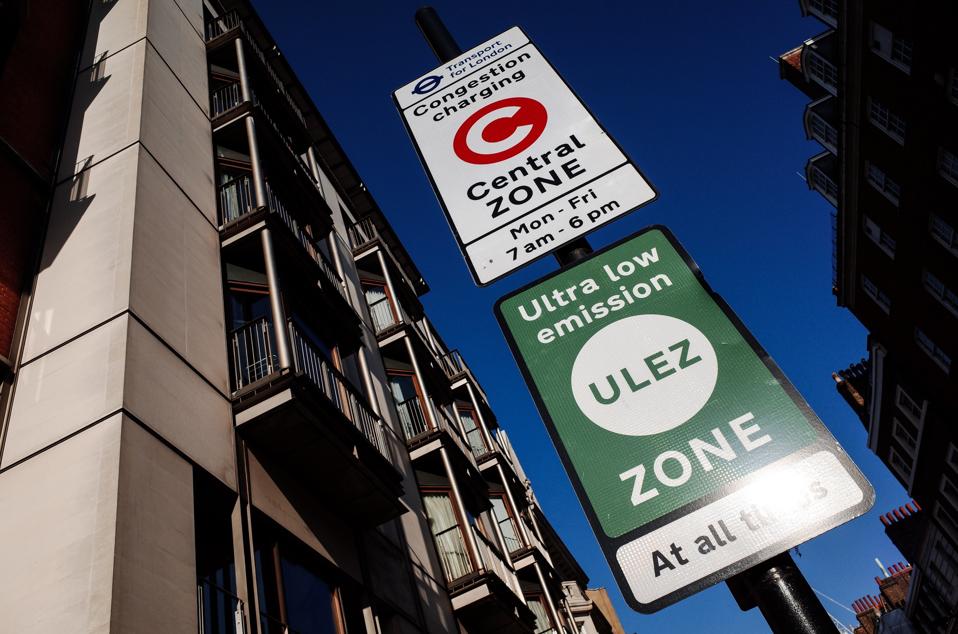
The report urges London to introduce a new kind of road user charging system which should be implemented by the end of the decade. Such a system could abolish all existing road user charges—such as the Congestion Charge and Ultra Low Emission Zone (ULEZ) charges—and replace them with a pay-per-mile road pricing scheme, with different rates depending on how polluting vehicles are, the level of congestion in the area and access to public transport. Subject to consultation, it is likely there would be exemptions and discounts for those on low incomes and with disabilities, as well as consideration around support for charities and small businesses.
Khan has charged Transport for London (TfL) to explore how such a scheme could be developed which would require national buy-in. Since the Smeed report of the 1960s successive national governments have rejected road pricing schemes.
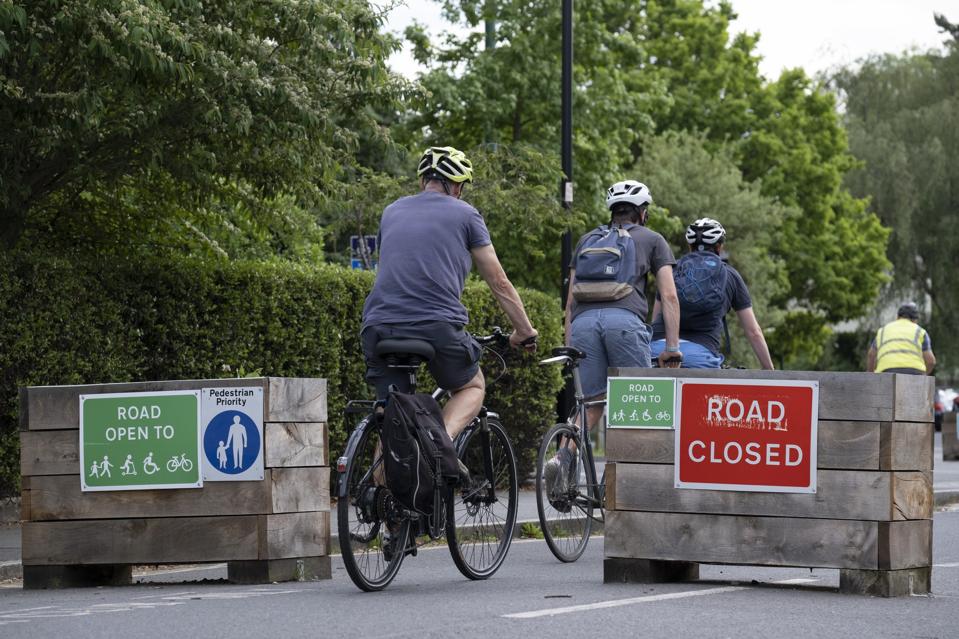
Other approaches “under consideration” by TfL include extending the ULEZ beyond the north and south circular roads to cover the whole of Greater London.
Prior to the introduction of full-fat road pricing a small clean air charge could be implemented, spit-balled a press release from the London Mayor who critics claim will be potentially adding to London’s traffic congestion by pressing on with the Silvertown road tunnel.
TfL will soon begin a period of consultation with Londoners, local government and businesses about the way to achieving a clean, green and healthy future for London. Subject to feasibility, the chosen schemes could be implemented by May 2024.
Khan said: “This new report must act as a stark wake-up call for the government on the need to provide much greater support to reduce carbon emissions in London. I’m not willing to stand by and wait when there’s more we can do in London that could make a big difference. We simply don’t have time to waste. The climate emergency means we only have a small window of opportunity left to reduce carbon emissions to help save the planet.”
The Mayor added: “It’s clear the cost of inaction would be far greater than the cost of transitioning to net-zero and reducing toxic air pollution.”