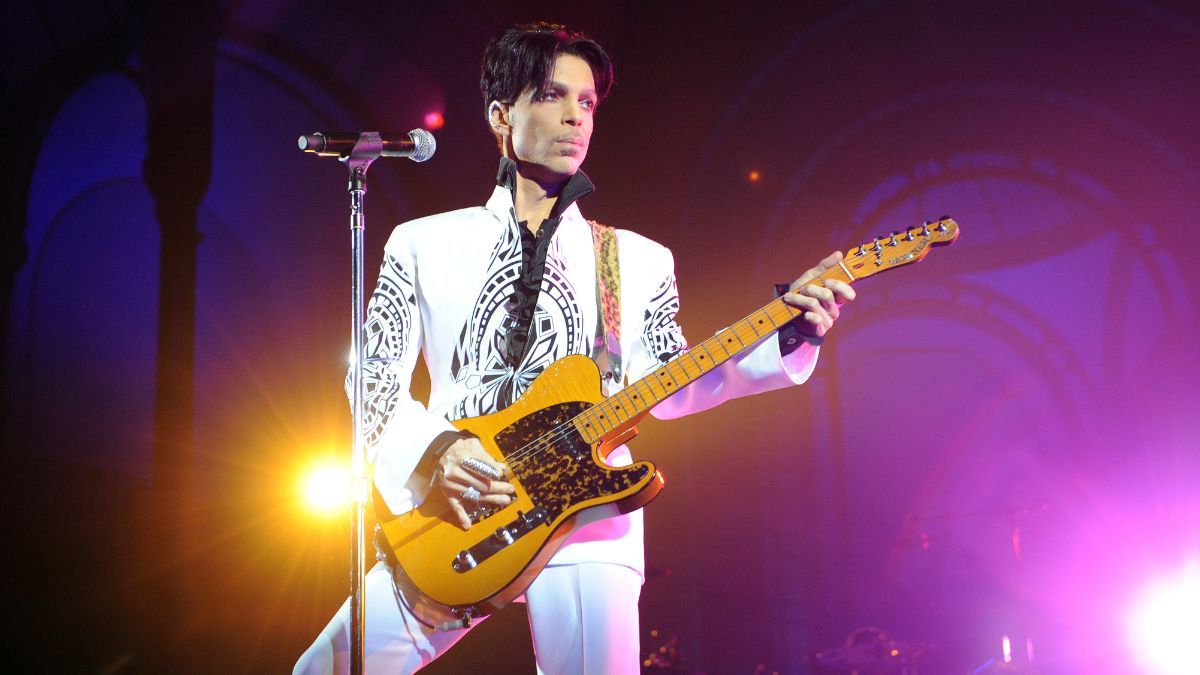
Prince’s words about Guitar Hero, and his rejected involvement in the video game, have resurfaced, with the Purple One once explaining why he turned down the franchise.
Guitar Hero has been in the news recently, after its producer – Red Octane Games – announced Stage Tour, a spiritual successor to the hugely popular music rhythm game.

The impact Guitar Hero has had on the wider music world is hard to ignore. It made DragonForce a household name, rekindled the careers of bands like the Fall of Troy, and inspired generations of players to pick up the instrument.
With the game at the height of its powers, its developers apparently approached Prince to strike up a deal. He didn’t bite – and it wasn't just for financial reasons.
When asked by American talk show host Tavis Smiley about his thoughts on the Guitar Hero craze in 2009, he said: “Well, I'm not mad at ‘em. I hear it made like $2 billion, and they came to us and offered us a very small portion of that.
“But,” he adds, “I think it's more important that kids learn how to actually play the guitar. It's a tough instrument. It took me a long time, and it was frustrating at first, but you just have to stick with it.”
The Purple One wasn’t wholly against the game, even though some critics were more vocal about it game-ifying the craft of learning the instrument. Led Zeppelin famously turned the game down, and Jimmy Page was particularly vocal about his feelings, for instance.
Meanwhile, Prince quietly declined the offer and focused on why people should pick up a real electric guitar rather than a guitar-shaped controller.
“It's cool for people who don't have time to learn the chords or ain't interested in it,” he says, “but to play music is one of the greatest things. To create something from nothing is one of the greatest feelings. And I would wish it upon everybody. It's heaven.”
In the comments of an Instagram reel sharing the interview clip, Journey's Neal Schon also weighed in.
“That’s cool, I didn’t know he turned it down,” he comments. “I did as well for the same reason.”

On the flip side, however, many guitarists, including Stray Kids’ Garrett Jones and Fender signature artist Steve Lacy, both say the games were a vital part of their playing journey. Its success also came at a time when rock music was falling out of the mainstream, helping to revitalize the genre in the public consciousness.
Elsewhere, the Cult of the Lamb video game has tapped up an all-star cast of shredders for its revamped soundtrack, and Fender has collaborated with Fortnite to bring its most famous guitars and basses to the hugely popular video game. Music and gaming will always be intertwined.