
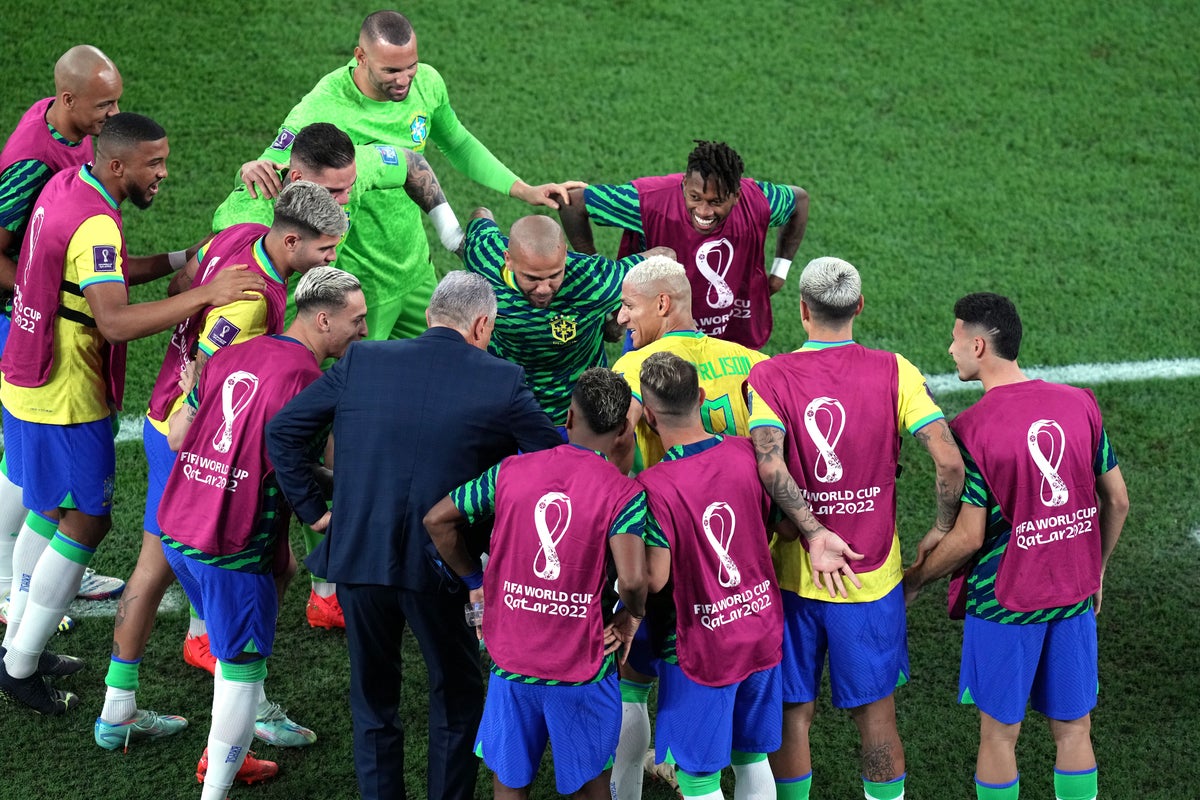
If Brazil are to conquer the world again, it will be as the dancing kings. If, over the decades, the Selecao became a byword for flair and exuberance with the ball at their feet, their willingness to express themselves when the ball is in the net has drawn criticism so far this World Cup. If Richarlison’s overhead kick against Serbia may be the goal of the tournament, Brazil’s quartet of strikes against South Korea became more notable for the rehearsed routines that followed, certainly amid one of the more needless controversies involving events in Qatar.
World Cups can be a place where footballing cultures collide. Brazil’s has tended to earn acclaim, for its aesthetic appeal and entertainment factor, though not from a particularly irascible Irishman whose comments went global. Roy Keane’s predictable reaction and unsurprisingly scathing verdict were designed for an audience of television viewers in the United Kingdom but it made headlines in Brazil. The message from manager Tite was that his side – and even he – will carry on dancing. Keane and other such killjoys may be misunderstanding the Brazilian psyche. Certainly, the favourites to lift the World Cup do not believe their capacity to enjoy goals deflects from their attempts to win it or shows any disrespect to opponents.














