Get all your news in one place.
100’s of premium titles.
One app.
Start reading
Tom’s Hardware
Tom’s Hardware
Technology
Bruno Ferreira

Tim Berners-Lee, inventor of the World Wide Web, thinks it can still be saved — despite some parts being 'optimized for nastiness'

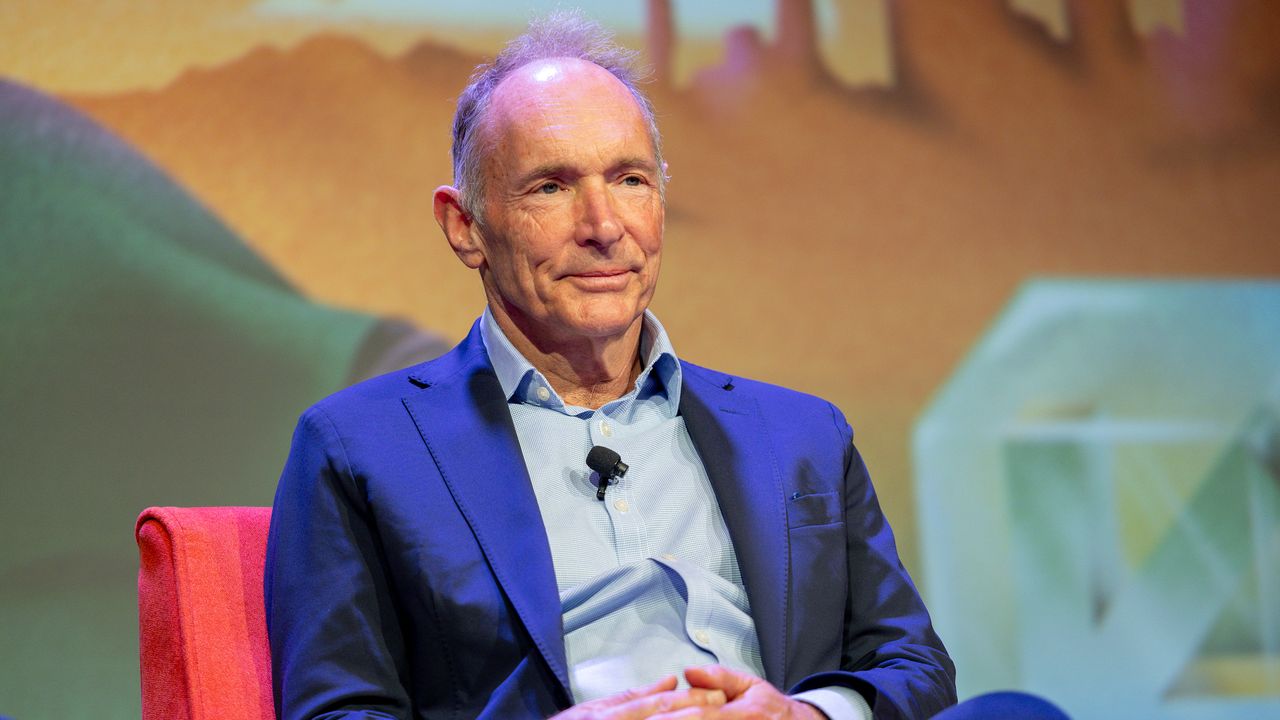
Tim Berners-Lee.

When Sir Tim Berners-Lee first came up with the idea for the World Wide Web back in 1989, his vision for it could be likened to a digital Library of Alexandria, with all human knowledge centralized, a cooperative attitude, and most of all, free. Fast-forward about 37 years, and while the Web did indeed bring the world together, it's fair to say that it didn't do so quite in the manner that Berners-Lee hoped for.

In an interview with the Guardian, Berners-Lee discusses where exactly things went wrong, and how they can perhaps be fixed in what he describes as "a battle for the soul of the web," noting that "it's not too late." The Web had a fairly peaceful early start without ads, heavy commercialization, and cleanly served the purposes of information and some entertainment, but started shifting around the late '90s with the dot-com boom and "charlatans", in Berners-Lee's view.

It wasn't until the polarization of the 2016 U.S. election that he had enough with the Web's toxicity, something that reportedly left him "devastated." He acknowledges that social media does not represent the entire web, but that "the problem is that people spend a lot of time on [social media websites] because they’re addictive," having later described them as "optimized for nastiness".

Interestingly, Berners-Lee notes that while early viewpoints on the internet were neutral and moral judgments were about how people used it, nowadays "the way you design a website, like Reddit or Pinterest or Snapchat, can be explicitly good," with the opposite, as now proven, equally possible.

He's since created and is promoting the Solid project, that can very broadly be described as a user-controlled, decentralized API for personal data sharing, accessed via standard web protocols. Users create their own "pods" where all their personal info lies, along with everything they publish online, and data collected about them. They can then choose to grant entities specific control over what data is accessed.

Berners-Lee believes this can bring sovereignty of personal data back in people's hands, and even went as far as raising $30 million for Inrupt, a company with a mission to "provide commercial energy and an ecosystem to help protect the integrity and quality of the new web built on Solid". Notably, though, there's nothing forcing the current web's gatekeepers like Google and Meta to use the Solid protocol — much less to copy any data they may be granted access to.

Still, he think that "the existing systems will fade to a certain extent, because people will get more excited in new systems." In this case, he's referring to developers engaging with the Solid project, who "they start coding just because of what they can imagine."

You can click through to the Guardian to read the entire interview and read Berners-Lee's thoughts on social media ban laws, the AI takeover, and other topics.

Follow Tom's Hardware on Google News, or add us as a preferred source, to get our latest news, analysis, & reviews in your feeds.

Sign up to read this article
Read news from 100’s of titles, curated specifically for you.
Already a member? Sign in here
Related Stories
Top stories on inkl right now
One subscription that gives you access to news from hundreds of sites
Already a member? Sign in here
Our Picks
Fourteen days free
Download the app
One app. One membership.
100+ trusted global sources.