Despite its disappointing end, the U.S. men’s national team enjoyed a historic group stage campaign on home soil to kick off the 2026 World Cup. Still, the journey is only really getting started for manager Mauricio Pochettino’s side.
After a stoppage time 3–2 loss to Türkiye on Friday, following initial wins over Australia and Paraguay, the USMNT will take on Group B third-place finishers, Bosnia & Herzegovina, in the round of 32 and enter the game as overwhelming favorites.
While the USMNT’s potential path to a deep World Cup run avoids most of the top-ranked teams, winning won’t necessarily come easy. Bosnia, despite being ranked No. 64 in FIFA Rankings, pushed No. 27 Canada to a 1–1 draw and upset No. 12 Italy in the last stage of World Cup qualifying.
Here, Sports Illustrated looks at three factors that could worry the USMNT ahead of its match against the Balkan nation on Wednesday.
The Sheer Size
Bosnia & Herzegovina is the tallest team at the tournament, averaging 6'1", with defender Stjepan Radeljić as the tallest at a whopping 6'7".
While Radeljić is unlikely to start, the first-choice center back pairing of Tarik Muharemović and Nikola Katić are both over 6'1". It will provide a legitimate physical test for the USMNT attackers, comparable only to what 6'4" Australian defender Harry Souttar offered in the group stage.
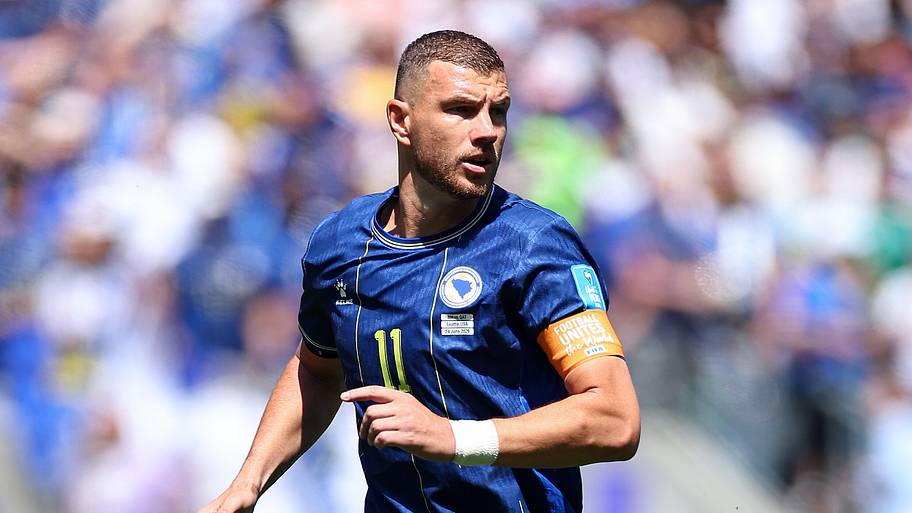
Up top, Bosnia veteran star striker Edin Džeko stands at 6'4". In contrast, the skillful and imposing secondary attacking option, Ermedin Demirović, stands at 6'0" but has a wide frame and is tough to push off the ball.
At an average height of 5'11", and as the 21st-tallest team among the 48 at the tournament, the USMNT doesn’t have many large players, and physicality isn’t a key factor in how Pochettino’s men approach games. Bosnia will look to receive the ball in the air more often and will be intense in every challenge, with the advantage in nearly every aerial duel.
The American and the Teenager
Winning the battle in the wide areas will be vital for the USMNT, and wingbacks Sergiño Dest and Antonee Robinson will play key roles, especially considering the opponents they are likely to battle.
Bosnia’s best young talents are on the wings and can expose space, while also cutting inside to create chances for potent, physically imposing attacking forces. On the right, it’s 21-year-old U.S.-Bosnian Esmir Bajraktarević, and on the left, likely 18-year-old Kerim Alajbegović.
Bajraktarević has been outstanding in the biggest games so far and was vital to the World Cup qualifying win over Italy, as well. Born and raised in Appleton, Wisconsin, he played for the USMNT in friendlies before switching to Bosnia, where his agility and speed have become key points of attack. Alajbegovic, meanwhile, had nine goals and three assists in the Austrian Bundesliga this season and comes off an electrifying performance against Qatar, in which he scored and completed six dangerous dribbles.
The Set Piece Threat
With the Bosnians’ height and imposing stature, set-pieces have become a critical part of their plan. Against Canada, a slight defensive error allowed them to score on a corner kick, and they have found opportunities against both Switzerland and Qatar.
When analyzing where chances come from, Bosnia has produced 0.45 expected goals (xG) from set plays, compared to 1.46 xG from open play, underscoring how critically important dead-ball opportunities are for the team.
It will be challenging for the shorter USMNT to contend for the aerial duels on these set pieces, and goalkeeper Matt Freese likely won’t be able to rise to claim every ball. It makes it extra important for the USMNT to limit how many set pieces they concede.