There's a lesson buried in the story of Irving Penn's Cuzco project, and it's one that every photographer working today would do well to absorb. It has nothing to do with technique, equipment, or artistic vision. It's simpler than that: when the assignment ends, keep shooting.
Penn arrived in Lima, Peru in December 1948 on a fashion job for Vogue. Standard brief, standard destination. But instead of catching the next flight home, he kept going; boarding a small plane to Cuzco, the ancient Inca capital sitting at an elevation of 3,400 metres in the Andes.
He had no commission, no art director, no brief. What he did have was a Rolleiflex and a frantic 72-hour window. In that three-day marathon, Penn produced more than 2,000 exposures; a staggering volume of work in a pre-digital age that suggests a photographer working in a state of pure, uninterrupted flow.
What followed has since been recognised as a landmark moment in portrait photography. And now The J. Paul Getty Museum in Los Angeles has announced the acquisition of 189 prints from Penn's Cuzco series, gifted by The Irving Penn Foundation.
The collection includes 178 gelatin silver prints and 11 platinum-palladium prints, along with a book maquette and two original issues of American Vogue in which the images first appeared in 1949. It is, by any measure, a significant moment for photographic history.
What photographers can learn
What makes the Cuzco project so instructive for photographers isn't just the quality of the resulting images; it's the method.
Penn didn't wander the streets with his camera hoping for decisive moments. He rented a local portrait studio, invited people in (market traders, children, couples, laborers) and photographed them against found backdrops, using natural light filtered through the studio windows.
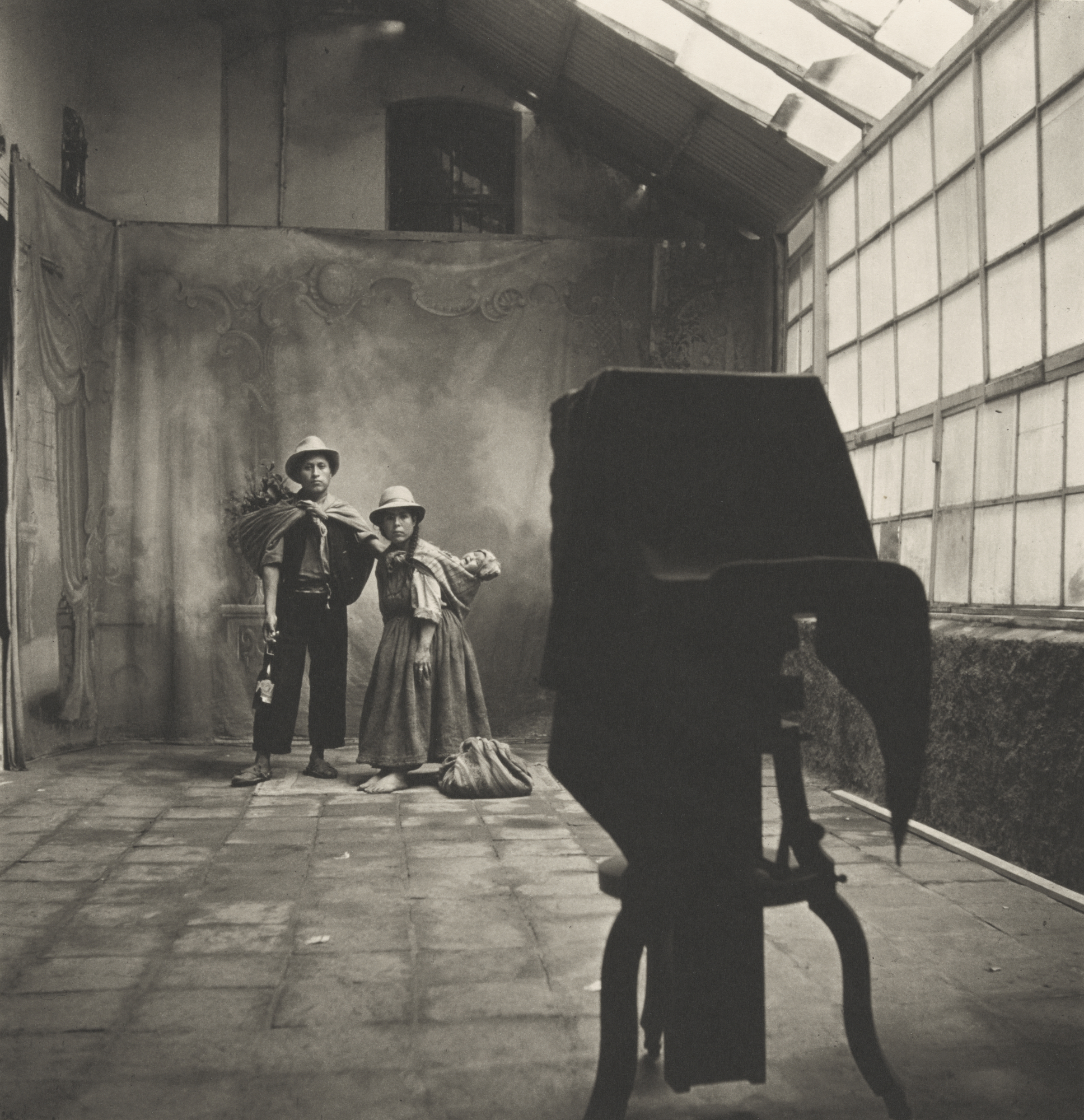
The image below tells that story beautifully. You can see the large-format camera in the foreground, the painted studio backdrop behind the subjects, the skylight overhead doing the work that no amount of flash equipment could replicate. It's a behind-the-scenes photograph that doubles as a masterclass in controlled simplicity.
Penn would later refine this approach into a full working methodology, travelling to Crete, Morocco, Nepal, New Guinea and beyond with what he called an "ambulant studio"; essentially a portable set of canvas backdrops that he'd erect wherever he found himself. The results became the 1974 book Worlds in a Small Room, one of the most quietly influential photobooks of the last century.
There's another lesson here for anyone who thinks the work ends when the shutter fires. Penn made over 2,000 exposures during those three days in Cuzco. He then spent the next five decades returning to the negatives, printing and reprinting selected images between 1959 and 2002.
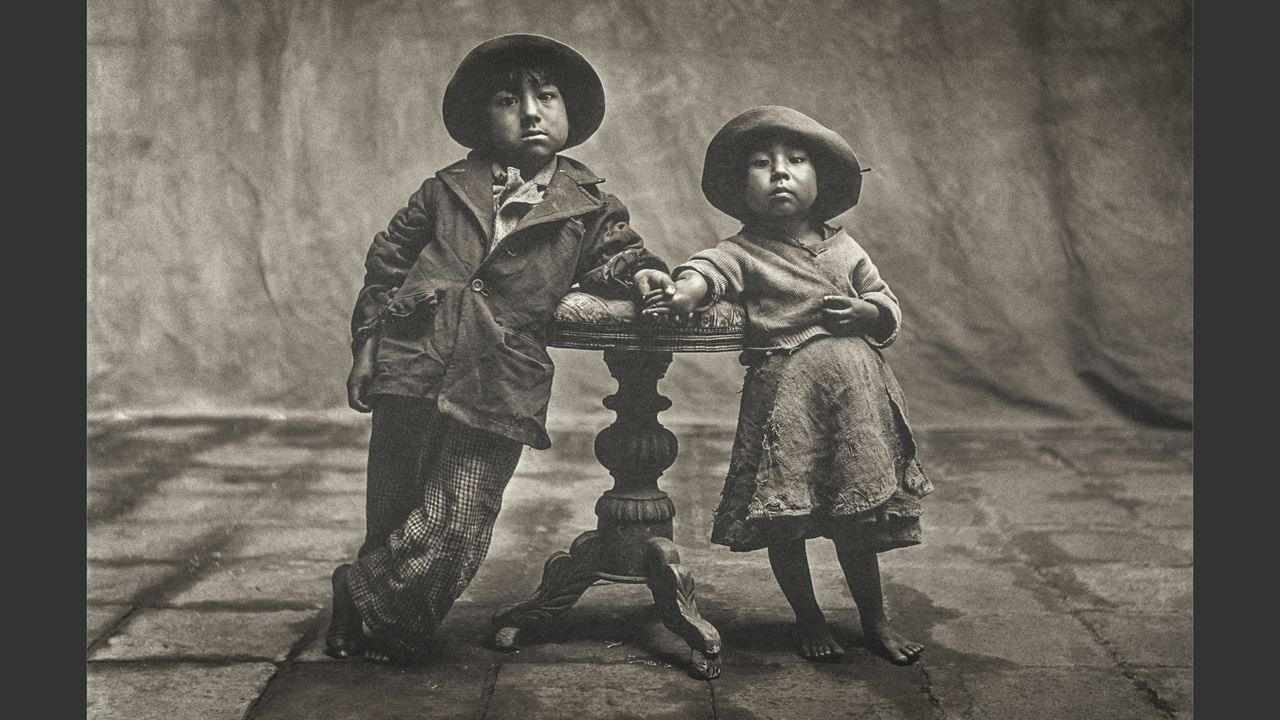
The platinum-palladium prints in particular (among them the portrait of two Andean children, which we've featured at the top of the page) represent a level of craft and considered reflection that sits at the opposite end of the spectrum from the instant-share culture much of society now inhabits.
Penn carefully labelled each print with titles and print dates. He treated the archive as a living body of work, not a closed chapter.
Why the Getty acquisition matters
The Getty already holds Penn’s Small Trades series (acquired in 2008), which represents the second major chapter of what would become the Worlds in a Small Room project. By uniting these two pillars, the Getty has become one of the most comprehensive repositories of Penn’s work in existence. Moreover, the museum intends to use the Cuzco holdings as a springboard for building its collection of Peruvian and Latin American photography.
Penn was 31 when he landed in Cuzco with his Rolleiflex and an open schedule. The photographs he made there – straightforward, formally rigorous, deeply respectful of their subjects – are still teaching photographers how to see today.
The detour turned out to be the destination.
The Cuzco series is now part of the permanent collection of the J. Paul Getty Museum, Los Angeles. Admission to the Getty Center is free; advance reservations are required.