Get all your news in one place.
100’s of premium titles.
One app.
Start reading
Guitar World
Guitar World
Entertainment
Charlie Wilkins

“Those old players had nothing to hide behind. Just their hands, their feel and the truth coming through the speakers”: 5 modern blues guitar heroes on the impossible task of imitating the blues greats

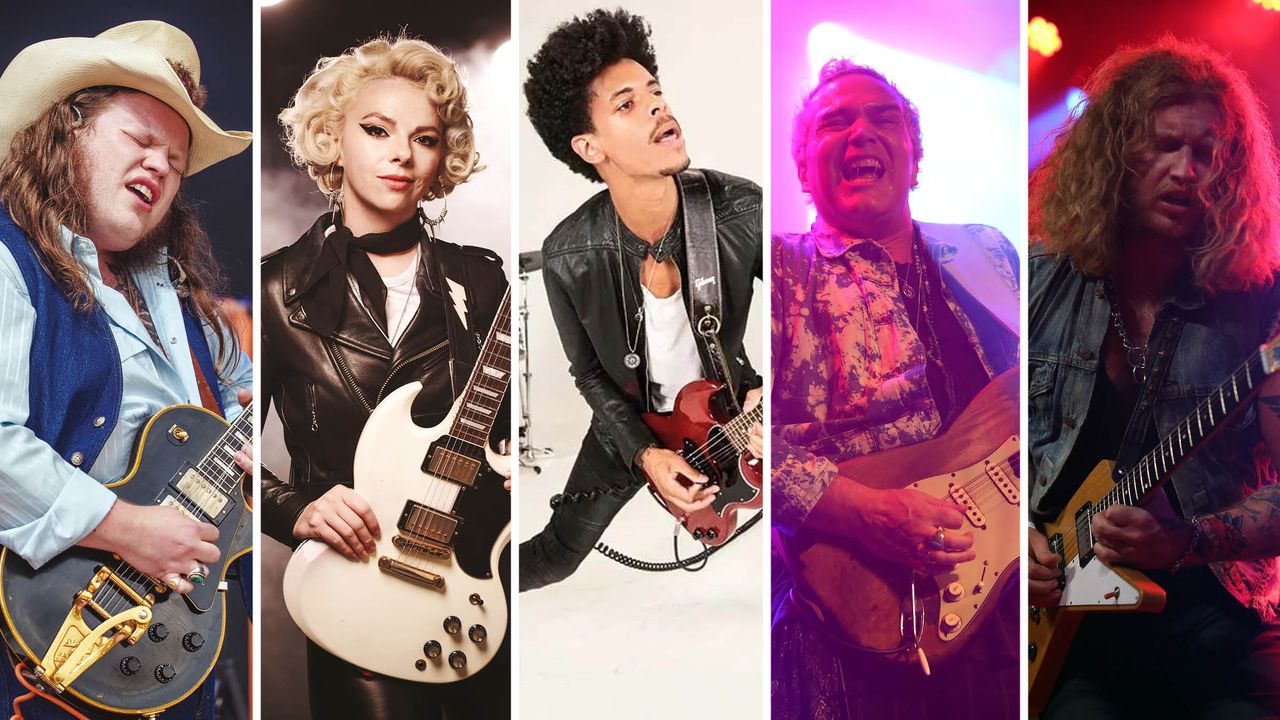
Five contemporary blues heroes [l-r]: Marcus King, Samantha Fish, Zach Person, Philip Sayce, Jared James Nichols.

Like a lot of aspiring players, I grew up chasing my guitar heroes. I listened to everyone, but the ones who really stayed with me were the players who played fiery blues licks with melodic phrasing that made every note feel alive.

When I finally dug into who influenced them, everything pointed back to the same source: the British blues explosion of the late ’60s and early ’70s. Clapton, Page, Beck, Green, Kossoff and Hendrix (despite being American, Hendrix was so tied into the London scene that you can’t separate him from it).

The guitarists from that era were influential because they reshaped what the electric guitar could be. British blues took the soul of American blues and turned it into something heavier, grittier and unhinged.

Suddenly, the guitar wasn’t just a clean supporting instrument. It became a voice that could cry, sing, scream, whisper or set the world on fire. These players’ phrasing had emotion, their tone was otherworldly and their attitude gave the instrument a voice that still resonates half a century later.

Today, we have a new generation of players – Samantha Fish, Zach Person, Philip Sayce, Jared James Nichols, Marcus King and others – who grew up on the sounds of that era and aren’t afraid to show it.

After years of playing guitar, at some point I realised that most of your tone comes from your hands and your soul. The great British blues guitarists proved this long ago and musicians such as Philip Sayce and Marcus King agree. Philip tells me: “You can have the same guitar and amp, but it’ll never sound the same in two people’s hands. Tone is who you are.”

Marcus adds: “Those old players had nothing to hide behind. Just their hands, their feel and the truth coming through the speakers.”

What always amazes me about the British blues era is how much emotion lived inside the phrasing. They didn’t need fast runs. They could make a single bend feel like a whole conversation.

Jared James Nichols sums it up: “Those guys could bend one note and it would just stop you. It wasn’t speed, it was the feel. You can’t really copy players like Clapton or Beck. You can play the notes, but getting it to sound right? That’s a whole different thing.”

(Image credit: Doug Hardesty)

This was also the era when the limits of the electric guitar were broken wide open and the songwriting became timeless snapshots of the moment. Built on emotion instead of formulas, classic songs like White Room, Purple Haze, All Right Now, Heartbreaker and Black Magic Woman still hit with the same impact today.

Zach Person says he grew up “listening and trying to mimic all the sounds, tones and techniques that Page and Clapton built their songs around”.

For Samantha Fish, the British blues wave wasn’t just about guitar, it opened the door to the deeper roots: “Two of my biggest influences were Jimmy Page and Keith Richards,” she says. “That era of rock guitar, influenced by the blues, was my gateway. It introduced me to Muddy Waters and Howlin’ Wolf because those were the heroes of the British guys. Once you start digging back, you realise how interconnected it all is.”

US-based Marcus King is the most direct about his songwriting roots: “I always go back to Eric Clapton,” he says. “Not just for his playing but his ability to evolve as an artist, especially becoming recognised as both a singer and songwriter.”

Philip Sayce agrees: “Clapton was the guy for me. He wasn’t just a guitar player; he sang great, wrote great songs and played beautifully. That’s what I aspire to be.”

Jimmy Page stopped Philip in his tracks, too: “Page’s approach to songwriting and production had a big influence on me. Watching how Zeppelin built those records showed the level those guys were operating at. And Jeff Beck’s phrasing was fearless. He just used his hands, volume and tone knobs and his imagination.”

Foundational Tone

Gear also played a huge role in defining the era. The setup was simple: a Gibson Les Paul into a cranked Marshall. Clapton, Beck, Page, Kossoff and Green built their tones on that foundation, while Hendrix forged his own identity with Fender Strats through Marshalls.

Effects were minimal by today’s standards, but early fuzz pedals, wahs and treble boosters, such as the Dallas Rangemaster, helped push those amps into the thick, singing overdrive that became the sound of classic rock. The first time I dimed an old Marshall Super Lead, I quickly realised why those classic tones became legendary.

Marcus King’s current rig continues to reflect that heritage: “I was infatuated by the aesthetic of Marshall stacks and captivated by the clarity of Fenders,” he says. “When I was young, I was lucky to have early Fender Super Reverbs and a Marshall ‘Plexi’ around the house.”

In fact, King’s signature Orange MK Ultra amp nods directly to that era: “It’s like a traditional British tube amp but with elements of American amps. It’s hand-wired and non-master volume, so you crank it up all the way just like those old amps.”

Zach Person proudly keeps carrying the torch for the classic Les Paul into a Marshall formula: “My favourite amp is the Marshall JTM45, which is basically a hot-rodded Bassman. It’s the perfect sound for me… Clapton’s tone in Cream is by far my favourite.”

Sayce’s approach to gear is rooted in the same spirit: “I mostly play old Strats and I’ve settled on high-headroom Fender or Marshall-style amps. Turn them up and hit the front-end with a pedal.”

Talking with these modern players reminds me how deeply the British blues influence runs. The phrasing, tone, soul and songwriting all trace back to an era that changed guitar forever. Music and players have evolved, but the British blues influence is still unmistakably intact. I think we all have a little British blues DNA in our playing, whether we realise it or not.

Three to get ready: Retro Vibes For Your Rig

(Image credit: Marshall)

Marshall Studio Vintage Combo $1,599/£999

The all-valve SV20C packs 20 watts of real Marshall ‘Plexi’ DNA, with a pair of EL34 valves and a 10-inch Celestion V-Type speaker that you can crank without blowing your eyebrows off.

Compact, affordable and dripping with Clapton-era mojo, it’s the perfect gateway ‘Plexi’ for players who want that vintage Marshall roar without the vintage-amp price tag.

(Image credit: Fulltone)

Fulltone Custom Shop Ranger $249/£259

The Fulltone Custom Shop Ranger pedal resurrects the classic treble-booster formula with six Rangemaster voices via a rotary switch, all powered by a warm germanium transistor. It tightens lows, lifts highs and kicks your amp into tonal bliss. One stomp and even the most polite, well-behaved amps bark, growl and bite with tone straight out of 1968.

Bare Knuckle The Mule Humbucker from $448/£350

If your guitar needs a crash course in vintage mojo, the Bare Knuckle Mule set should do the trick. Hand-wound with Alnico IV magnets, these pickups deliver woody mids, crisp highs and open dynamic response that Patent Applied For pickups are known for. They’re touch-sensitive, super musical and perfect for chasing the tones of Clapton, Green and Kossoff.

Sign up to read this article
Read news from 100’s of titles, curated specifically for you.
Already a member? Sign in here
Related Stories
Top stories on inkl right now
One subscription that gives you access to news from hundreds of sites
Already a member? Sign in here
Our Picks
Fourteen days free
Download the app
One app. One membership.
100+ trusted global sources.