You might already know that balance declines naturally with age, usually due to a combination of bone density loss, muscle atrophy, stiffer joints, or tighter muscle groups. Doesn't getting older sound like such a joy?
While experts encourage resistance training well into your later years to preserve muscle and strength, I also encourage people to think about their mobility and balance.
Building strength and range of motion in your body is your greatest anti-aging tool and the hidden secret to longevity, so I encourage you to test yours now. Better late than never, as they say. And it's far from doom and gloom, because you can be both young and immobile and older and very mobile, so there's always time to improve.
Let's tie up a pair of the best running shoes or go barefoot if you prefer, and get started.
Watch: Balance exercise test
A post shared by Tom's Guide Fitness (@tomsguidefitness)
A photo posted by on
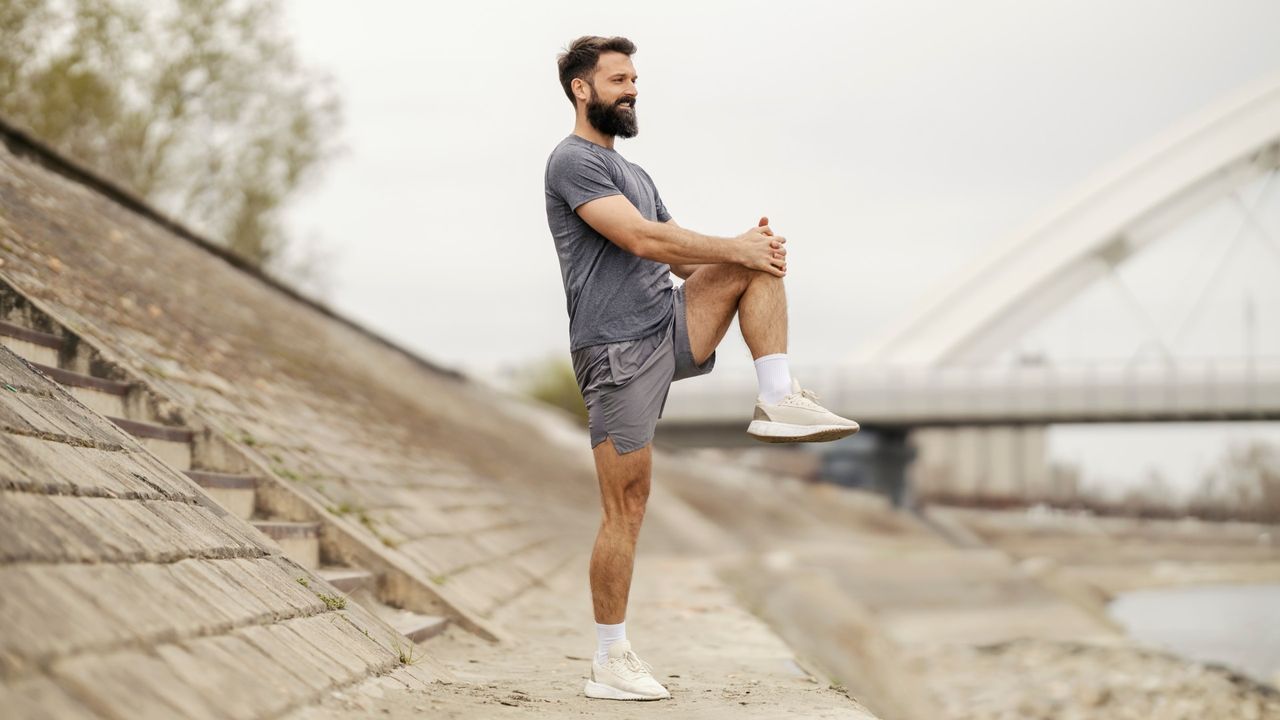
Stork pose tests stability and unilateral balance. Learning to stand on one leg is also functional; think about activities like walking, climbing, or running, where you move one leg forward at a time, or even balancing while tying your laces or putting your pants on.
Before you get started, hip flexibility and strength might limit how high you can raise your knee. If you can, aim for hip height, or slightly lower if you need. Focus your gaze on an anchor point, which is anything unmoving you can see ahead or down.
How:
If you experience pain at any time, stop and rest. If you're working with an injury or health condition, I recommend seeking advice before starting these exercises, especially if you find it difficult to stand on one leg or have lower-body joint issues.
- Stand with your feet hip-width apart and brace your stomach. Look ahead
- Shift your weight into your right leg, then lift your left leg into the air
- Draw your left knee upward to roughly hip height with a 90-degree bend in the leg, foot flexed
- Place your hands on your hips or around your knee and spread your weight through your grounding foot. Avoid arching your lower back and try to stay as still as possible
- Slowly lower the left leg
- Reset, then switch sides. Test twice per leg, then try with your eyes closed.
Age |
Time |
Results |
20-30 years |
20+ seconds |
Strong |
30-40 years |
15-19 seconds |
Above average |
40-50 years |
10-14 seconds |
Average but undertrained |
50-60 years |
5-9 seconds |
Stability deficit |
60+ years |
Under 5 seconds |
Poor control |
Dr. Michael Mosley, who wrote for BBC Science Focus in 2022, was more specific:
- Under 40: 45 seconds with eyes open, 15 seconds with eyes closed.
- Aged 40-49: 42 seconds open, 13 seconds closed.
- Aged 50-59: 41 seconds open, 8 seconds closed.
- Aged 60-69: 32 seconds open, 4 seconds closed.
- Aged 70-79: 22 seconds open, 3 seconds closed.
What the research says
Standards differ depending on the guidelines you follow online, but the idea is to stand on one leg without support; you can test this with your eyes open and closed. In short, you should be aiming for more than five seconds, and above 45 seconds is considered pretty darn strong.
Researchers from Mayo Clinic, republished by the AARP, say how long a person can stand on one leg is "a better measure of aging than changes in strength or gait," which are characteristics used to assess healthy aging. They also found "the greatest age-related decline in one-legged balance, especially when participants stood on their nondominant leg."
A study from the journal PLOS ONE, published in 2024, assessed 40 adults over 50 in tests for walking, grip strength, balance and knee strength. During balance tests, participants stood normally with their eyes open for 30 seconds, then eyes closed for 30 seconds. They then repeated this for 30 seconds with their left leg, then their right leg, in the air.
Results showed the one-legged balance test (particularly on the non-dominant side) declined most with age. This can be due to proprioception, neuromuscular control, core strength and joint stability.
What are the benefits of good balance?
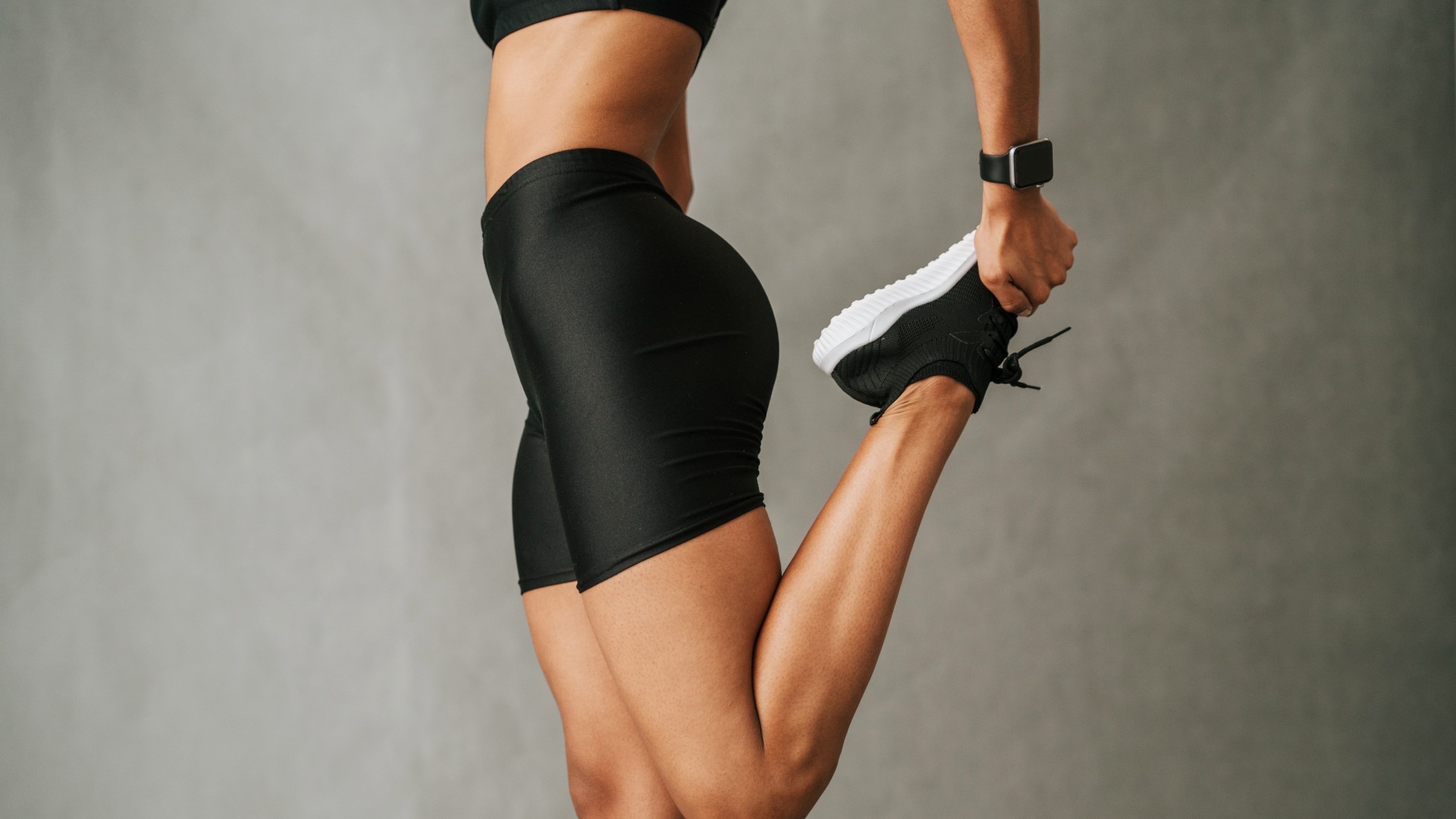
Notice how your center of gravity shifts as you move. Your body must realign and stabilize, which recruits multiple stabilizing muscles, including the glutes, hips and core.
You'll likely be stronger on one side than the other, which is normal. If there's a huge difference, it might be worth adding more single-sided strength and balance exercises to your routine to help balance things out. Think single-leg deadlifts, Bulgarian split squats and lunges, for example.
Try to control the entire movement rather than relying on momentum. Even if you fall, keep practising. It gets easier, I promise. Balance training will help strengthen your ankles, hips and core, which can improve exercise performance, help prevent injury and make daily life a lot easier, especially if you enjoy being active.
If you'd like to stay independent and reduce your risk of injuries or falls as you age, you'll need to address balance and gait eventually.
If you'd like to stay independent and reduce your risk of injuries or falls as you age, you'll need to address balance and gait eventually. The CDC reports that one in four "older adults" report falling each year; 37% of those require medical treatment or restricted activity as a result.
If you've performed this test and aren't happy with your results, here's a five-move 'barefoot mobility' routine to get you started.
Follow Tom's Guide fitness on Instagram for more workouts, routines, tips, and tricks.
Balancing work that requires you to perform movement on one side of the body at a time will also improve stability, core engagement (to prevent wobbles) and proprioception, which is your body's awareness of where it is in space.
A strong and active core will help you maintain an upright, strong torso position and protect your posture, reducing the likelihood of back pain and injury. Here's a five-minute 'bracing' routine to help you activate your core before exercise.
More from Tom's Guide
- I teach people how to be more mobile: 3 low-impact back and shoulder moves that build stability and strength after 40
- I can’t do my regular strength workouts when I’m on the road, so I tried this 15-minute full-body calisthenics workout instead
- I teach people over 50 to be mobile: 3 low-impact moves that build more stability than a 30-minute walk