
Get all your news in one place.
100’s of premium titles.
One app.
Start reading
Digital Camera World
Hillary K. Grigonis

This retro Kodak compact camera was dropped in a lake in an attempt to photograph the Loch Ness Monster. Now, the 1970s camera trap has been fully restored

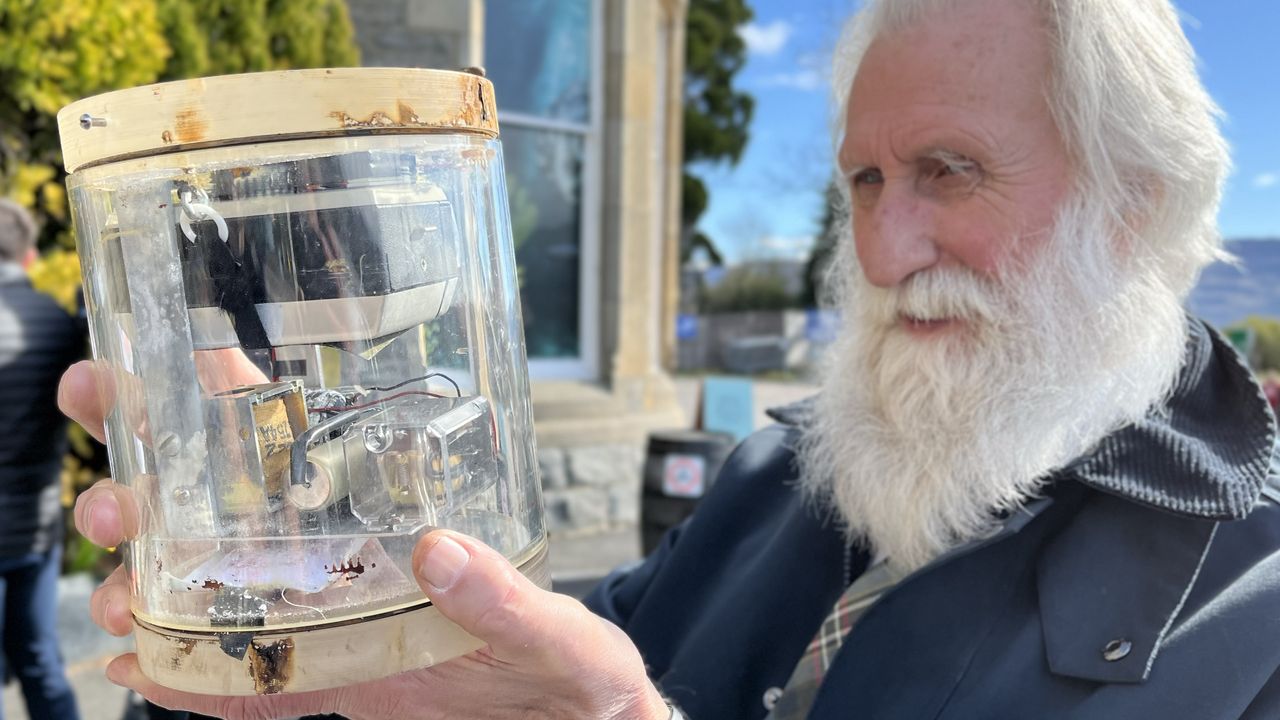
Researchers found a 1970 camera trap originally set up to research the Loch Ness legend. This image depicts the camera before restoration, held by researcher Adrian Shine.

The legend of the Loch Ness monster is tied, in part, to early photographs attempting to capture the legend on film – but now one of the earliest attempts to photograph the legend through “systematic science and engineering” has resurfaced.

Last year, researchers and the submarine Boaty McBoatface stumbled upon a camera trap that had been submerged in the lake for more than 50 years. Now, the old camera trap has been fully restored for display at the Loch Ness Centre.

The camera trap encased a Kodak Instamatic 174 and flash cube inside waterproof housing. The camera was set up to take a photo when a bait line was triggered. Researchers traced the camera trap back to a series of six cameras released into the lake by Professor Roy Mackal of the Loch Ness Investigation Bureau in 1970.

While the images on the film camera survived more than 50 years underwater, the surviving images did not appear to catch a glimpse of the creature behind centuries of lore.

The camera trap has now been restored by the BBC’s The Repair Shop. The news organization filmed the restoration process, with the episode available to watch in the UK.

“This camera is a remarkable survivor from a formative period in Loch Ness research,” said Loch Ness Project Founder Adrian Shine. “Professor Roy Mackal’s work in the early 1970s represented one of the first serious attempts to apply systematic science and engineering to the mystery of the loch. Being able to trace this camera back to that expedition, and now see it restored to working condition, is extraordinary. It transforms the camera from a static relic into a living piece of investigative history.”

The Kodak Instamatic 174 was a simple compact camera produced between 1968 and 1971. A key feature for the small camera that allowed it to be used inside the camera trap was the winding mechanism that automatically advanced the film after each frame, a feature that became more common in consumer film cameras in the 1970s and 1980s.

Film from the recovered camera trap (Image credit: National Oceanography Centre)

While the film on the Loch Ness Instamatic camera trap was intact, the camera was non-functional when researchers found the camera in 130m / 426 feet of water last year. The Repair Shop has now restored the Instamatic 174 to a functioning condition and returned it to the waterproof housing.

The camera will be on display at the Loch Ness Centre in Drumnadrochit, Scotland.

You may also like

Want to explore underwater photography? Browse the best waterproof cameras.

Sign up to read this article
Read news from 100’s of titles, curated specifically for you.
Already a member? Sign in here
Related Stories
Top stories on inkl right now
One subscription that gives you access to news from hundreds of sites
Already a member? Sign in here
Our Picks
Fourteen days free
Download the app
One app. One membership.
100+ trusted global sources.







