Germany’s government has drawn heavy criticism from environmental groups after it agreed to remove parts of a controversial law on heating homes.
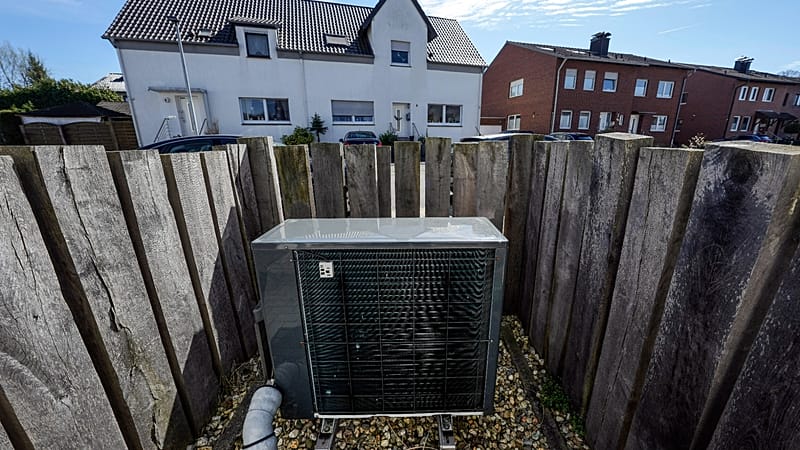
The legislation previously stated that newly installed heating systems were required to use at least 65 per cent renewable energy - such as a heat pump.

The reform will now allow homeowners to use oil and gas instead.
One critic has called the move "an unconditional fulfilment of all the wishes of the fossil fuel lobby".
Germany scraps renewable heating mandate
The law on renewable heating sources was passed in 2023, and hailed by climate experts as one of the most ambitious goals of the centre-left-led government in power at the time.
But critics pointed to the challenges presented by rising inflation, with one newspaper calling the bill “Habeck’s heating hammer”, referring to the legislation’s author, Robert Habeck of the Green Party.
The right-wing, climate-denying Alternative für Deutschland slammed the law’s promotion of heat pumps, accusing the Green Party of “forcing” households to make costly interventions and removing their freedom of choice.
Germany’s government has now agreed to scrap the renewable heating mandate, as well as the requirement for expert consultation when installing a new system.
‘This reform is a disaster’
The centre-right Christian Democratic Union (CDU) maintains that the modifications to the legislation will still align with the target to cut CO2 emissions from buildings, among the major sources of planet-warming pollution, while giving households greater choice as to which technology to use.
Proponents say the legislation plans for a greater use of ‘green’ fossil fuels.
Economy Minister Katherina Reiche said homeowners would be able to choose sources including “hybrid models, biomass; yes, even gas and oil heating, but with an increasing proportion of biogas or bio-oil”.
The ‘green’ credentials of biomass and biogas are highly debated as their production and combustion can lead to significant carbon emissions and ecosystem damage.
Campaigners have accused the government of abandoning its climate goals - which include hitting net zero emissions by 2045.
"This reform is a disaster," Green Party parliamentary group co-leader Katharina Dröge told the German Press Agency (dpa).
"The CDU and SPD [Social Democratic Party] have today made it abundantly clear: climate protection is completely irrelevant to this coalition,” she added. “The federal government has abandoned the achievement of the climate targets."
The managing director of the German Environmental Aid Association (DUH), Barbara Metz, described the revised law as "an unconditional fulfilment of all the wishes of the fossil fuel lobby".
‘An enormously expensive gas cost trap’
Germany is the biggest greenhouse gas emitter in the EU, with the nation still relying on oil and gas for nearly 80 per cent of its heating.
Despite the promise to switch to ‘climate-friendly’ fossil fuels, critics have pointed to the scarcity and rising cost of sources like biomethane on global markets.
Dröge criticised the government of “driving people into an enormously expensive gas cost trap" with the legislation reform.
Heat pumps cost more than gas boilers to buy and install, but they are more economical to run.
Germany subsidises 30-70 per cent of the cost of a new heat pump, funding that will continue to be offered until at least 2029 under the revised law.
“Especially in light of Trump, global crises and fossil fuel dependencies, this [legislation change] is short-sighted and dangerous," Julian Joswig, a Green Party politician, wrote on X.