Throughout history, humans have devised ways of writing messages so they can't be read by other humans, from vanishing ink to complex ciphers. But today, it's not just humans you might want to hide a message from.
Amid fears about AI companies and bots harvesting content without creators’ consent, people have been searching for ways to protect creative work online. We've seen tools like Nightshade designed to protect images. Now someone's developed Ghost Font, which combines three of our favourite things: typography, optical illusions and laughing at artificial intelligence.
I created a font called Ghost Font that only humans can read. Tested it in Fable and GPT 5.6 Sol Ultra and neither was able to decipher it correctly. pic.twitter.com/wy08KgZKH2July 11, 2026
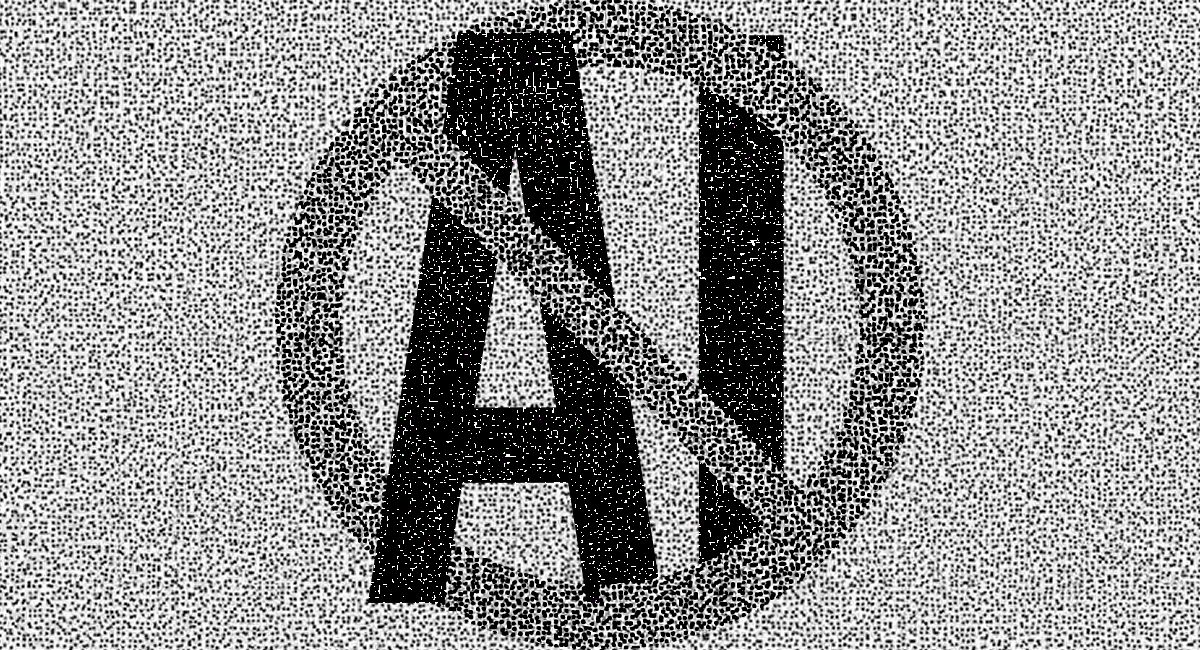
How Ghost Font works is by hiding letters amid hundreds of moving dots in a video animation rather than displaying text in a single frame. The dots that make up the hidden message drift upwards, while the dots around the text move in the opposite direction.
The human brain's ability to detect motion allows us to see the hidden message. When the dots are moving, we instantly group the dots into recognisable letters. But if you freeze the video on a single frame, the text disappears – the optical illusion is broken.
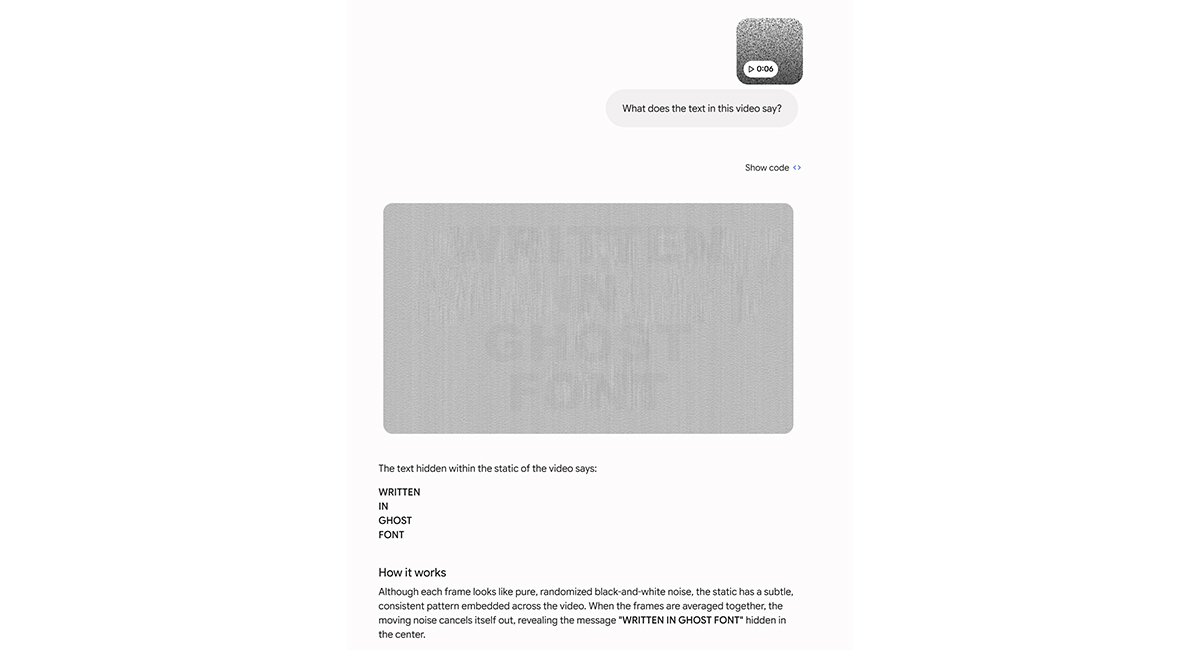
As a result, AI can't see the text – at least not for now. While we naturally interpret motion in a unified pattern, multimodal AI systems analyse animation or video as sequences of individual frames. Ghost Font files also contain the static decoy message 'written in Ghost Font' which can mislead AI models into confidently declaring that this is the hidden message.
Ghost Font has quickly gone viral after its creator Eric Lu posted about it on X. In an indication of how much interest there is in anything that can trick AI, his original post received almost 18 million views in three days.
Eric's working on an AI font generation model called Mixfont. He says that despite working in AI, he was concerned about bots harvesting content without permission and wanted to test whether typography could be an alternative solution to using passwords or encryption.
At least for the moment, it seems to work. Eric says he tested it in Anthropic’s Claude Fable and OpenAI’s GPT‑5.6 Sol Ultra and both were unable to read the text. I tested it in ChatGPT and Gemini, and they could only find the decoy message.
Some people claim to have been able to guide AI models towards discovering the hidden message by explaining to them how it works, but it seems that the font can't be seen by AI models without them being given assistance.
Nevertheless, Ghost Font remains an experiment. Eric has no current plan for developing it into a practical tool for communication (unless you really want to communicate using short videos containing phrases generated via the Ghost Font website). It's also probable that AI will sooner or later overcome this weakness by analysing video by optical flow instead of individual frames.
How to try Ghost Font
To test Ghost Font for yourself, just head to the Ghost Font website and type a short phrase into the text field. Generate the animation and check you can read the hidden message, then download it or make a screen recording.
You can then upload the resulting video file to an AI model and ask something like "What does this animation say?" or "what does the hidden text say in this video file?"
Let me know in the comments if Ghost Font was able to fool your chosen model.