Get all your news in one place.
100's of premium titles.
One app.
Start reading
Tom’s Guide
Tom’s Guide
Technology
Kaycee Hill

This is what's really causing your tomato leaves to curl — and how to actually fix it

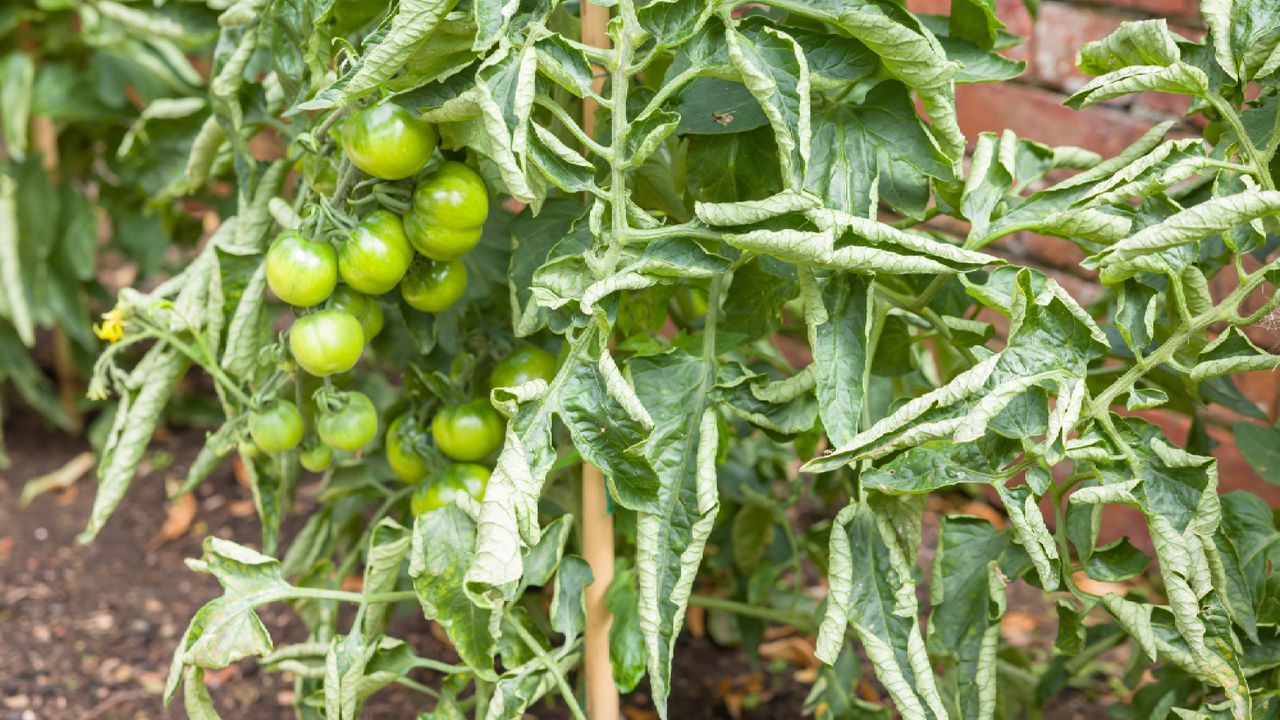
Ripening tomato plant with curled leaves.

Curling tomato leaves are your plant's way of telling you something is wrong. When you notice the foliage starting to curl, roll, or twist, it's tempting to panic. But understanding what causes tomato leaves to curl is crucial because different problems require different solutions.

Some causes resolve on their own once conditions improve. Others demand immediate action. Here are the five most common reasons your tomato plants are curling and exactly what to do about each one.

1. Heat stress strikes first

Hot, dry conditions are the most common culprit behind curling tomato leaves. When temperatures spike and moisture becomes scarce, tomato plants face an impossible choice: they're losing water through evaporation faster than their roots can absorb it.

The plant responds by curling leaf margins upward — a survival strategy that reduces sun exposure and water loss. You'll typically notice this on lower leaves first.

To fix this, water deeply and consistently. Aim for 1 inch of water per week delivered directly to the root zone with a drip line or soaker hose rather than overhead watering, which spreads disease.

You can also add a 2-inch mulch layer around the base to slow soil moisture evaporation. Once conditions cool or moisture returns, the curling typically resolves within days. The good news is that temporary leaf curl from heat stress rarely impacts your final harvest or plant growth long-term.

2. When you prune too much

Pruning tomato plants encourages fruit production, but removing too much foliage at once creates shock. When you strip away energy-generating leaves suddenly, the remaining foliage curls as the plant struggles to cope with the stress and loss of photosynthetic capacity.

The remedy is straightforward: water thoroughly and wait. The plant needs time to recover and grow new leaves. Within a couple of weeks, new foliage should emerge and the curling should disappear.

In the future, prune conservatively and gradually rather than removing large sections of growth at once. Focus on removing only lower leaves and suckers between main stems.

3. Transplant trauma

Moving seedlings into the garden disrupts roots and exposes plants to temperature fluctuations. Some tomato varieties respond by curling their leaves as they acclimate to outdoor conditions. This stress is temporary but worth preventing when possible.

If your transplanted tomatoes already show curling leaves, increase watering to help them settle in. Most plants recover naturally within two weeks without intervention.

To minimize transplant shock in future seasons, harden off seedlings by gradually exposing them to outdoor conditions before planting. Transplant on a cooler, overcast day rather than in full sun, and handle root balls gently.

Temporary shade from a cloth or tarp for the first few days also reduces stress significantly.

4. Viruses look different than stress

Tomato blight appears as brown or dark spots on leaves that rapidly expand and kill foliage. Early blight shows up after plants have set fruit and appears as concentric rings on lower leaves first.

Late blight is more severe. It spreads quickly in cool, wet conditions and can destroy an entire plant in days. Blight-infected leaves curl, yellow, and drop, leaving fruit exposed to sunscald.

Blight is a fungal disease spread by water splash and poor air circulation. Once you see it, act immediately. Remove all infected leaves and dispose of them in the trash —never compost blight-infected material. To improve airflow around the base of the plant, you can prune lower branches.

If blight continues spreading despite these steps, remove the entire plant to prevent it from infecting neighboring tomatoes.

Prevention is far more effective than treatment. Choose blight-resistant varieties like Mountain Magic F1 or Artemis F1 when planting. Space plants far enough apart for air circulation, mulch to prevent soil splash, and remove lower leaves as the plant grows. These practices eliminate the humid conditions blight needs to thrive.

5. Chemical drift is irreversible

Weed killer drifting from nearby lawn treatments can destroy tomato foliage. When herbicides like 2,4-D or dicamba blow onto your plants, they cause leaves to bend downward with individual leaflets curling upward in a cup-like pattern. This looks distinctly different from heat-stress curling.

Another sneaky source is contaminated compost or mulch containing persistent herbicides like picloram or clopyralid, which are chemicals that linger in soil for years.

Unfortunately, there's no cure for herbicide injury. You're left with a "wait and see" approach. Some plants recover and produce fruit despite the damage. Others decline and fail to fruit. Prevention is your only real defense. Keep weed killers away from tomato areas entirely.

(Image credit: Future)

More from Tom's Guide

Sign up to read this article
Read news from 100's of titles, curated specifically for you.
Already a member? Sign in here
Related Stories
Top stories on inkl right now
One subscription that gives you access to news from hundreds of sites
Already a member? Sign in here
Our Picks
Fourteen days free
Download the app
One app. One membership.
100+ trusted global sources.