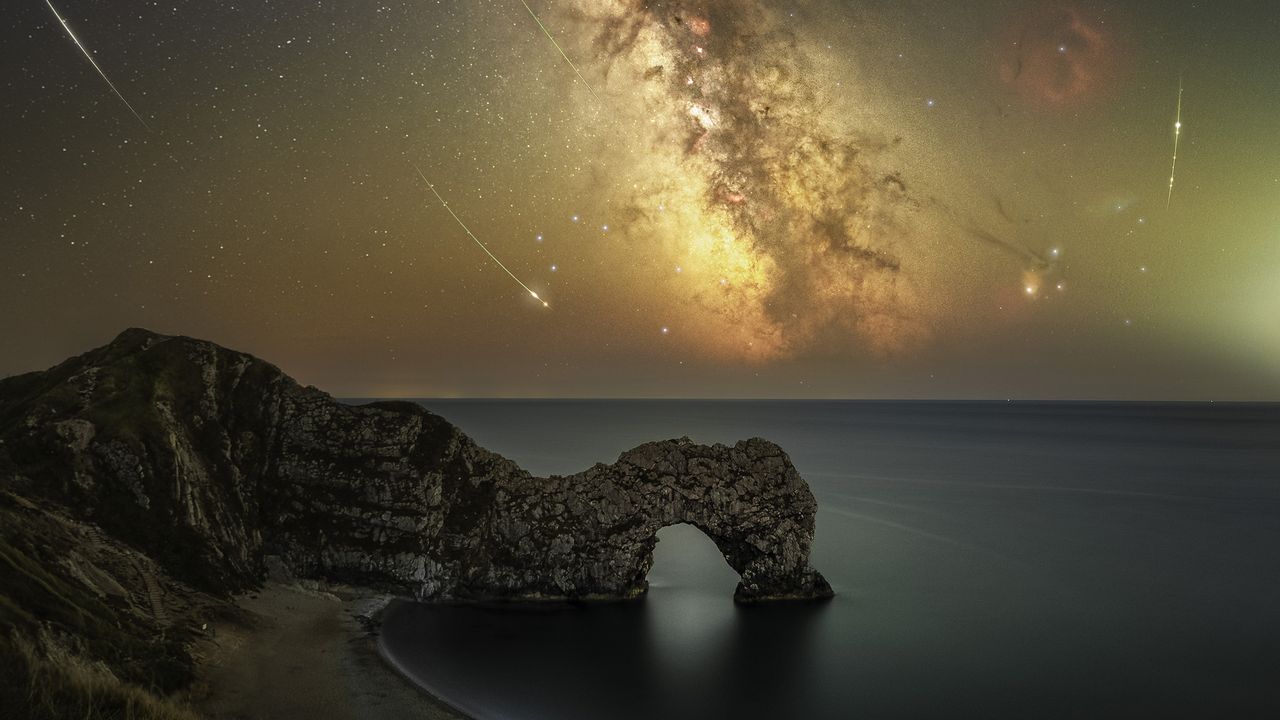
Astrophotography pushes both camera gear and technique to the limit. From battling light pollution to mastering long exposures and working with specialist equipment, making the sky's beauty visible takes patience, precision, and the right tools.
If you're interested in astrophotography, chances are you've already come across the work of Josh Dury. The award-winning astrophotographer is known for his mesmerising night sky images – and he's also the best-selling author of 52 Assignments Night Photography – a practical guide for mastering low-light and after-dark shooting.
Ahead of his upcoming talk at The Photography & Video Show 2026, Dury offered a look inside his kitbag – revealing the camera, lenses, and astro photography gear he trusts to bring his creative vision to life.
From specialist equipment to the techniques that make deep-sky detail possible, here's what powers one of the UK's leading night sky photographers.

Josh Dury's Talk
Sustainable approaches for astrophotography
Tuesday March 17 2026 – 10:30 - 11:00 – Behind the Lens Theatre
As astrophotography grows in popularity and more of us turn our cameras to the skies, there is a growing demand and pressure for our 'dark-sky' places.
Astro expert Josh will uncover the inherent challenges of capturing the night skies, and discuss how photographers can promote positive stewardship at popular locations, limit light pollution, and protect nocturnal species.
Also looking at how we can identify new images and avoid repeated content when pitching to potential clients, Josh will contemplate the present and future of astrophotography, while encouraging us all to expand our horizons.
Find more information on The Photography & Video Show website
Pro Gear + techniques
Dury's astro setup

1. Camera
My preferred camera of choice is the Sony A7s III – it's best suited to low-light environments and a powerhouse.
With increased Signal to Noise Ratio (SNR), images taken in low light environments appear cleaner and more defined with minimal image artefacts and noise (*dependent on value that is selected).
2. Lens
Sigma 14mm F/1.4 DG DN boasts f/1.4 capability at 14mm, is not only a wide-angle lens, the light gathering capability is staggering.
With greater light entering the camera to the sensor, exposures that were typically being achieved with a f/2.8 lens by comparison take half the time, even seconds to utilise.
3. Specialist tool: Sky-watcher Star Adventurer
For utilising long exposures, the Skywatcher Star Adventurer is a fantastic star tracker to use. It requires more components to operate, but the tracking – when set up correctly – allows for lengthy exposures.
A sleek, stylish design coupled with a heavier payload makes for a user-friendly interface when dealing with more complex photographic techniques.
The Starman's favorite technique
It's a difficult one to answer, as I like to experiment with multiple methods.
One that catches my attention is long exposure; revealing celestial attractions in the night-sky that are not visible to the human eye.
Opening up the interesting question is what else is there for us to see amongst the stars?

- The Photography & Video Show 2026: everything you need to know
- Get 20% off tickets of your tickets with our exclusive money-saving code!
You might like...
Browse the best cameras for astrophotography, the best lenses for astrophotography, and the best star tracker camera mounts for astrophotography.