Get all your news in one place.
100’s of premium titles.
One app.
Start reading
Tom’s Guide
Tom’s Guide
Technology
Erin Bashford

'This is the key to unlocking barista-quality coffee': I'm a coffee expert and you should never use pressurized baskets

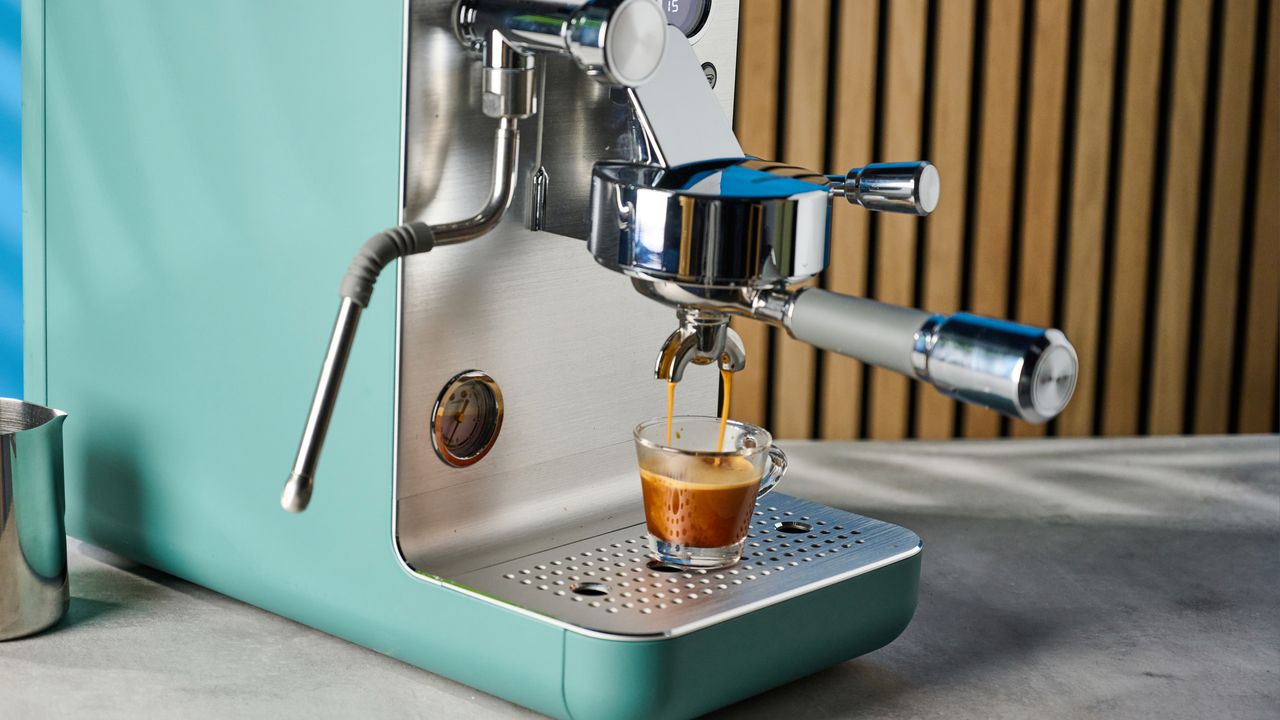
The smeg emc02 mini pro manual espresso machine in jade green.

I'm an ex-barista, and now I'm Tom's Guide's resident coffee expert. I've reviewed tons of coffee machines — everything from the $3,000 Breville Oracle Dual Boiler to the $129 Casabrews 3700 Essential — and I know my way around the mighty bean.

One thing I will not stop talking about is portafilter baskets — namely, the vast difference between single-walled and dual-walled portafilter baskets. These two things are also called non-pressurized and pressurized, which you might've seen in your espresso machine's manual.

Dual-walled/pressurized baskets are primarily for pre-ground store-bought coffee and people without their own grinder (or without a grinder that's capable of grinding espresso-fine). If you're using high-quality coffee that's freshly ground to espresso-fine, you should use the single-walled/non-pressurized basket to get the best out of your pricey coffee.

Wondering why? Don't worry, I'll tell you absolutely everything you need to know.

What's a portafilter basket? What's a portafilter?

(Image credit: Erin Bashford)

Coffee is confusing because there are loads of different words for the same thing, and people love arguing about what all these synonyms actually mean. What Johnny at your local coffeehouse might call a group handle, your favorite coffeefluencer might refer to as a portafilter. The same can be said for single-walled and dual-walled baskets — these are also called non-pressurized and pressurized.

Bamboozling, right? Don't worry — that's why I'm here.

The portafilter/group handle is the handle you hold. It often has a spout, but bottomless/naked portafilters are gaining popularity among the coffee enthusiast community.

The basket/portafilter basket refers to the sieve-like metal bowl that goes inside the end of the portafilter/group handle.

Need a break? Me, too. Here's something I made earlier that might help you visualize.

This is a portafilter/group handle. (Image credit: Erin Bashford)

The photo above is a portafilter (also known as a group handle). This is where you put the baskets (which is where you put the coffee).

(Image credit: Erin Bashford)

So, in the photo above, the circular basket on the right has been fitted to the portafilter and is where you put the coffee. You'll either have a single-walled/non-pressurized, dual-walled/pressurized basket. Either will act as a filter to stop coffee grounds going through the portafilter into your drink.

(Image credit: Erin Bashford)

Above is a disassembled portafilter and portafilter basket. You can see the portafilter/group handle at the top of the image, then the dual-walled/pressurized basket on the left, and the single-walled/non-pressurized basket on the right.

Alright, time for some audience participation. I want you to go to your espresso machine, grab your portafilter, and pop out the basket. Does it look more like the left basket or the right basket? Does it have one tiny hole, or does it have many holes (like a sieve)?

Did your espresso machine come with any more options? Cheaper machines, like the Casabrews CM5418 and the De'Longhi Dedica Duo, only come with pressurized baskets. Pricier options, like all Brevilles and most <$300 De'Longhis come with non-pressurized baskets too.

If your machine only came with pressurized baskets, don't fret. You can buy plenty of aftermarket single-walled baskets. Simply type your espresso machine name into Amazon with single-walled/bottomless/naked/non-pressurized basket and tons will come up. It's also fine to use a pressurized basket, depending on what coffee you're using (but if you want to get more serious about espresso, you'll need to move onto single-walled).

So what's the difference between pressurized and non-pressurized baskets?

The clue's kind of in the name: the difference is pressure. That's not to say that single-walled/non-pressurized baskets brew with zero pressure — espresso is a pressurized brewing method, it's literally in the name — but the two baskets are designed to create pressure in different ways.

A single-walled/non-pressurized basket uses the fineness of your ground coffee to create back pressure, delivering the correct environment to extract flavor from your grounds. To achieve this pressure, you'll need to have your coffee ground fine enough, using one of the best coffee grinders for espresso.

Conversely, a dual-walled/pressurized basket forces the water through a teeny-tiny hole to create that pressure, meaning you can use pre-ground coffee that isn't fine enough to create its own back pressure. This can destroy gentle, nuanced notes in the espresso.

I use the same Ethiopian medium-roast beans for every espresso I make, and I notice a huge difference between single- and dual-walled portafilter espresso. The single-walled shot always has a juicier, fruitier mouthfeel, whereas the dual-walled shot tastes like your automatic machine coffee.

(Image credit: Erin Bashford)

Dual-walled/pressurized portafilter baskets aren't inherently bad, though. There are some important use cases. If you're using pre-ground or stale coffee, pressurized baskets will allow you to extract espresso, whereas a single-walled basket would just produce a watery mess. Pressurized baskets also create a "fake" crema, which is better for visuals and latte art if you don't have the knowledge of equipment to make "authentic" espresso.

However, if you're using a bean-to-cup or you have one a good grinder, you'll 100% want to use single-walled/non-pressurized baskets to get the best taste out of your espresso.

All that being said, if you're not following the "rules" of coffee, but you still like the coffee you make? Then ignore everything I just said and keep doing what you're doing! There's no "right" way if you're happy.

But if you want to nerd out, I'm so here for that. Espresso is a dark art and a science (and a slippery slope into knowing terminology like "puck screen" and "dial it in"), but with a little experimenting, you will be crafting barista-quality espresso in no time.


More from Tom's Guide

Sign up to read this article
Read news from 100’s of titles, curated specifically for you.
Already a member? Sign in here
Related Stories
Top stories on inkl right now
One subscription that gives you access to news from hundreds of sites
Already a member? Sign in here
Our Picks
Fourteen days free
Download the app
One app. One membership.
100+ trusted global sources.