
Get all your news in one place.
100's of premium titles.
One app.
Start reading
LiveScience
LiveScience
Jennifer Zieba

'This is largely uncharted territory': Scientists reveal the brain's 'fear circuit' works differently than we thought

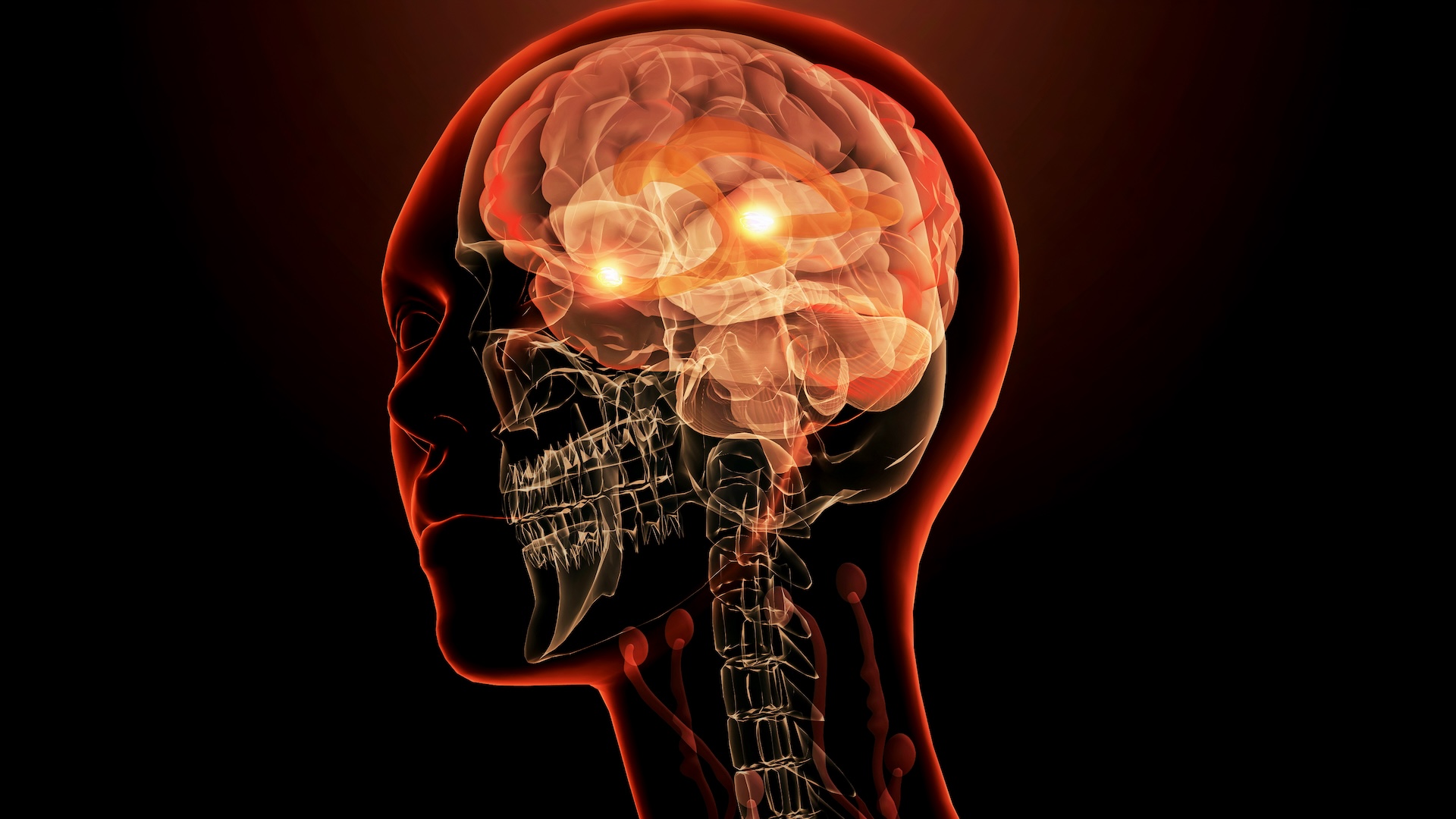
An artist's 3D rendering of a brain in the outline of a face and skull. There are two glowing dots near the center of the brain.

Scientists just discovered that the primary messengers controlling the brain's "fear circuit" aren't what we thought they were.

When you accidentally touch a pan on the stovetop or brush up against a scalding hot iron, you reflexively pull back with a feeling of pain and a sudden sense of danger. This is because the pain receptors in your hands shoot a signal through your spinal cord and brainstem, where a specific group of neurons then sends those signals to the brain's fear center, the amygdala. This triggers an emotional fear response that, in this case, helps us remember to avoid touching hot surfaces — but this fear-driven mechanism also comes into play in many other scenarios.

Sign up to read this article
Read news from 100's of titles, curated specifically for you.
Already a member? Sign in here
Related Stories
Top stories on inkl right now
One subscription that gives you access to news from hundreds of sites
Already a member? Sign in here
Our Picks
Fourteen days free
Download the app
One app. One membership.
100+ trusted global sources.







