Get all your news in one place.
100’s of premium titles.
One app.
Start reading
We Got This Covered
We Got This Covered
Jaymie Vaz

“This is a win for the wallets”: Schumer praises Supreme Court ruling for tearing out Trump’s tariffs

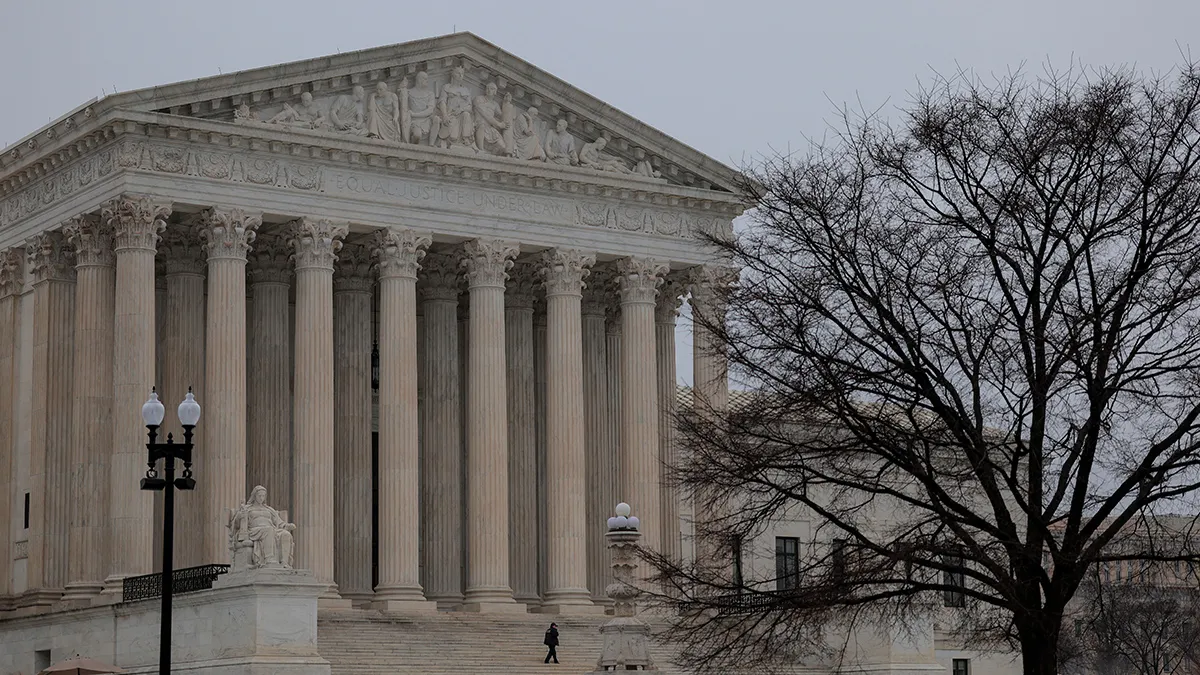
The Supreme Court just delivered a significant blow to President Trump’s economic policy, striking down a major portion of his tariffs in a 6-3 ruling. This decision effectively wipes away one of the president’s hallmark actions from his second term.

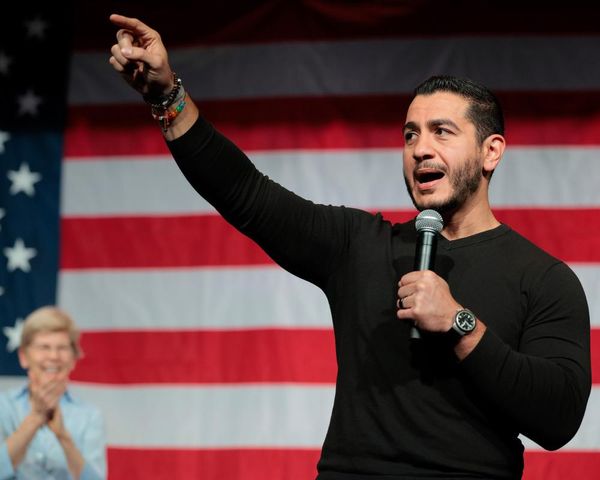
Senate Minority Leader Chuck Schumer praised the ruling, calling it a “win for the wallets of every American consumer.” He stated that “Trump’s chaotic and illegal tariff tax made life more expensive and our economy more unstable.” Schumer pointed out that families paid more, small businesses and farmers were squeezed, and markets swung wildly because of these tariffs. He emphasized that a president can’t just ignore Congress and make unilateral decisions.

Trump, on the other hand, was visibly frustrated by the news. Sources familiar with the situation say he was handed a note about the decision while addressing state governors at the White House. He reportedly called the ruling a “disgrace” and indicated he’d have to address the courts. Per The Hill, just the day before, he had argued that without tariffs, the country would be “bankrupt,” asserting his right to impose them for national security purposes.

It is a massive roadblock to Trump’s favourite threat

The whole issue revolved around Trump’s use of the International Emergency Economic Powers Act (IEEPA), a 1970s-era law. This law allows the president to “regulate” imports during national emergencies that pose an “unusual and extraordinary” threat. However, Chief Justice John Roberts, writing for the majority, clarified that IEEPA “does not authorize the President to impose tariffs.” 

He noted that in the IEEPA’s half-century existence, no president had ever invoked it to impose tariffs, especially not of this magnitude. Roberts stressed that the president needs “clear congressional authorization” to justify such an extraordinary assertion of power, which he couldn’t provide in this instance.

This ruling also invoked the “major questions” doctrine, a conservative legal principle that requires actions of “vast economic and political significance” to have clear congressional authorization. Roberts argued that endorsing the administration’s view would improperly expand presidential authority over trade policy, replacing “longstanding executive-legislative collaboration over trade policy with unchecked presidential policymaking.”

The market reacted positively to the news, with U.S. stock indexes seeing their biggest jump in over two weeks. However, the ruling raises concerns regarding the billions of dollars already collected from these tariffs. Justice Brett Kavanaugh, in his dissent, said that processing refunds is “likely to be a ‘mess’.” He believes that the tariffs were lawful but also suggested that the court’s decision might not “greatly restrict presidential tariff authority going forward.” 

Treasury Secretary Scott Bessent and other administration officials have indicated they plan to explore other legal justifications to retain as many of Trump’s tariffs as possible. Trump’s tariffs have often alienated trading partners and caused global economic uncertainty. This Supreme Court decision is a significant moment, re-emphasizing the separation of powers and potentially reshaping the landscape of presidential authority in trade.

Sign up to read this article
Read news from 100’s of titles, curated specifically for you.
Already a member? Sign in here
Related Stories
Top stories on inkl right now
One subscription that gives you access to news from hundreds of sites
Already a member? Sign in here
Our Picks
Fourteen days free
Download the app
One app. One membership.
100+ trusted global sources.