
Get all your news in one place.
100's of premium titles.
One app.
Start reading
TechRadar
TechRadar
Alex Blake

This Google-backed ‘phone cluster computing’ project is turning retired Pixels into low-cost Linux data centers — as UCSD researchers say a 2,000-phone cluster will soon support 100 computer science classes

Recycle phone.
  • Google is working on an intriguing way to give old phones a new life
  • Their motherboards would be used as makeshift cloud servers
  • This could save money and reduce the industry’s environmental impact

What happens when you recycle your old phone? In most cases it’ll be stripped for parts, but the smartphone itself doesn’t usually live on in any meaningful way. Things might look different in the future, though, as a new project from Google is giving discarded phones a new life in the cloud.

The tech giant has teamed up with researchers from the University of California San Diego to find ways in which old smartphones can be reused past their sell-by date, and one particularly promising avenue is as replacement servers. The idea is to both reduce the raw materials needed to manufacture new servers and cut down on the emissions that result from that manufacturing process.

As detailed on Google’s blog (via Tom's Hardware), the tech firm is exploring what it calls “phone cluster computing.” This involves removing the motherboards from old phones, then packing them into clusters and deploying the resulting amalgam into a “general-purpose computing platform.” This can be used to power servers instead of prompting businesses to buy new devices.

And it could be worthwhile. Google claims that between 25 and 50 phones equate to a modern server, depending on the task. However, many places don’t need anywhere near that much power — grading and research performed by teachers and universities is “within the capabilities of a single smartphone to host,” Google notes. A 20-phone cluster, meanwhile, can handle “peak submission rates” from a classroom of 75 students or more, suggesting education could be a worthwhile avenue for this kind of experimentation.

Powering future servers

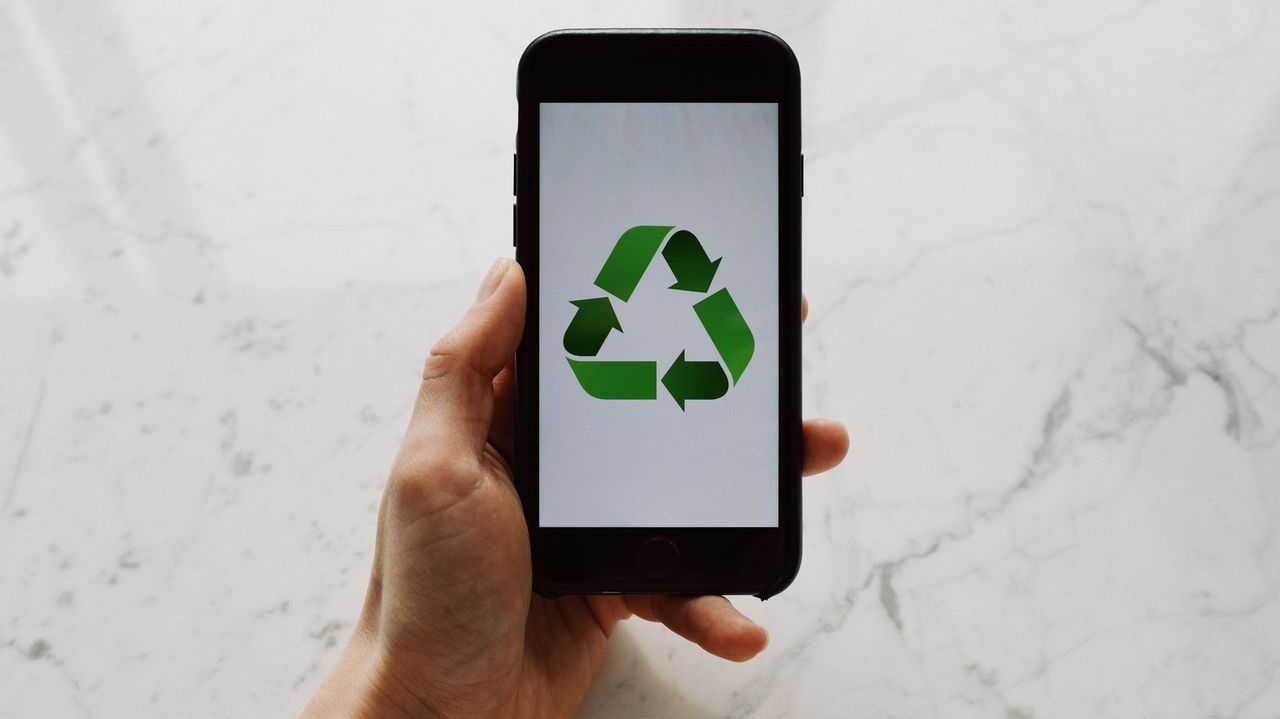
Phone components could be repurposed as large-scale cloud servers, according to Google. (Image credit: Shutterstock/Sashkin)

A project like this makes a lot of sense. After all, while your old phone might not feel as snappy as something you can buy today, it’s still full of highly capable components that could provide valuable power in different circumstances. As Google explained, “The single-threaded performance of modern smartphones’ performance processor cores is on-par with or better than those of modern multicore servers.” Simply throwing that away is clearly wasteful.

That’s made more pertinent when you consider Google’s assertion that people tend to replace their phones every four years. By that point, most smartphones remain extremely capable and still have plenty of life left in them. It would be a shame to squander that, especially when the intensive manufacturing process is taken into account.

Researchers at the University of California San Diego are planning a computing cluster packed with up to 2,000 repurposed phones, which would be deployed for computer science research. This could be capable of “supporting a hundred such classes at once,” Google says, and will be able to do so at a “fraction of the cost” of a regular server equivalent.

If the project is a success — and if consumer-grade hardware such as that found in smartphones is able to handle sustained usage in this way — it probably wouldn’t be a surprise to see more moves like this in the future. The 2,000-phone cluster is expected to go live in fall 2026, so watch this space.

Sign up to read this article
Read news from 100's of titles, curated specifically for you.
Already a member? Sign in here
Related Stories
Top stories on inkl right now
One subscription that gives you access to news from hundreds of sites
Already a member? Sign in here
Our Picks
Fourteen days free
Download the app
One app. One membership.
100+ trusted global sources.