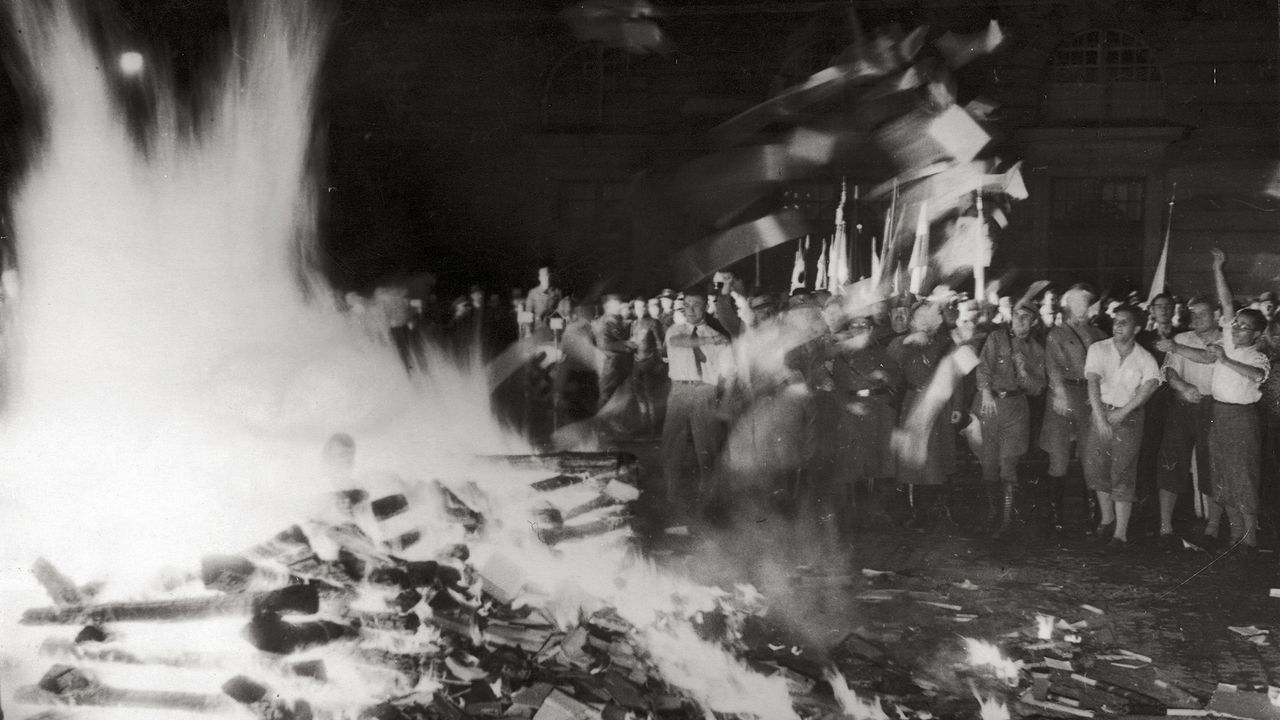
Shutter speed plays a key role in capturing the “feel” of an image and is arguably the best tool in a photographer's kit for transmitting the energy of a scene. While controversial, the images taken during an infamous night of book burning carried out by the Nazis in Berlin shortly after Hitler’s rise to power in 1933 are perfect examples of this.
The shots were taken on May 10, 1933 during what came to be known as the Book Burning at the Opernplatz (today known as Bebelplatz).
That night, Nazi student groups, professors, and paramilitary members collectively set ablaze some 20,000 volumes of literary work by Jewish, liberal, leftist, and pacifist authors, with Propaganda Minister Joseph Goebbels even appearing to make a speech.
In sharp images of that day, the way in which the books are frozen flying through the air and the arms of their throwers freeze in historic detail. The hatred written on the crowd's faces is terrifyingly frozen in time.
But, take a look at how the mood changes from another photo taken on the same day when the photographer used a slow shutter speed, turning flying books into ghostly blurs and creating an eerie feel that strikes me to my core.
Whether the photographer – most likely George Pahl, a photojournalist – intentionally composed the frame with a slow shutter speed or if this was the result of the technology of the time remains unknown. However, if he’d frozen the motion, I don’t think it would have told the story of the night quite as accurately as the motion blur does.
The Book Burning at the Opernplatz marked the climax of the "Action against the Un-German Spirit," a widespread antisemitic campaign organized by the German Student Association in the spring of 1933. It systematically purged German universities and society of cultural, political, and intellectual works that didn’t align with National Socialist (Nazi) ideology.
The long exposure photo from that day in 1933 captures the tragic day in history with a ghastly atmosphere that makes the photo feel even more frightening.
You might also like
This photographer took the iconic Oppenheimer portrait using his exclusive Manhattan Project access.