
There's this running debate among astronomers about whether our moon deserves a proper name. After all, it is the way of our solar system. Other moons each have monikers, like Phobos and Deimos, and there is certainly no planet named "planet" nor asteroid named "asteroid." Even worlds beyond our cosmic neighborhood have names, albeit often very boring ones. However, our moon's namelessness does have a silver lining: It forces us to remember that it is, indeed, a moon.
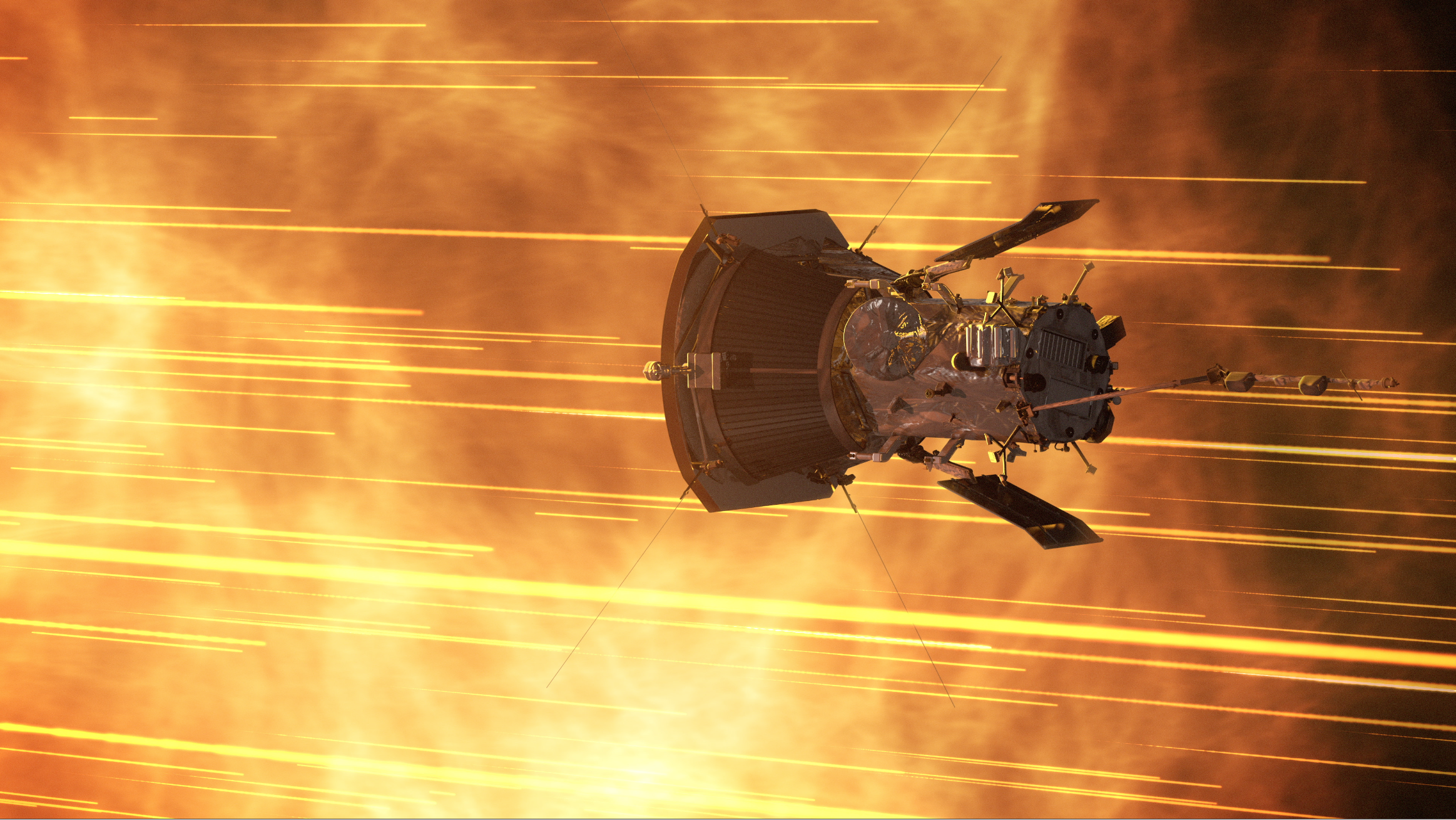
The same can't be said for the sun, whose name makes it easy to forget it's really an incomprehensible, scorching star. But on Christmas Eve this year, we'll be acutely reminded of the sun's cosmic nature thanks to a resilient little spacecraft on a spectacular journey through space: the Parker Solar Probe. On Dec. 24 at 6:53 a.m. ET, this conical explorer will fly dangerously close to none other than our glowing yellow sun.












