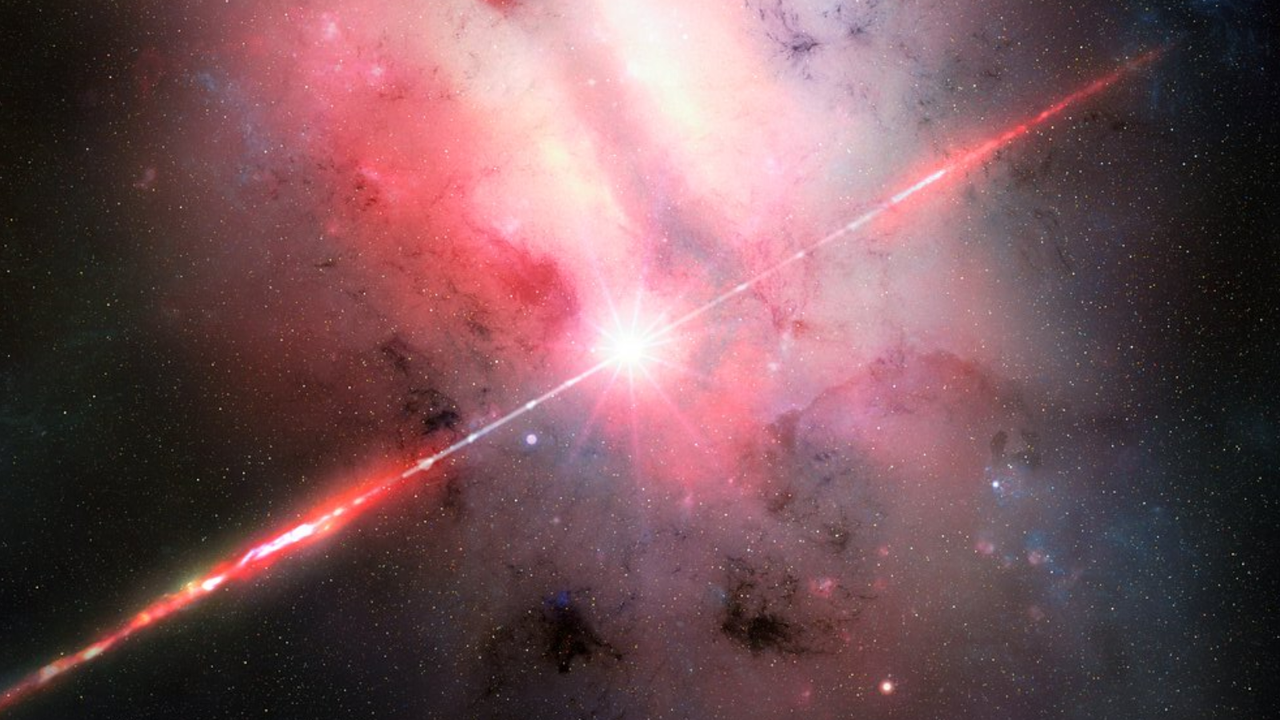
Astronomers have spotted the longest gamma-ray burst ever seen, a cosmic explosion that lasted seven hours — and they determined it could be the work of a black hole destroying a star.
Gamma-ray bursts (GRBs) are considered to be the most powerful cosmic explosions since the Big Bang, but when GRB 250702B was first detected on July 2, 2025 by NASA's Fermi Gamma-ray Space Telescope, it quickly stood out among the around 15,000 GRBs detected thus far. The blast could be the result of an elusive intermediate-mass black hole devouring a star.