
Get all your news in one place.
100’s of premium titles.
One app.
Start reading
Fashion Times
Fashion Times
Lifestyle
Lara Galan

Think You Can Spot Fake Designer Bags? Here Is What Fashion Experts Actually Look For

Counterfeit luxury goods have never been more convincing. What used to be easy to dismiss at a glance now requires a trained eye and, in some cases, professional tools. For anyone shopping secondhand, browsing resale platforms, or buying from independent sellers, knowing how to spot fake designer bags has become a genuinely useful skill.

Fashion experts and authentication specialists point to a consistent set of tells across brands and bag styles. The details below reflect what they check first, and why.

Why Learning to Authenticate Luxury Bags Is Worth the Effort

Designer bags hold and sometimes grow in value over time, which makes the secondhand market both an opportunity and a minefield. Beyond investment risk, counterfeit goods are linked to serious supply chain violations, including labor exploitation and, in some cases, organized crime. The case for knowing how to authenticate luxury bags is about more than protecting a purchase. It is about making an informed decision.

Stitching Is the First Thing Experts Examine

Before anything else, fashion authenticators go straight to the stitching. Authentic designer bags are made with meticulous, uniform stitch counts that meet strict brand standards. Counterfeit versions cut corners here, and it shows: frayed edges, uneven spacing, and thread that does not match between the exterior and interior lining are all immediate red flags.

  • Count the stitches per inch: luxury houses maintain exact counts that rarely vary between bags of the same model
  • Check the thread color on both sides of a seam: authentic bags match inside and out
  • Look at stress points like handles and corners where sloppy construction shows up first

Hardware Weight and Engraving Quality Are Major Tells

Genuine hardware on luxury bags feels immediately different in the hand. It is solid, weighty, and smooth to operate. Authentic zippers glide with zero resistance. Clasps snap with purpose. Fake designer bags tend to use hollow, lightweight hardware that catches, sticks, or feels gritty under the fingers.

Engraving is equally telling. Brand logos etched into genuine hardware are crisp, clean, and evenly spaced. On counterfeits, lettering is often shallow, blurry, or slightly misaligned. Even a millimeter of offset in font spacing is worth noting.

Expert tip: Check the zipper pull specifically. Many luxury houses stamp their name directly on the zipper hardware. On fakes, this text is frequently missing, misspelled, or poorly executed.

What Authentic Leather Smells and Feels Like

Real leather has a distinct, earthy scent that is immediately recognizable. Fake designer bags made from synthetic materials typically carry a sharp chemical or plastic smell that genuine leather never does. The smell test takes seconds and eliminates a significant portion of fakes without needing to look at anything else.

The texture is equally informative. Genuine leather is soft, slightly warm to the touch, and has a natural flexibility. It stretches slightly under gentle pressure. Faux or low-grade materials feel rigid, plasticky, or uniformly smooth in a way real hide never quite is.

  • Real leather shows natural grain variation; perfect uniformity can be a sign of synthetic material
  • Brand-specific materials like Louis Vuitton coated canvas and Gucci GG Supreme have distinct textures worth learning separately
  • A chemical smell on any bag claiming to use genuine leather is a reliable red flag

How to Check Serial Numbers and Authentication Details

Serial numbers and production codes are a standard part of how to authenticate luxury bags, but they require brand-specific knowledge to use effectively. Where a serial number is placed, how it is formatted, and what it encodes varies significantly between houses. Chanel, for example, has changed its serial number format several times over the decades, and knowing which format corresponds to which era is essential.

One of the clearest signs of a fake: identical serial numbers appearing across multiple bags. Authentic pieces carry unique codes. Any bag sharing an exact code with another is a counterfeit by definition.

Worth noting: authentication cards, dust bags, and original packaging can all be replicated just as easily as the bag itself. Paperwork alone does not confirm authenticity.

Can a Low Price Identify a Fake Designer Bag?

Price is one of the fastest and most reliable initial filters. Luxury bags at dramatic discounts with no credible explanation are almost always fake. Legitimate sales, consignment, and pre-owned pricing do exist, but they still operate within a recognizable range. A bag priced far outside that range, with no documented provenance or verifiable seller history, deserves serious skepticism.

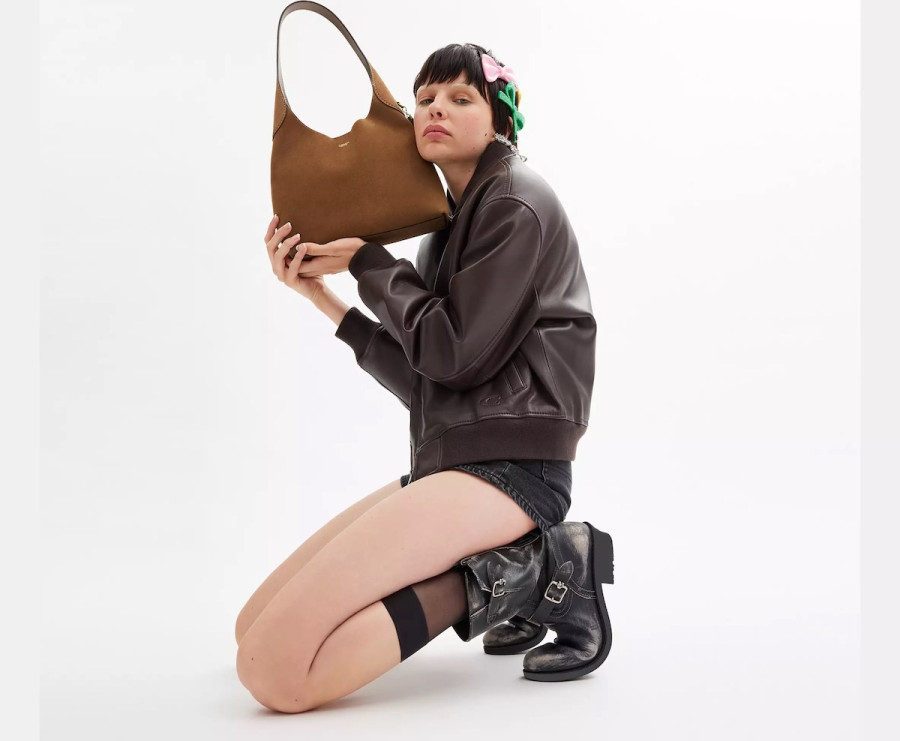
Amelia Gray in Balenciaga's Le City bag campaign. (Credit: Courtesy of Mario Sorrenti)

How to Authenticate Luxury Bags When Buying Online

Online authentication is harder by nature because the physical inspection that reveals most fakes is not possible. Fashion experts consistently advise against purchasing from unverified independent sellers on social media platforms, where fake designer bags are common and recourse after a bad purchase is limited.

  • Request detailed photos of hardware, stitching, serial numbers, and interior lining before committing
  • Use established resale platforms that include authentication guarantees as part of their process
  • Third-party services like Entrupy and Real Authentication offer professional verification for a fee
  • If possible, arrange to inspect the bag in person before finalizing any purchase

What Are Superfakes and Why Do They Need a Closer Look?

Superfakes are high-grade counterfeits that replicate the exterior of a designer bag with impressive accuracy. From a distance, or even up close without handling the bag, they can be genuinely difficult to distinguish. Fashion experts note, however, that superfakes almost always fall short on the interior: lining quality, inner stitching, and construction details are harder to replicate and rarely receive the same investment as the outer shell. Flipping the bag inside out or examining the base of the lining will reveal inconsistencies that the exterior hides.

How to Authenticate Luxury Bags Like a Pro: What Every Buyer Should Know

Spotting fake designer bags is a skill that sharpens with exposure. Handling authenticated pieces, studying brand-specific details, and knowing which features each house prioritizes builds the kind of eye that no checklist fully replaces. For high-value purchases, professional authentication is always worth the cost. The fee is a fraction of the potential loss, and the confidence it provides changes how secondhand shopping feels entirely.

Frequently Asked Questions

1. What are the most common signs of fake designer bags?

The most reliable red flags are inconsistent or frayed stitching, hollow and lightweight hardware, a chemical smell from materials claiming to be leather, and serial numbers that do not match the bag's production era or are identical to other bags of the same model.

2. How do you authenticate luxury bags without a professional?

Start with the smell and feel of the material, then check hardware weight and zipper action, examine stitching consistency on both the exterior and interior, and verify the serial number format against known brand standards. These checks will catch most counterfeits without specialist tools.

3. Is it illegal to buy fake designer bags?

Laws vary by country. In some jurisdictions, knowingly purchasing counterfeit goods carries penalties, while in others the legal risk sits primarily with sellers. Beyond legality, counterfeit purchases support supply chains linked to labor violations and organized crime, which is an important consideration regardless of local law.

4. Can authentication cards be faked too?

Yes. Authentication cards, dust bags, receipt replicas, and original-style packaging are all regularly produced by counterfeiters and should not be treated as proof of authenticity on their own. Physical inspection of the bag itself, combined with professional verification for high-value pieces, is the only reliable standard.

Sign up to read this article
Read news from 100’s of titles, curated specifically for you.
Already a member? Sign in here
Related Stories
Top stories on inkl right now
One subscription that gives you access to news from hundreds of sites
Already a member? Sign in here
Our Picks
Fourteen days free
Download the app
One app. One membership.
100+ trusted global sources.







