
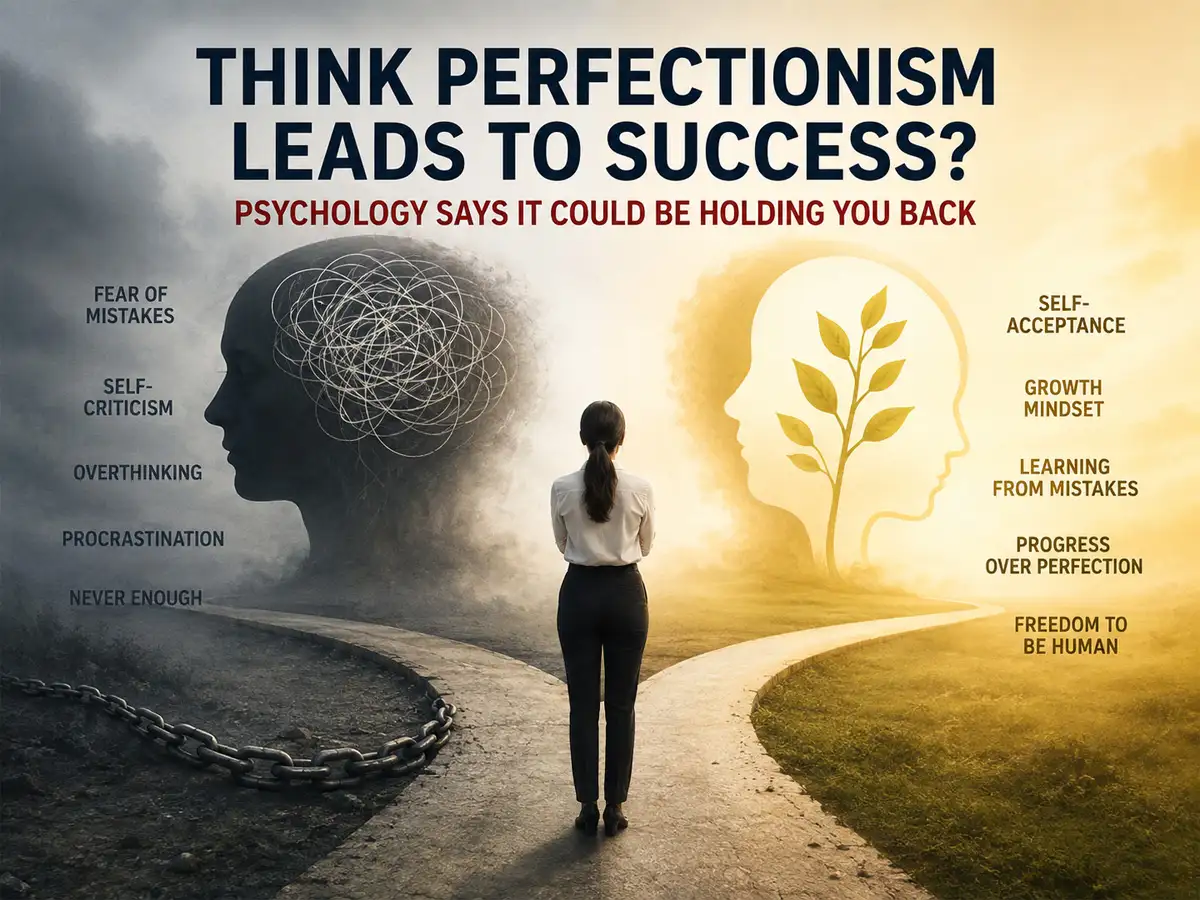
Perfectionism can look like a superpower as it pushes people to work harder, set ambitious goals and pay attention to details. In school, at work or while building a career, high standards can seem like the secret to getting ahead. But psychology suggests there is an important difference between striving to do your best and believing that anything less than perfect is failure. When perfectionism becomes rigid, it can create fear of mistakes, procrastination, stress and burnout. Research shows that some forms of perfectionism can support achievement, while others can undermine it. The real goal, psychologists suggest, is not to lower your standards but to stop demanding flawlessness from yourself.
NOT ALL PERFECTIONISM IS THE SAME













