
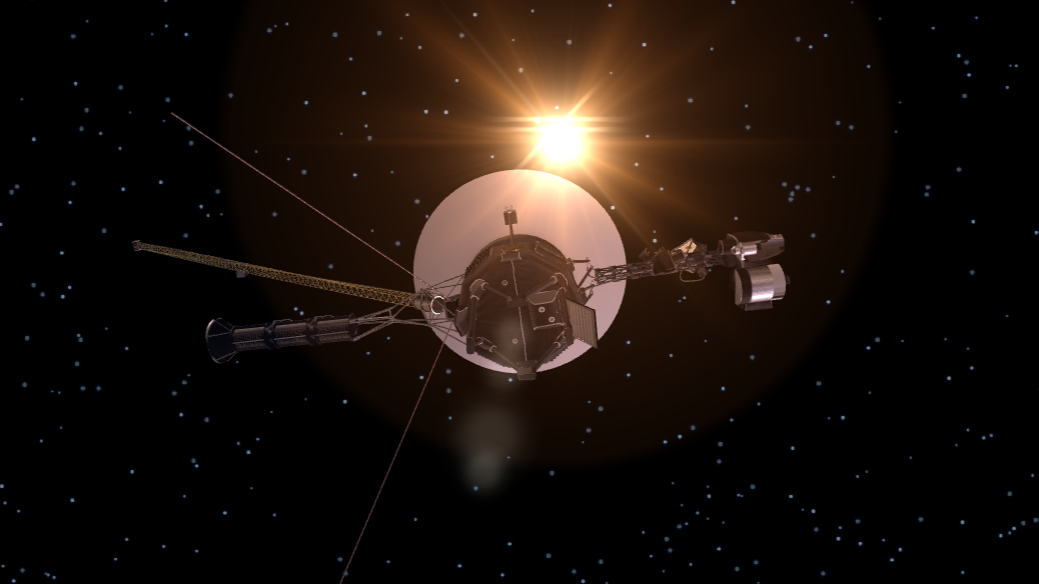
I was once sitting with my father while Googling how far away various things in the solar system are from Earth. He was looking for exact numbers, and very obviously grew more invested with each new figure I shouted out. I was thrilled. The moon? On average, 238,855 miles (384,400 kilometers) away. The James Webb Space Telescope? Bump that up to about a million miles (1,609,344 km) away. The sun? 93 million miles (149,668,992 km) away. Neptune? 2.8 billion miles (4.5 billion km) away. "Well, wait until you hear about Voyager 1," I eventually said, assuming he was aware of what was coming. He was not.
"NASA's Voyager 1 interstellar spacecraft actually isn't even in the solar system anymore," I announced. "Nope, it's more than 15 billion miles (24 billion km) away from us — and it's getting even farther as we speak." I can't quite remember his response, but I do indeed recall an expression of sheer disbelief. There were immediate inquiries about how that's even physically possible. There were bewildered laughs, different ways of saying "wow," and mostly, there was a contagious sense of awe. And just like that, a new Voyager 1 fan was born.







