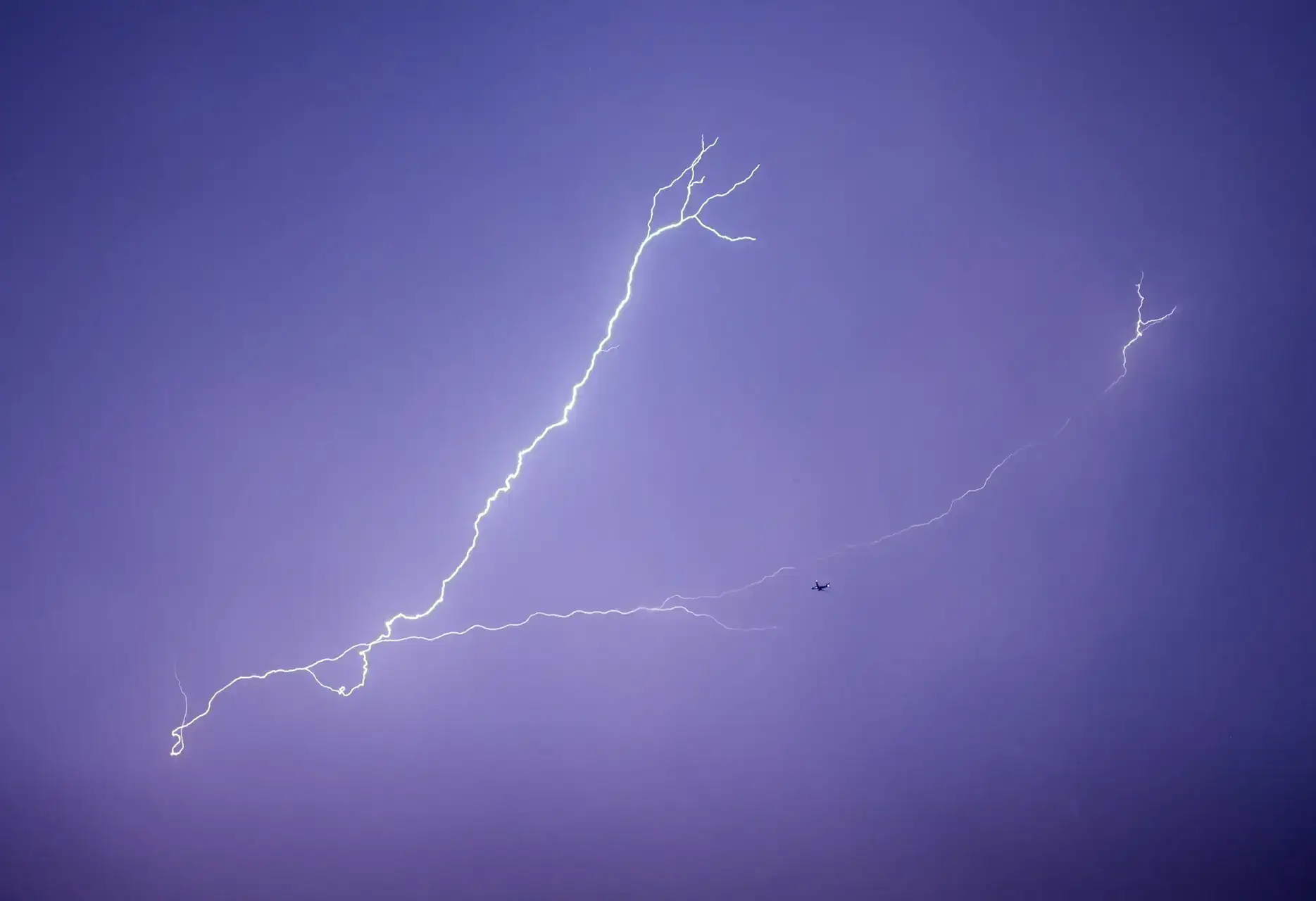
In the early days of commercial aviation, flying was far more unpredictable than it is today. Pilots had limited information about the weather ahead, and thunderstorms were among the biggest threats in the sky. Aircraft could leave the runway under clear conditions and suddenly enter violent storms filled with powerful winds, lightning, hail and extreme turbulence.
One of the most tragic examples came on August 31, 1940, when Pennsylvania Central Airlines Flight 19 took off from Washington, D.C. The DC-3 aircraft was considered reliable, and its captain had thousands of hours of flying experience. Yet, as the plane entered a severe thunderstorm near Virginia, it was struck by disaster.
Witnesses described seeing a flash of lightning, a loud roar and what looked like a burning aircraft moving through the clouds. The plane crashed into an alfalfa field, killing all 25 people aboard. The accident became a turning point in aviation history because it revealed how little scientists truly understood about thunderstorms.
After Flight 19, several more deadly crashes followed, many connected to poor weather conditions. Government investigators discovered that thunderstorms were responsible for dozens of aviation accidents, proving that understanding storms was not just a scientific challenge but a matter of life and death.
Why did scientists decide to fly directly into storms?
At the time, meteorologists knew thunderstorms were dangerous but had limited tools to study their inner structure. Weather stations on the ground could record basic conditions, but they could not measure what was happening inside a massive storm system thousands of feet above the Earth.
Researchers needed information about temperature, humidity, wind speed, rainfall and turbulence. The only way to collect this data was to enter the storms themselves. It was a risky idea, but scientists believed that flying into danger was the only way to make future flights safer.
This mission became known as the Thunderstorm Project, a major government research effort involving the U.S. Army Air Forces, Navy, Weather Bureau and scientific organizations. The project brought together some of the country’s best weather experts and aviation specialists.
Instead of avoiding storms, trained pilots would intentionally fly into them with scientific equipment. Their goal was not to challenge nature but to understand it. Every dangerous flight provided information that could protect thousands of passengers in the future.
How did Combat pilots help reveal the secrets of thunderstorms?
The Thunderstorm Project needed pilots who could handle extreme conditions, so researchers recruited former World War II aviators. These pilots had experience flying dangerous missions and were prepared for difficult situations in the air.
They used P-61 Black Widow aircraft, planes originally built for nighttime military operations. During the project, these aircraft became flying laboratories filled with instruments designed to measure storm conditions.
The pilots were instructed not to avoid large or frightening storms. Instead, they searched for the most intense parts of thunderstorms and carefully recorded what they experienced during each flight.
Their missions were extremely dangerous, but their courage helped scientists discover that thunderstorms were not random disasters. They had patterns, stages and internal structures that could be studied and predicted.
What discoveries made modern air travel much safer?
The Thunderstorm Project changed the future of aviation by revealing how thunderstorms develop and behave. Scientists discovered that storms move through predictable life cycles and contain areas of extreme turbulence, especially inside heavy rain cores.
Researchers also found that some parts of storms were less dangerous than others. These discoveries helped pilots understand where the greatest risks were and how to avoid the worst conditions.
One of the most important findings was the value of radar. Weather radar allowed aviation teams to detect storms before aircraft entered dangerous areas, turning weather forecasting into a practical safety tool.
FAQs:
Q1. How did the thunderstorm project change the future of air travel safety?The Thunderstorm Project transformed aviation by studying storms from inside rather than simply avoiding them. Scientists and pilots discovered how thunderstorms developed, where turbulence was strongest and how weather data could help prevent dangerous flights. Their research became a foundation for modern aviation safety systems.
Q2. Why did combat pilots risk their lives by flying into thunderstorms?
Former military pilots joined the project because they had the skills needed to handle extreme flying conditions. Using specially equipped aircraft, they entered powerful storms to collect scientific data. Their dangerous missions helped researchers understand weather patterns that were once considered unpredictable.