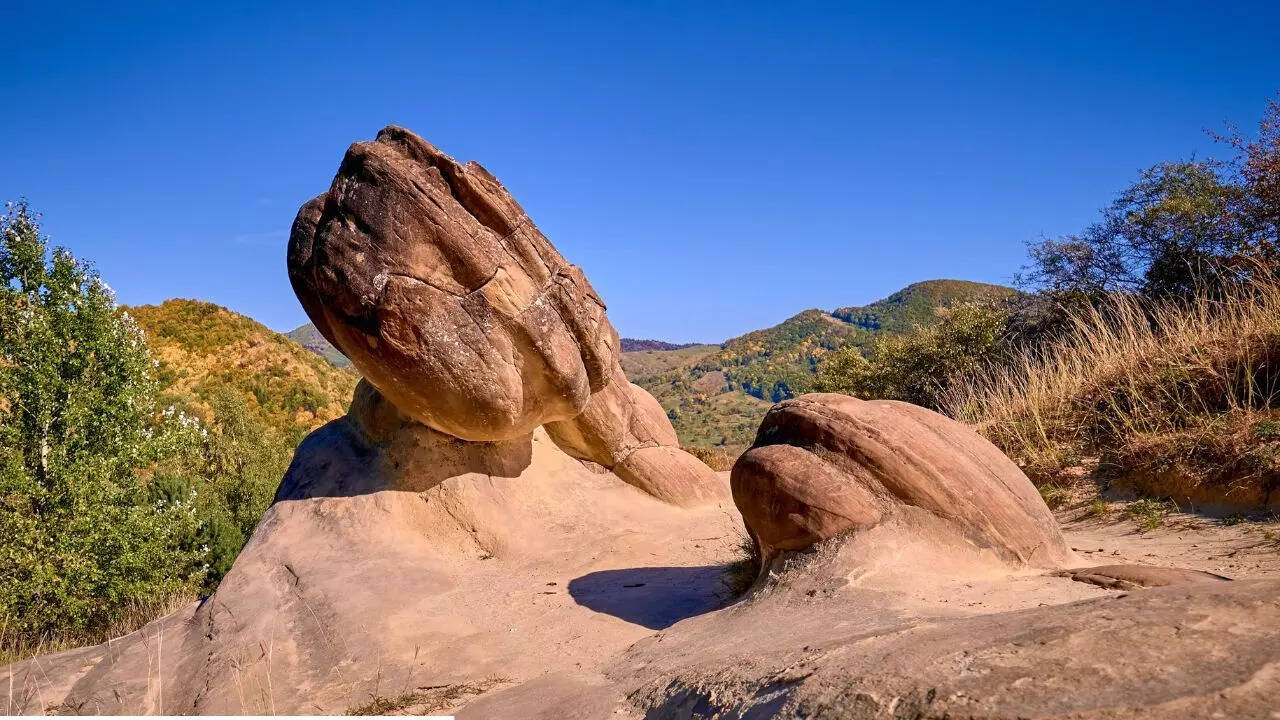
In a quiet part of southern Romania, rounded sandstone formations sit in open fields and woodland edges, drawing steady scientific interest. Known as 'trovants', these stones are often described as living rocks because they appear to grow and, in some cases, form smaller offshoots that separate from the main body. The best-known examples are found near the village of Costeşti in Vâlcea County, where a protected site called the Muzeul Trovantilor preserves several large specimens. The structures are classified as cemented sandstone concretions formed millions of years ago. While folklore has long surrounded them, geologists attribute their unusual shapes and gradual expansion to natural chemical and sedimentary processes rather than biological activity.