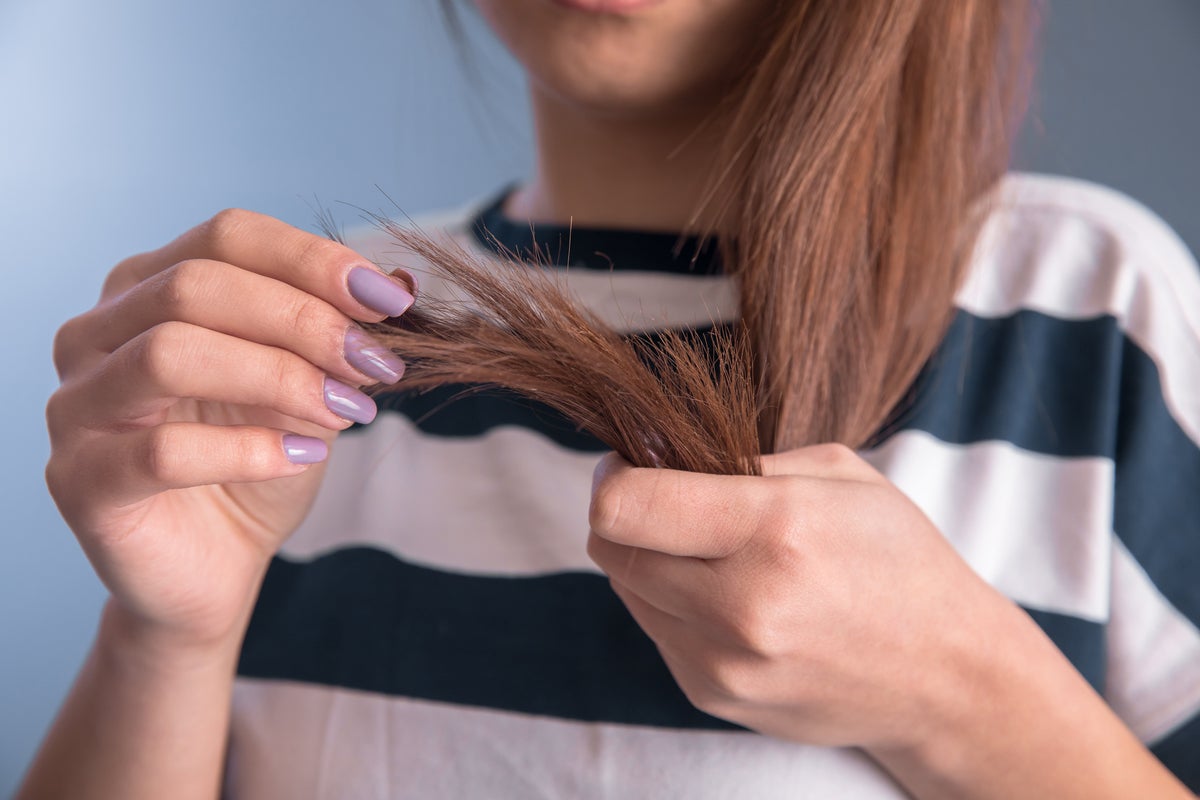
If split ends, snapping strands, and a straw-like texture sound all too familiar, your hair may be damaged.
While dryness can show up in similar ways, true damage goes deeper. It happens when the hair’s cuticle – responsible for strength and elasticity – is compromised, leaving strands feeling brittle and prone to breakage. The result? Persistent frizz, lengths that won’t grow, and a noticeable lack of shine.

So what’s behind it, and can it be undone? From heat styling and chemical treatments to environmental exposure and everyday wear and tear, there are plenty of factors that can take a toll on your hair.
To separate myth from fact, I spoke to leading hair professionals and trichologists to understand what’s really going on – and, crucially, the products and treatments they swear by to help restore hair back to its healthiest state.
Read more: Best heat protectants for hair 2026, tested by a beauty editor
What are the signs of damaged hair?
“Damaged hair will usually feel rough, dry, and more difficult to manage,” explains trichologist and founder of hair care company Act and Acre, Helen Reavey. “You might notice increased breakage when brushing, split ends that travel up the strand, excessive frizz, dullness, and hair that tangles much more easily than it used to.”
Siobhan Haug, award-winning colourist and co-founder of Fitzrovia salon Haug London Haus, agrees adding that "the first sign of damaged hair is a ruffled cuticle, so where the surface layer of the hair looks dry and you've got frayed edges, this is where the cuticle layer is standing up a little”.
Loss of elasticity is also a major sign. Reavey explains you can test this by gently stretching a strand and seeing how it reacts: if you have damaged hair instead of bouncing back, it snaps. “I always remind people that damage isn’t just about how the hair looks — it’s about how it behaves,” says Reavey. “If it’s breaking, shedding excessively from mid-lengths, or feeling weaker than usual, that’s your sign.”
What causes hair damage?
Several factors cause hair breakage including using too much heat. Haug explains that heat damage is a big one as lots of people fail to use heat protection (we’ve rounded up the best heat protectants). Simultaneously, chemical dyes and treatments, environmental factors like extended UV exposure, wind, central heating and air con are also factors.
“Overusing heat to style your hair will strip the scalp and strands of moisture, leaving them dull and weak, while using too many chemicals and dyes will cause buildup on the scalp and strands,” Reavey reinforces.
“Additionally, build-up of dead skin, pollution, and sweat on the scalp can all contribute to the hair shaft weakening, causing unhealthy hair growth and an increased chance of damage.”
She adds that it’s important to remember that diet, hydration, stress levels, and hormonal imbalances can also play a role in hair health. Reavey says: “At the birth stage of each hair follicle if it doesn't have the right nutrients then there is a chance it will grow much thinner which leads to the hair becoming more brittle and susceptible to split ends and breakage.”
How to prevent hair damage?
Prevention always starts at the scalp, says Reavey: “If the scalp isn’t hydrated, balanced, and properly cleansed, the hair that grows from it will be weaker from day one.” Scalp health can be maintained by using a serum which helps to hydrate the scalp so the strand that grows in has better resilience from the start.
The trichologist also advises to double cleanse. The first cleanse breaks down buildup, sweat, and pollution, while the second actually cleans the scalp.
She adds a few other tips like keeping hot tools below 180°C, always applying heat protectant, avoiding aggressive brushing when wet, supporting hair internally with hydration, protein, and stress management, and consistent cuts every 10-12 weeks.
How to repair damaged hair?
“While it isn’t possible to fully repair/heal the hair, it is possible to reduce some of the signs of damage, such as dryness and dullness,” Reavey explains.
In order to get rid of split ends and breakage, she recommends routine hair cuts every 12 weeks. “A healthy trim will remove the damaged, thinned strands and give your hair a refresh,” Reavey says. “Bond repair treatments are another option that can help with some of the healing, just make sure to not overuse them, as they can also have a negative effect.”
On regular hair cuts, Haug agrees. “While there are treatments that will temporarily seal split ends, we’d always recommend a cut to remove these as ultimately they will continue to damage the hair shaft until they’re cut,” she says.
However, according to Kieran Tudor, award winning hairdresser and founder of hair care brand Centred, there’s no quick fix.
He recommends starting with a nourishing cleanse that replenishes moisture without stripping the scalp's natural barrier. Then it’s all about rebuilding the internal structure which, for chemically processed or lightened hair, he advises periodic K18 treatments that work at a molecular level to temporarily reconnect broken keratin chains, improving elasticity and reducing snapping.
“It’s not about overloading the hair with protein every wash,” Kieran explains. “It’s about strategic strengthening when the fibre truly needs it.” A healthy scalp is also top of his list, which can be boosted by massaging as it “improves circulation, supports follicle function and reduces stress-related tightness in the tissue” which creates a better environment for growth over time.
When it comes to using heat on damaged hair, Kieran says to reduce this wherever possible. When you do use heat, it’s important to always apply a quality heat protection spray, lower the temperature and avoid multiple passes with straighteners. “Think of it like recovering skin after a peel. You wouldn’t expose it to unnecessary trauma,” he says.
Read more: Best hair oils for 2026, tested on three hair types
Do hair extensions damage hair?
“They can, especially if they’re installed too tightly or worn continuously without breaks,” Reavey warns. “Excess tension can lead to inflammation at the follicle, which over time may cause traction alopecia, particularly around the hairline. If you choose to wear extensions, make sure they are professionally installed, avoid excessive tension, and give your scalp recovery periods between installs.”
Haug adds: “When applied correctly by a professional, hair extensions don't damage the hair, but it does really depend on how you look after the extensions once they've been done.”
Does straightening your hair damage it?
The short answer? Yes, according to Reavey – especially if used frequently or at high temperatures. “Heat weakens the protein bonds within the hair shaft," she explains. “I recommend keeping tools below 180°C (about 356°F) and always using a heat protectant.”
“Adding direct heat to the hair from something like a hair straightener really dries out the cuticle layer of the hair so it makes the hair look dull, and damages the surface area of the hair, Haug adds. “If you're doing that repeatedly then it will start to create damage on the cortex level (the middle of the hair) particularly through lengths and ends where the hair is a bit weaker.”
You should also note that areas around the hairline or sections that you straighten a lot, don’t need as much effort as the rest, Haug says. “Where you might do four or five passes across hair at the back of your head, at the front you probably only need to do one or two.” “Repeated straightening is what's going to cause damage.”
Do certain hair styles cause damage?
Tight hair styles like high ponytails, slicked-back buns, tight braids, and those that pull at the hairline can create chronic tension on the follicle, Reavey explains. “Over time, that tension can cause thinning or traction alopecia.”
Textured hair specialist and celebrity hairstylist to the likes of Serena Williams and Micheala Coel Lorraine Dublin agrees. “Hair extensions can cause damage, especially if they’re used often or installed incorrectly,” she explains. The most common issue is a type of hair loss, called traction alopecia, happens when extensions pull on the roots for long periods, Dublin explains. Tight braids, sew-ins, and tight ponytail weaves can also pull on roots and cause breakage and thinning over time, she adds. To avoid damage, Dublin advises it’ss best to have extensions put in and taken out professionally.
Does air drying damage hair?
“Funnily enough air drying can cause damage,” Haug says. “Often people think that it's great because you're not using heat, but your hair is most fragile when it's wet.”
This is because it’s more susceptible to breakage. “If you go outside it's obviously getting the full effect of the elements, so actually you should dry your hair before leaving the house and not leave it to air dry,” she adds.
Reavey agrees: “Hair is at its weakest when wet because the cuticle is lifted and the internal bonds are more elastic,” she explains. “That’s when breakage happens. Brushing aggressively, pulling it into a tight bun or slicked-back style while damp, twisting it into braids, or going to bed with it wet can all create tension and friction on a fragile strand.”
The trichologist advises if you prefer to air dry, gently squeeze out excess water with a microfiber towel detangle carefully from the ends up, and let the hair dry loose whenever possible. Plus, it’s best to avoid sleeping on damp hair as friction against the pillow can cause unnecessary breakage.
What products do experts recommend for damaged hair?
Centred daily calma repair shampoo

“I recommend Centred daily calma shampoo and conditioner as a repair-focused foundation,” says Kieran Tudor.
“They’re designed to gently cleanse without stripping the scalp’s natural barrier, while replenishing moisture and supporting a calmer, more balanced environment.”
Buy now £22, Healf.com
Kérastase gloss absolu glaze milk anti-frizz heat protecting spray

All experts stress the importance of heat protector. This one is recommended by Helen Reavey and offers 230 degrees heat protection. “It protects the cuticle from heat damage while keeping hair smooth and lightweight,” says Reavey.
Buy now £42.55, Amazon.co.uk
Act and Acre daily hydro serum

Reavey recommends the daily hydro serum from Act and Acre for hair type one (straight) to “maintain scalp hydration without weighing hair down”, and those with hair type two (wavy) to “improve moisture levels and manageability”.
Buy now £24, Cultbeauty.co.uk
Schwarzkopf Professional fibre clinix fibre sealer

“This is a protein cream that really softens the hair so it does two jobs, it adds strength and hydration, so it's great if you want to just air dry your hair but it also gives you a really smooth finish on dry or damaged hair types if you're blow drying,” says Siobhan Haug.
Buy now £26, Hairbyreema.com
Centred en-root scalp oil

Kieran Tudor recommends committing to scalp health with a treatment like Centred en-root scalp oil regularly, ideally weekly. “A healthy scalp produces stronger hair,” he says. “It’s that simple.”
“Massage improves circulation, supports follicle function and reduces stress-related tightness in the tissue. Over time, this creates a better environment for growth.”
Buy now £36, Wearecentred.com
The Body Shop Jamaican black castor oil leave-in conditioner

Lorraine Dublin suggests using Jamaican black castor oil for damaged hair. This product from The Body Shop is a leave-in treatment, designed to nourish curls and coils.
Buy now £18, Thebodyshop.com
Olaplex no 3 hair perfector

Kieran Tudor recommends the cult product from Olaplex for damaged hair. When senior shopping writer Daisy Lester tested the new formula, she described the hair treatment as the “perfect mid-week pick-me-up” for dull, brittle and coloured hair.
“My highlights looked brighter, and my strands looked softer instantly after use, but Olaplex’s patented formula also works long-term to rebuild broken bonds caused by chemical and heat damage,” she explained.
Buy now £28, Amazon.co.uk
For smoothing and taming flyaways, these are the 12 best leave-in conditioners, tried and tested on different hair types