
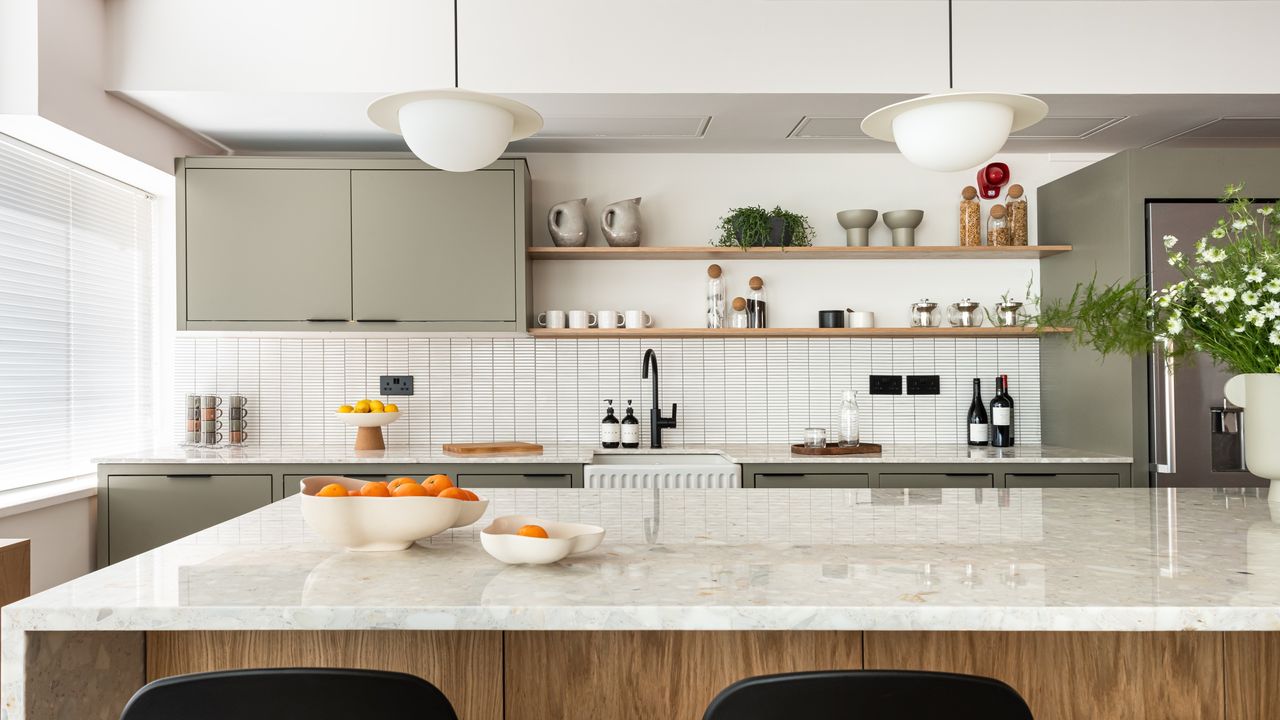
When you're in the midst of planning a new kitchen, the thought of a sparkling new cooking space is sometimes all you can think of. And we get it, it's exciting — but it's important to assess the basics first to avoid construction problems resulting from a poorly installed kitchen that will end up being difficult and costly to remedy after the fact.
The key? Discuss all your new modern kitchen ideas with your designer, builder, plumber, and electrician during the planning stage. Whilst it's not as compelling as the kitchen design itself, overlooking things like power outlets and plumbing is not an oversight you want to be making.

And as for the other construction issues builders often see? Our experts have highlighted the five main problem areas so you can avoid making the same mistakes, too.
1. Kitchen Cabinets That Don't Fit the Space

Poor measuring, rushed fitting, or uneven floors can all lead to kitchen cabinets that don't fit into a space properly.
Uneven floors can be particularly problematic in older or period properties, and making sure your contractor considers this is essential.
"One of the most frequent issues we’re brought in to fix is cabinetry that simply doesn’t fit the room," says Nick Cryer, founder of Berkeley Place. "Older properties rarely offer the convenience of straight walls or level floors. Centuries of settlement can create significant variation, sometimes several millimetres from one end of a run to the other.
"When a contractor relies too heavily on modular units without allowing for these heritage quirks, you inevitably get gaps, crude fillers, misaligned doors and, over time, sloping or even cracked worktops."
A bespoke approach is the solution, advises Nick. "This almost always delivers a superior result, because each unit is crafted to the exact dimensions and irregularities of the space," he explains.
"Modular kitchens can look exceptional, but only when installed with meticulous care: accurate laser measurement, proper shimming, and, above all, time. A rushed install is almost always a compromised one."
2. Worktops That Fail Under Pressure

Natural stone kitchen countertops are always a timeless and chic choice, but they are heavy. Incorrect installation of porcelain, marble, or any solid-surface worktops can lead to sagging, cracking, and failed joints.
"In high-end renovations, clients often specify premium materials such as large-format porcelain, thick quartz slabs, or hand-selected natural stones," Nicks explains. "These surfaces are beautiful and extremely heavy.
"We frequently see worktops fail, not because of the material itself, but because the base cabinetry beneath hasn’t been engineered to the standards required for luxury installations. In older properties, where floors may dip or joists may have been altered during previous renovations, inadequate bracing can lead to sagging, cracked stone, or failing joints.
The solution? Always make sure the cabinets or substrate can properly support the weight of the kitchen countertop.
"Before templating, the substrate must be perfectly supported and leveled," says Nick. "We plan structural reinforcement early in the design process, especially for oversized islands, cantilevered breakfast bars, or sink/appliance zones. Once a stone surface cracks, repair is rarely seamless, so the groundwork must be uncompromising."
3. Plumbing That Isn’t Future-Proof

Plumbing shortcuts can only ever lead to one thing: headaches. Dodgy pipe placements and unsealed joints can cause leaking behind panels that will be expensive to fix.
"Behind beautifully paneled walls and bespoke joinery in period kitchens, we often uncover legacy pipework that’s undersized, corroded, or incorrectly positioned," says Nick.
"Modern kitchen ideas demand far more from plumbing than their predecessors were ever designed for: integrated dishwashers, boiling-water taps, ice-making fridges, high-capacity filtration, and concealed cisterns all require careful preparation."
The best protection is a full plumbing assessment before installation, pressure testing, and sign-off by a qualified plumber.
"Future-proofing is essential: today’s appliance choices may not be tomorrow’s, and reworking pipework behind bespoke cabinetry is disruptive and costly," Nick advises.
4. Ventilation Treated as an Afterthought

It might not be the most glamorous aspect of planning a new kitchen, but well-planned ventilation is a key factor in a renovation's success.
"Prestigious homes increasingly feature open-plan kitchen–living spaces," says Nick. "Without proper extraction, cooking odors and moisture can travel easily into drawing rooms, dining rooms, and restored plaster ceilings.
"We often discover poorly routed ductwork, underpowered extractors, or fan systems constrained by the original building fabric. Long duct runs, chimney breast obstacles, and heritage beams can also severely hamper performance."
For any kitchen renovation, old or new build, the ventilation strategy must be designed early — ideally at the architectural stage to deliver modern performance while respecting the structure.
"A quiet yet powerful extraction system is essential for comfortable everyday living without compromising the integrity of the building," says Nick.
5. Lighting and Power That Don’t Work in Real Life

Dark corners, unreachable switches, inadequate sockets, unsafe wiring, and tripped circuits are all issues builders notice when lighting and power aren't properly planned.
You should always opt for a layered lighting scheme that offers different functionality for your daily tasks and activities. Your electrician will need to ensure your power layout actually fits your needs. And, if you're working on a period property, you'll need to pay even closer attention.
"Lighting and power require far more thought than in new builds," advises Nick. "Kitchens often occupy former sculleries, rear extensions, or remodelled reception rooms; spaces never designed for today’s appliances or lighting expectations.
"We still see schemes that leave prep areas in shadow or power layouts that don’t reflect how people actually use the room. Last-minute on-site decisions, particularly in older properties with complex existing wiring, can lead to overloaded circuits or unsafe installations."
A kitchen designer and electrician should always collaborate about the needs of your home.
"It should account for: appliance loads for modern premium appliances; task and ambient lighting appropriate to period proportions; integration into bespoke joinery; future-proofing for smart tech and charging; heritage compliance where required," says Nick.
When executed well, the electrical layout becomes invisible, supporting both modern living and the timeless character of the property.
Shop Stylish Kitchen Decor
This 100% mango wood serving platter would look stylish when propped up against a modern kitchen backsplash (when not in use, of course).
These meringues look almost as good as the footed marble serving bowl — the perfect piece to elevate your tasty treats (or fruit).
Nothing says timeless kitchen style better than Alessi, and this is a kettle you would be proud to have on display.
These construction problems are usually avoidable if tackled head-on at the planning stage. Nick outlines the questions you should focus on:
- Have all measurements been laser-checked, and have uneven floors, out-of-square walls, and structural quirks been fully assessed?
- Has the structural integrity of the base cabinetry been engineered for premium, heavy worktops?
- Is all plumbing pressure-tested, upgraded where necessary, and future-proofed for additional appliances?
- Is the ventilation route planned early enough to respect the building fabric and deliver compliant airflow?
- Is there a detailed electrical plan showing circuit loads, switch positions, lighting design, and socket locations appropriate for a luxury modern home?
"A robust pre-installation checklist may sound daunting, but it prevents the vast majority of issues we see," Nick explains. "The cost of doing the job twice is always far higher than doing it properly the first time."
And on that note, you may want to get up to speed on the kitchen planning mistakes that designers always see, as well.