
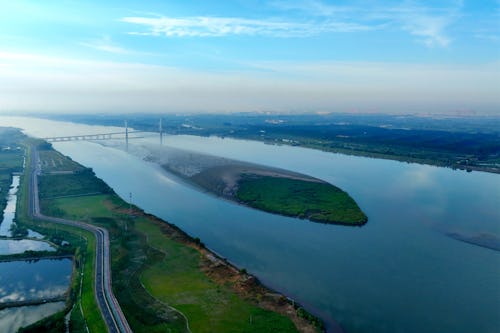
There are few benefits to the rapidly dwindling water levels across the planet — at least when it comes to the ongoing survival of the species that currently occupy Earth. It’s been a real boon to understanding those who came before us, though, as receding waterlines have been revealing things previously lost to history. The latest revelation comes from China, where an ongoing drought has resulted in the Yangtze River drying up — uncovering 600-year-old Buddhist relics that haven’t been seen for centuries.
According to a report from Vice, the relics were spotted on an island reef, made visible by the low water levels. The three statues are believed to have been built by the Qing and Ming dynasties, meaning they were likely built sometime between the 1400s and 1600s. The middle statue, the tallest of the three, sits at about 95 centimeters tall (about 37 inches) and shows a monk sitting on a lotus petal, a symbol of purity and spiritual awakening in the Buddhist tradition. Fittingly for this reveal, the lotus flower is known for its arising from dirty waters looking perfect and untouched.