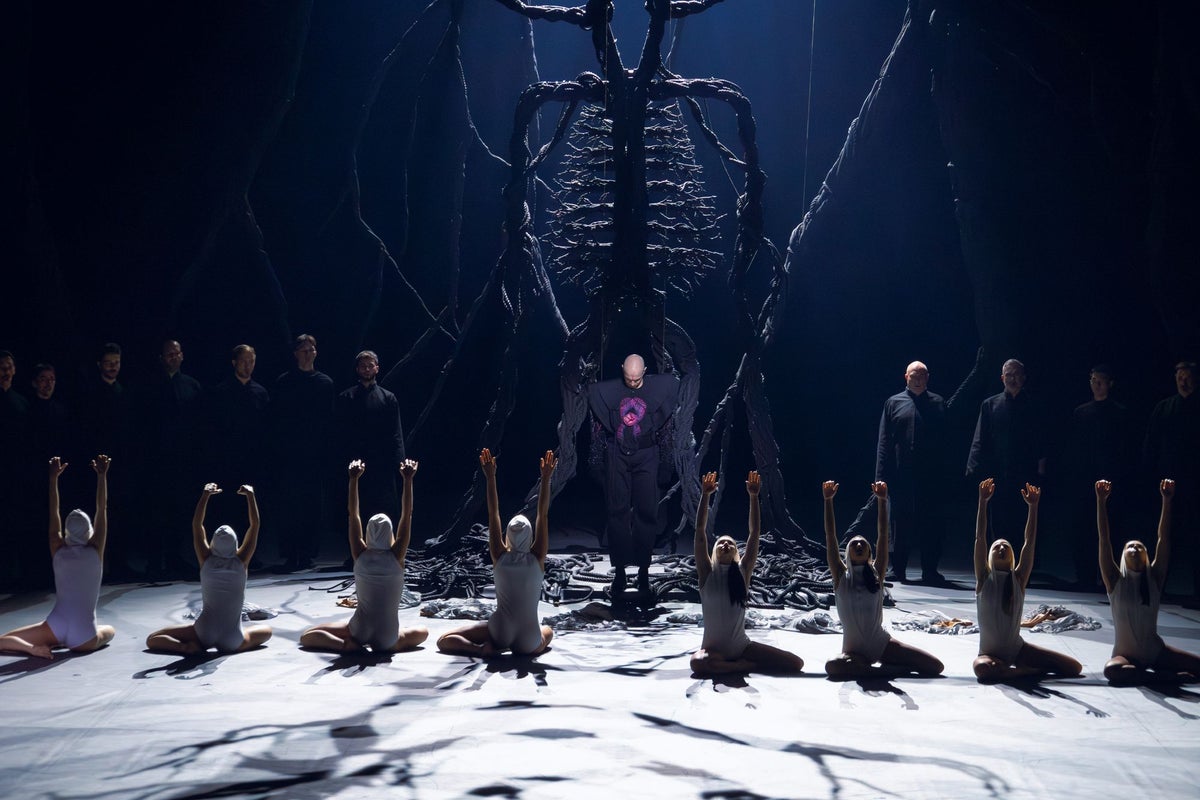
The Palace of Versailles has always been about artifice. Nothing is quite true, its spectacle invented and reinvented for its age. Ironically, in our days of access and equality, it is probably far more a successful part of Parisian life than at any time since the great days of Louis XIV and the end of the 17th century. It hosts balls and garden parties, firework and fountain displays, and a fine series of concerts and opera performances. Once again, it has its own orchestra, choir, and now a recording label. There is still something awe-inspiring and slightly magical about walking through the gates of the palace in the evening and crossing the vast courtyard to the theatre’s entrance in the east wing.
The opera house in the palace is as artificial as any of Louis’s propaganda. It was added shortly before the revolution, not for royalty to watch opera but for the middle classes to pay to experience the aristocrats having dinner on stage: the equivalent today of food videos on celebrity Instagrams. It was only decades later, as Versailles was restored gradually under France’s subsequent emperors, that the intimate theatre with its huge stage began to be used properly.