Get all your news in one place.
100's of premium titles.
One app.
Start reading
The Conversation
The Conversation
Environment
Annalisa Bracco, Professor of Ocean and Climate Dynamics, Georgia Institute of Technology

The world’s fourth mass coral bleaching is underway, but well-connected reefs may have a better chance to recover

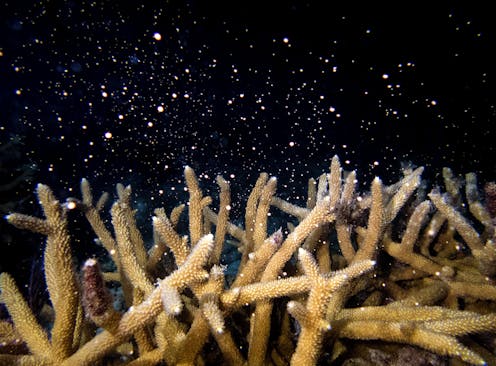
Staghorn coral spawns near North Key Largo, Fla. Liv Williamson/University of Miami Rosenstiel School of Marine, Atmospheric, and Earth Science via AP

The world’s coral reefs are like underwater cities, bustling with all kinds of fish and sea animals. Coral reefs cover less than 1% of the ocean, but they support an estimated 25% of all marine species, including many important fish species. The economic value of the services that these complex ecosystems provide is estimated at over US$3.4 billion yearly just in the U.S.

Today, rising ocean temperatures threaten many reefs’ survival. When ocean waters become too warm for too long, corals expel the colorful symbiotic algae, called zooxanthellae, that live in their tissues – a process called coral bleaching. These algae provide the corals with food, so bleached corals are vulnerable to starvation and disease and may die if the water does not cool quickly enough.

Sign up to read this article
Read news from 100's of titles, curated specifically for you.
Already a member? Sign in here
Related Stories
Top stories on inkl right now
One subscription that gives you access to news from hundreds of sites
Already a member? Sign in here
Our Picks
Fourteen days free
Download the app
One app. One membership.
100+ trusted global sources.